
Sapele at a glance
Sapele is a West African member of the mahogany family and the most common substitute for genuine mahogany in joinery. It is harder than mahogany, very stable for its weight, and famous for its ribbon-stripe figure.
Its low T/R ratio (1.4) makes it one of the more stable hardwoods for doors and frames. Utile is a close relative with similar properties but plainer figure.
Sapele is a hardwood. Origin: Tropical Africa. The tree typically reaches 30–45 m tall, 1–1.5 m trunk diameter.
Buy Sapele: stock, sizes and grades
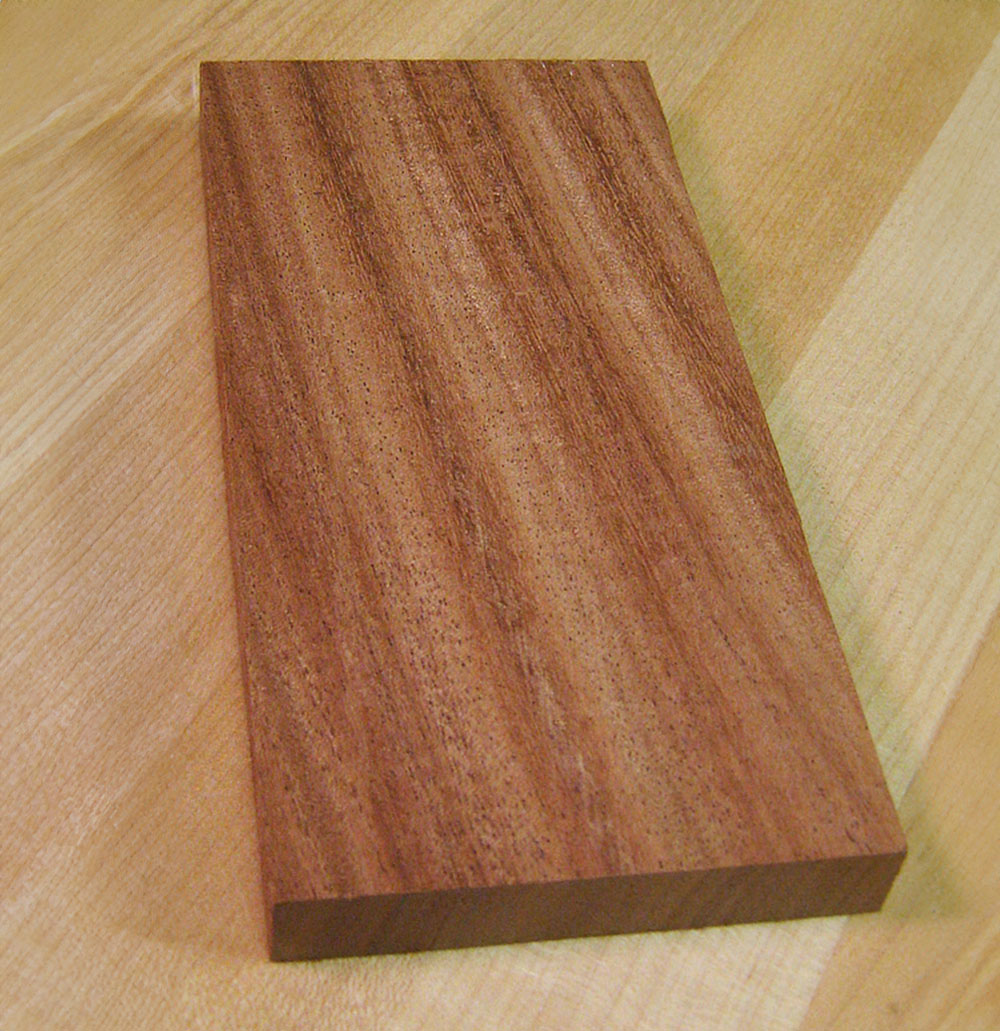
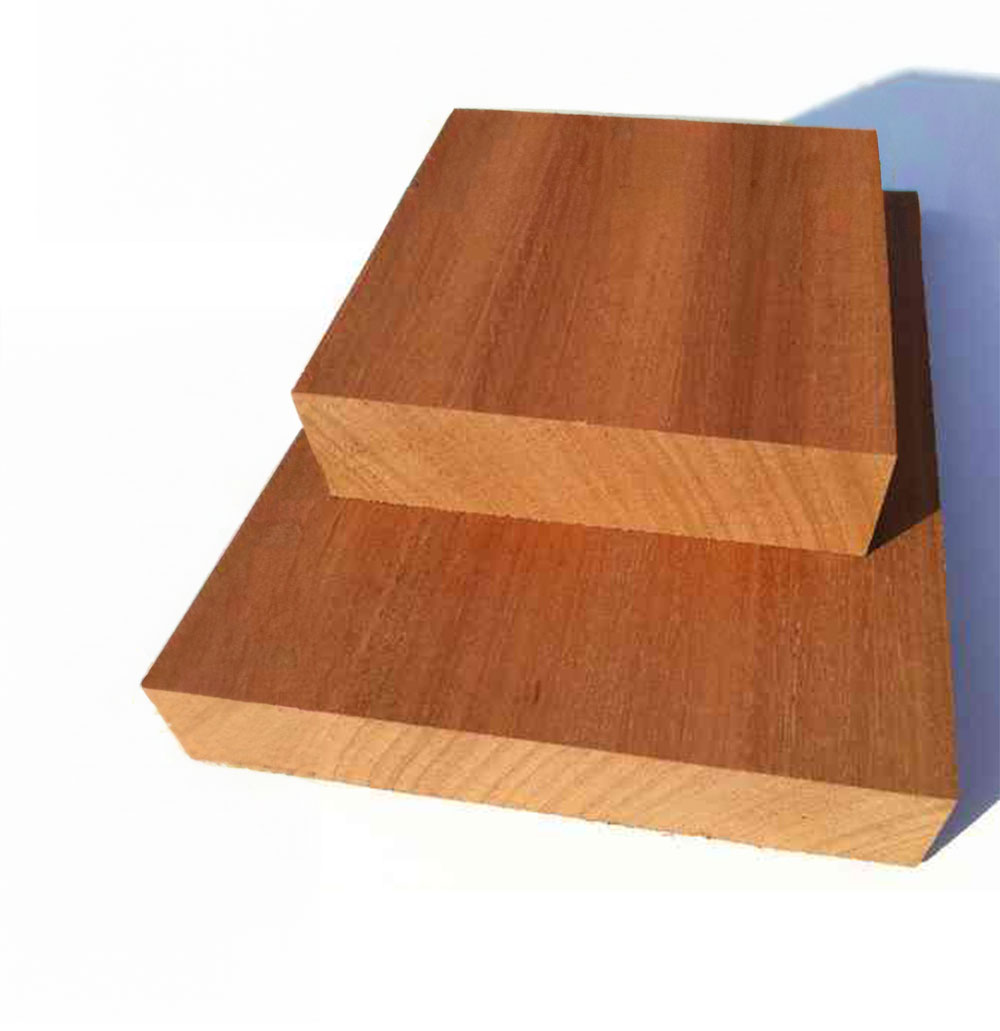
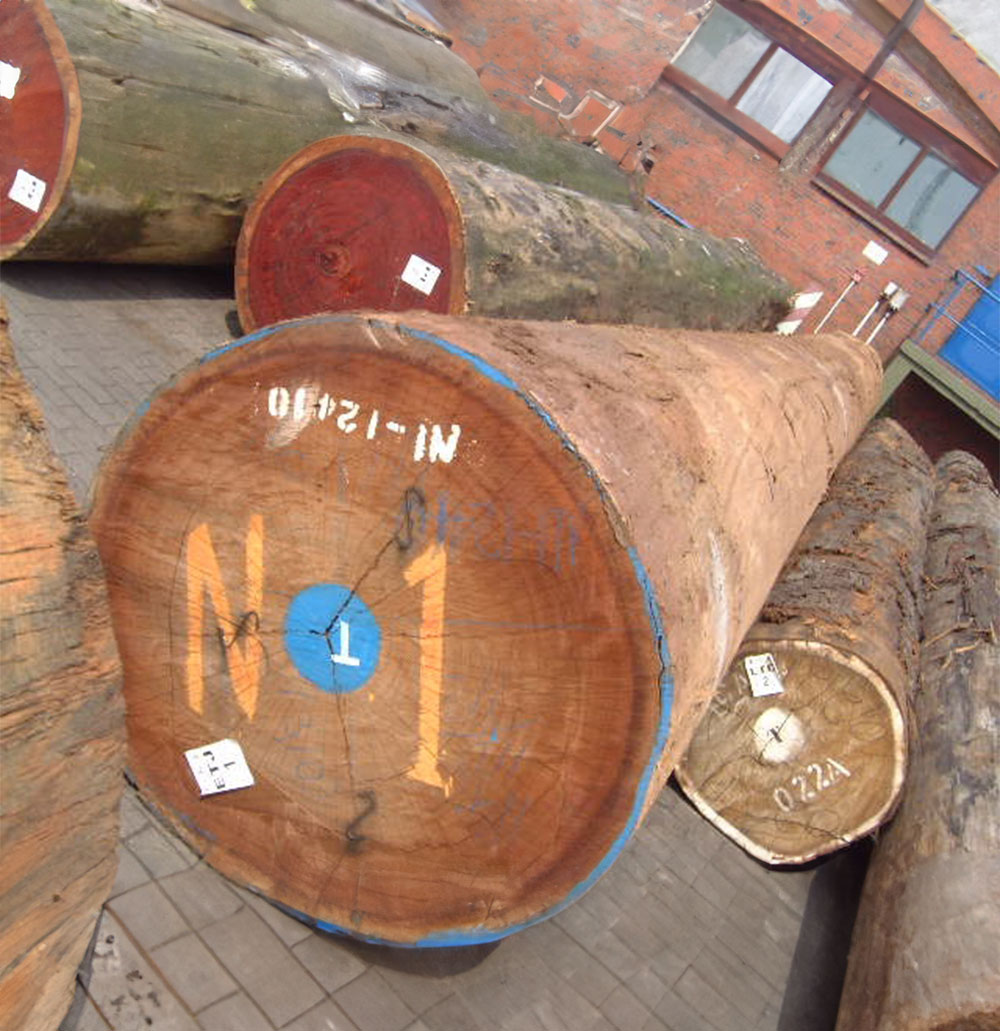
Kathwala supplies Sapele as sawn timber, planed planks and made-to-order products. Tell us the sizes and quantity and we will confirm grade, moisture content and price.
| Sawn timber | Thickness 25, 32, 38, 50, 63, 75 and 100 mm (1 to 4 inches); widths 100 to 300 mm; lengths 1.8 to 4.2 m (6 to 14 ft). Random widths and lengths, or cut to your sizes. |
|---|---|
| Planed (S4S) planks | Planed on all four sides to your finished size, for joinery and furniture making. |
| Panels and boards | Finger-jointed or edge-glued panels 18 to 40 mm thick, up to 1220 x 2440 mm, made to order. |
| Made from Sapele | Doors and frames, flooring, wall panels, mouldings and furniture, made to your drawings. |
| Response | We respond within 24 hours. |
Sapele is durable outdoors, so it also suits decking, cladding and garden furniture.
Buy Sapele from Kolkata
Kathwala supplies Sapele from Nimtalla Timber Market on Strand Road, Kolkata. Sapele is not commonly stocked in East Indian timber markets, so you are welcome to visit and see the boards before you order.
In the Indian trade Sapele is also asked for as sapelli and sapele mahogany.
For today’s Sapele rate, send your sizes and quantity on WhatsApp, call or email us, or apply for a quote. We respond within 24 hours.
Colour, grain and figure
Colour
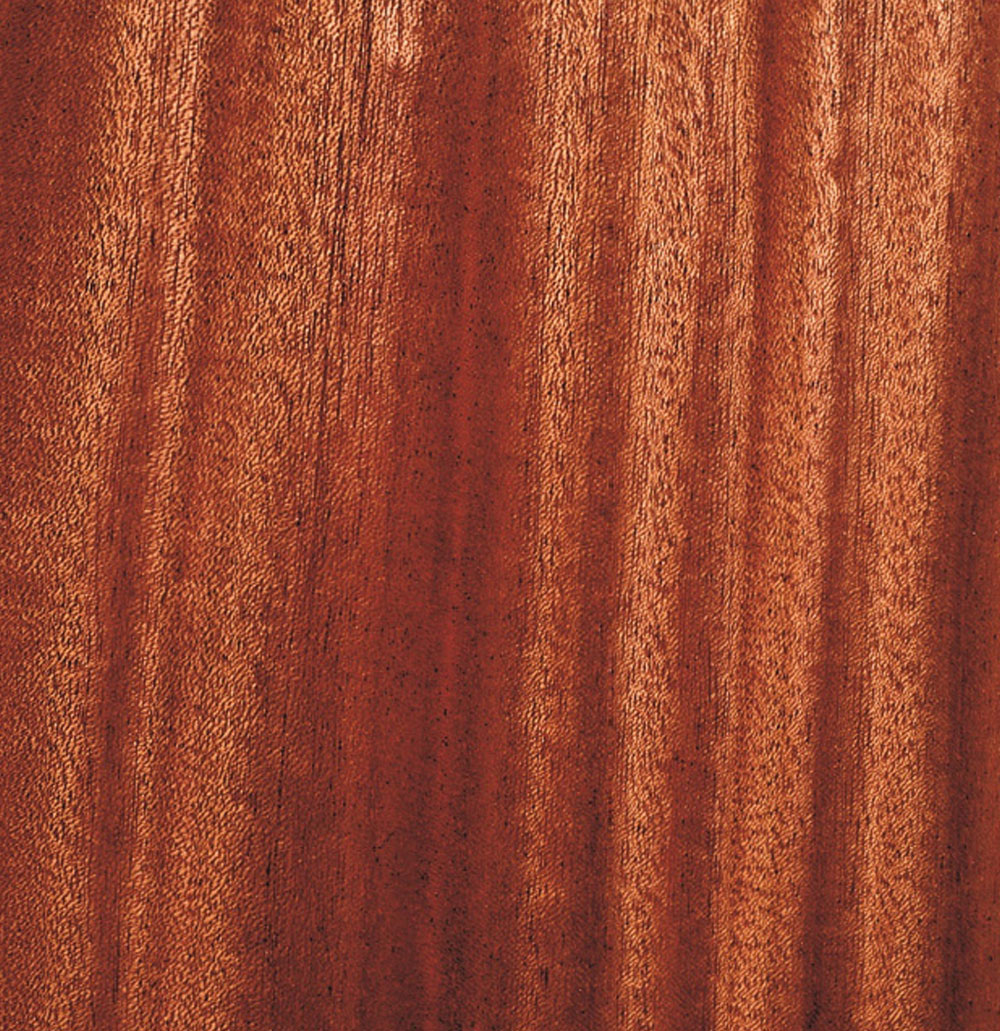
Golden to dark reddish-brown heartwood that darkens with age. Quartersawn boards show a striking ribbon-stripe figure; pommele, quilted and fiddleback figure also occur.
Grain and texture
Interlocked, sometimes wavy grain with a fine, uniform texture and good lustre.
How it ages
Deepens to a richer red-brown over time.
Grain pattern: what to look for
- Flat-sawn face: Wavy, irregular lines; the flat-sawn face is plainer than the quartersawn.
- Quartersawn face: The classic ribbon stripe: alternating light and dark bands that shimmer and swap as the light moves, caused by interlocked grain.
- Figure: Pommele (blister-like spots), quilted, mottled, beeswing and fiddleback figure all occur.
- Texture and knots: Fine, uniform texture with good lustre; virtually knot-free.
For how grain, texture and figure work across all our woods, read our guide to types of wood grain.
Hardness, strength and density
Sapele has a Janka hardness of 1,360 lbf (6,060 N), which makes it medium-hard and about as hard as white oak. Janka measures the force needed to press a 11.28 mm steel ball halfway into the wood, so it is a good guide to dent resistance in floors and furniture.
| Average dried weight (12% MC) | 665 kg/m³ |
|---|---|
| Specific gravity (basic / 12% MC) | 0.56 / 0.67 |
| Janka hardness | 1,360 lbf (6,060 N) |
| Modulus of rupture (bending strength) | 110.9 MPa |
| Modulus of elasticity (stiffness) | 12.35 GPa |
| Crushing strength | 58.9 MPa |
| Shrinkage, radial / tangential | 5.2% / 7.2% |
| Shrinkage, volumetric | 12.9% |
| T/R ratio | 1.4 |
Figures are typical published averages (green to oven-dry shrinkage; strength at 12% moisture). Individual boards vary. Source: The Wood Database, unless stated in the notes above.
Stability and movement
Sapele shrinks 12.9% in volume from green to oven-dry (5.2% radially, 7.2% tangentially). We rate its stability as moderate. For comparison, teak shrinks 7.2% and white oak 16.3%.
A low T/R ratio means boards change shape very little as they dry or take up moisture, so cupping is rare.
In practice: let boards acclimatise on site for one to two weeks before installation, and keep indoor humidity between 35% and 60%.
Durability and outdoor use
Durable. Moderately to very durable heartwood; moderate insect resistance.
Our rating: suitable outdoors with a protective finish.
Working, gluing and finishing
Interlocked grain can tear out when planing or routing, so sharp cutters and a low cutting angle help. Turns, glues and finishes well. Stains on contact with iron.
Smell
A distinct cedar-like scent when worked.
Health and safety
Reported skin and respiratory irritant; severe reactions are uncommon. As with all wood dust, use extraction and a mask when sanding or machining.
What Sapele is used for
- Doors and frames
- Window joinery
- Furniture and cabinetry
- Flooring
- Veneer and plywood
- Musical instruments
What we make from Sapele
- Wood doors and door frames
- Furniture and joinery
- Solid hardwood flooring
- Wood wall panels
See photos and sizes on our Sapele product page.
Sustainability, price and sourcing
Not listed in CITES. IUCN Red List: Vulnerable. We recommend legally verified or certified supply for EU and US orders.
Price: Moderate for plain stock; figured sapele veneer can be very expensive.
Every export order ships with a commercial invoice, packing list, certificate of origin and phytosanitary certificate. For CITES-listed species we ship only with valid CITES permits.
What decides the price of Sapele
Timber in India is sold by the cubic foot (CFT). We do not publish a rate list because the rate changes with each shipment and with what you order. These are the things that move the Sapele price:
- Grade: clear boards without knots or sapwood cost more than boards with them.
- Width and length: wide and long boards come from bigger logs and cost more per cubic foot.
- Thickness and cut: thick sections and quartersawn boards cost more than standard flat-sawn stock.
- Seasoning: kiln-dried timber costs more than air-dried timber and moves less once it is made up.
- Form: planed, finger-jointed or profiled timber costs more than rough sawn timber.
Send us a cutting list on WhatsApp or apply for a quote for today’s rate. We respond within 24 hours.
Vastu and feng shui
Vastu guidance for Sapele
In our Vastu practice, Sapele is a warm, welcoming timber: reddish brown with a shimmering ribbon stripe. That character places it under the Prithvi (earth) with Agni (fire) element, and it works best in the south, south-east and south-west of a room or home.
Best directions and rooms
Use Sapele for living rooms, dining rooms, formal entrances and bedroom furniture. For a single-species house, it can carry the whole home if the north-east is kept light in finish and furniture.
Benefits
- Its shimmering ribbon stripe brings a sense of flow and opportunity to entrance doors on the north and east
- Adds warmth and confidence to south-facing living and dining spaces
- Supports hospitality: good for dining tables and sideboards where guests gather
- Brings energy to the south-east without the intensity of a bright red wood
Where to take care
Keep large pieces out of the north-east; there, use it only for small accents. As with any wood in Vastu, keep the timber whole and sound, and avoid pieces with large splits or knots in doors and beds.
Feng shui
In feng shui, all timber belongs to the Wood element, associated with growth and vitality and with the east and south-east. By colour, Sapele also carries Fire energy (red, pink and purple), which the classical bagua links to the south and to warmth, energy and recognition. A practical reading: use Sapele where you want to add warmth, or to balance a room that feels short of it.
Vastu and feng shui are cultural and design traditions. This guidance reflects Kathwala’s own Vastu practice.
Sapele compared with similar woods
| Species | Janka (lbf) | kg/m³ | Vol. shrinkage | Durability |
|---|---|---|---|---|
| Sapele | 1,360 | 665 | 12.9% | Durable |
| Mahogany | 850 | 545 | 9.3% | Moderately durable |
| Iroko | 1,190 | 660 | 8.8% | Very durable |
| Teak | 1,070 | 655 | 7.2% | Very durable |
| Red Meranti | 800 | 675 | 12.5% | Moderately durable |
Caring for Sapele
- Clean floors and panels with a dry or barely damp mop; avoid standing water and steam mops.
- Use felt pads under furniture and mats at entrances to cut grit wear.
- Oil finishes need a maintenance coat every one to three years in busy areas; lacquered surfaces can be screened and recoated.
- Shield from strong direct sun if you want to slow colour change.
Sapele FAQ
Is Sapele a hardwood or a softwood?
Sapele is a hardwood. Its average dried weight is 665 kg/m³, which makes it medium-heavy.
How hard is Sapele?
Sapele has a Janka hardness of 1,360 lbf (6,060 N). That is about as hard as white oak.
Is Sapele good for flooring?
Yes. At 1,360 lbf it is hard enough for residential and most commercial floors, and its moderate stability helps boards stay flat.
Can Sapele be used outdoors?
Durable: suitable outdoors with a protective finish. Moderately to very durable heartwood; moderate insect resistance..
Is Sapele dimensionally stable?
Its stability is moderate, with 12.9% volumetric shrinkage and a T/R ratio of 1.4.
Does Sapele change colour over time?
Deepens to a richer red-brown over time.
Is Sapele good for Vastu?
Yes. In our Vastu practice, Sapele is a warm, welcoming timber that suits the south, south-east and south-west, and works well for dining tables, living-room furniture and formal entrances.
Can I buy Sapele from Kathwala for export?
Yes. We supply Sapele as sawn timber and as finished products such as wood doors and door frames, furniture and joinery. Use the form on this page for a quote; we respond within 24 hours.