
Rubberwood at a glance
Rubberwood is plantation timber from rubber trees that have finished producing latex. Treated and kiln-dried (RSKD), it is a stable, low-cost hardwood for furniture and edge-glued panels.
Most rubberwood is sold as finger-jointed boards and panels rather than long solid lengths, because the trees are relatively small.
Rubberwood is a hardwood. Origin: Native to Brazil; grown on plantations across tropical Asia, including Kerala. The tree typically reaches 23–30 m tall, 0.3–1 m trunk diameter.
Buy Rubberwood: stock, sizes and grades
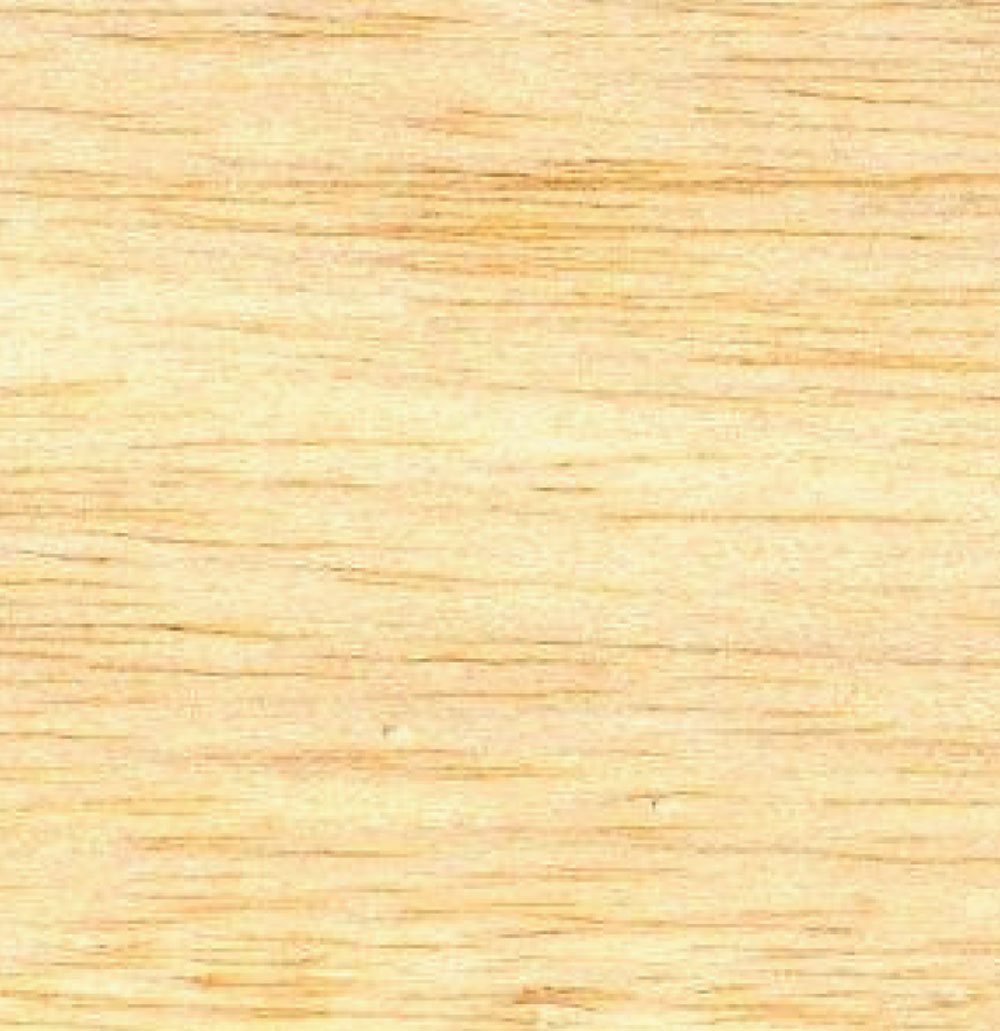
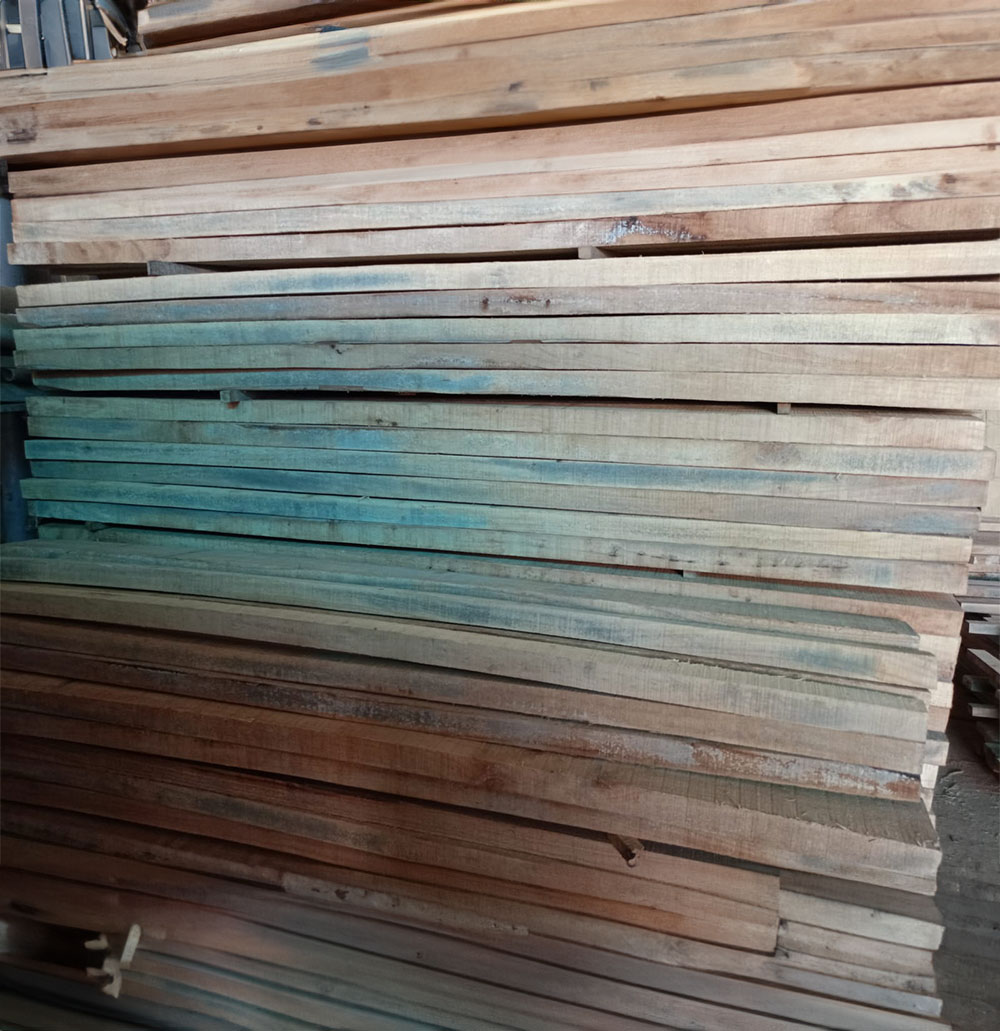
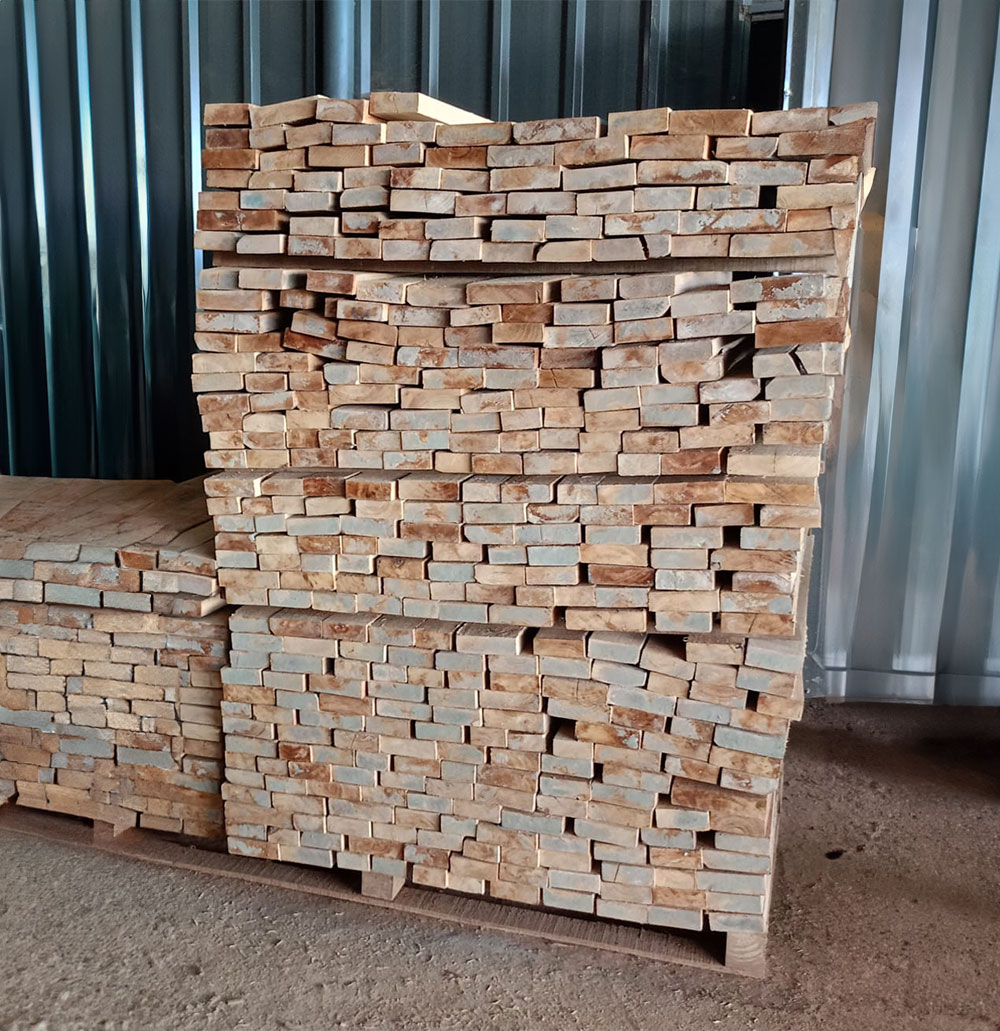
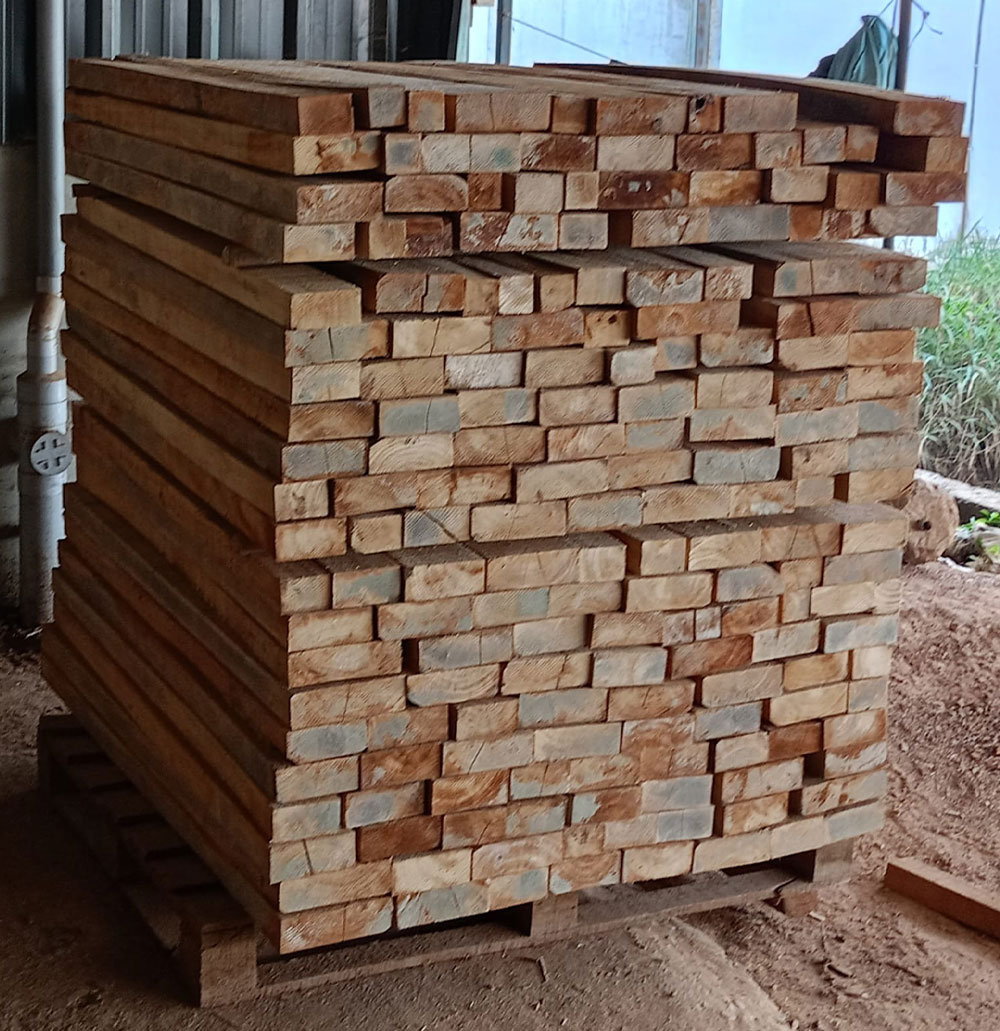
Kathwala supplies Rubberwood as sawn timber, planed planks and made-to-order products. Tell us the sizes and quantity and we will confirm grade, moisture content and price.
Indicative prices
Rubberwood RSKD (chemically treated and seasoned), per CFT by width and thickness. From our current price list, effective 15 June 2026, ex-godown.
Lengths 1 ft 6 in to 4 ft 6 in
| Width | 1, 1.5 and 2 in thick | 3 in thick |
|---|---|---|
| 3 and 4 in | ₹1,601 | ₹1,701 |
| 5 in | ₹1,701 | ₹1,801 |
| 6 in | ₹1,801 | ₹1,901 |
| 7 in | ₹1,901 | ₹2,001 |
| 8 in | ₹2,001 | ₹2,101 |
| 9 in | ₹2,101 | ₹2,201 |
Lengths 5 ft and longer
| Width | 1, 1.5 and 2 in thick | 3 in thick |
|---|---|---|
| 3 and 4 in | ₹1,701 | ₹1,801 |
| 5 in | ₹1,801 | ₹1,901 |
| 6 in | ₹1,901 | ₹2,001 |
| 7 in | ₹2,001 | ₹2,101 |
| 8 in | ₹2,101 | ₹2,201 |
| 9 in | ₹2,201 | ₹2,301 |
These prices are indicative and come down for larger volumes. The final rate depends on grade, sizes and the stock on the day. GST (18%) and TCS (2%, not charged to consumers) are extra, as are delivery and any machining. For a firm quote, message us on WhatsApp or apply for a quote. We respond within 24 hours.
| Sawn timber | Thickness 25, 32, 38, 50, 63, 75 and 100 mm (1 to 4 inches); widths 100 to 300 mm; lengths 1.8 to 4.2 m (6 to 14 ft). Random widths and lengths, or cut to your sizes. |
|---|---|
| Planed (S4S) planks | Planed on all four sides to your finished size, for joinery and furniture making. |
| Panels and boards | Finger-jointed or edge-glued panels 18 to 40 mm thick, up to 1220 x 2440 mm, made to order. |
| Made from Rubberwood | Doors and frames, flooring, wall panels, mouldings and furniture, made to your drawings. |
| Response | We respond within 24 hours. |
Buy Rubberwood from Kolkata
Kathwala supplies Rubberwood from Nimtalla Timber Market on Strand Road, Kolkata. You are welcome to visit and see the boards before you order.
In the Indian trade Rubberwood is also asked for as rubber wood and parawood.
For today’s Rubberwood rate, send your sizes and quantity on WhatsApp, call or email us, or apply for a quote. We respond within 24 hours.
Colour, grain and figure
Colour
Light blonde to medium tan, sometimes with brown streaks; often stained.
Grain and texture
Straight; somewhat coarse, open texture with low lustre.
How it ages
Darkens slightly with age.
Grain pattern: what to look for
- Flat-sawn face: Straight, plain lines on a pale cream to light tan ground.
- Quartersawn face: Straight, even stripes.
- Figure: Mostly plain, with little colour variation.
- Texture and knots: Somewhat coarse, open texture with low lustre; small knots are common.
For how grain, texture and figure work across all our woods, read our guide to types of wood grain.
Hardness, strength and density
Rubberwood has a Janka hardness of 960 lbf (4,280 N), which makes it medium-soft and 29% softer than white oak. Janka measures the force needed to press a 11.28 mm steel ball halfway into the wood, so it is a good guide to dent resistance in floors and furniture.
| Average dried weight (12% MC) | 595 kg/m³ |
|---|---|
| Specific gravity (basic / 12% MC) | 0.49 / 0.59 |
| Janka hardness | 960 lbf (4,280 N) |
| Modulus of rupture (bending strength) | 71.9 MPa |
| Modulus of elasticity (stiffness) | 9.07 GPa |
| Crushing strength | 42.1 MPa |
| Shrinkage, radial / tangential | 2.3% / 5.1% |
| Shrinkage, volumetric | 7.5% |
| T/R ratio | 2.2 |
Figures are typical published averages (green to oven-dry shrinkage; strength at 12% moisture). Individual boards vary. Source: The Wood Database, unless stated in the notes above.
Stability and movement
Rubberwood shrinks 7.5% in volume from green to oven-dry (2.3% radially, 5.1% tangentially). We rate its stability as excellent. For comparison, teak shrinks 7.2% and white oak 16.3%.
A high T/R ratio means flatsawn boards are prone to cupping; quartersawn or rift-sawn stock is the safer choice for wide boards and panels.
In practice: let boards acclimatise on site for one to two weeks before installation, and keep indoor humidity between 35% and 60%.
Durability and outdoor use
Non-durable. Perishable and prone to fungal stain and insects, which is why it is chemically treated and kiln-dried (RSKD) before use.
Our rating: interior use only.
Working, gluing and finishing
Easy to machine. Warps while drying, but is fairly stable once properly seasoned. Glues, stains and finishes well.
Smell
A sour smell when green that fades after drying.
Health and safety
General wood-dust risks; people with latex allergies may react. As with all wood dust, use extraction and a mask when sanding or machining.
What Rubberwood is used for
- Furniture and cabinetry
- Finger-jointed panels and worktops
- Kitchen items
- Interior millwork
- Toys
What we make from Rubberwood
- Furniture and joinery
- Wood wall panels
See photos and sizes on our Rubberwood product page.
Sustainability, price and sourcing
Not listed in CITES or on the IUCN Red List. Felled at about 30 years when latex yield ends, so it is a by-product of rubber plantations.
Price: Low; one of the most economical furniture hardwoods.
Every export order ships with a commercial invoice, packing list, certificate of origin and phytosanitary certificate. For CITES-listed species we ship only with valid CITES permits.
Vastu and feng shui
What the tradition says
The rubber tree produces milky latex. The Brihat Samhita (53.86) says the wood of milky-sap trees should be rejected for house building, so rubberwood is a poor choice for anyone following that text strictly, at least for structural parts.
Applying Vastu principles
Rubberwood is a medium-weight, pale wood. Applied to modern Vastu practice, it suits the north, north-east and east, where Vastu prefers lighter weight and lighter tones. Many practitioners also prefer a single species throughout a house, or no more than two or three.
Feng shui
In feng shui, all timber belongs to the Wood element, associated with growth and vitality and with the east and south-east. By colour, Rubberwood also carries Metal energy (white, grey and pale tones), which the classical bagua links to the west and north-west and to clarity, focus and order. A practical reading: use Rubberwood where you want to add clarity, or to balance a room that feels short of it.
These notes are cultural and design guidance, not scientific claims. Where we interpret general principles rather than quote a text, we say so.
Rubberwood compared with similar woods
| Species | Janka (lbf) | kg/m³ | Vol. shrinkage | Durability |
|---|---|---|---|---|
| Rubberwood | 960 | 595 | 7.5% | Non-durable |
| White Beech | 1,450 | 710 | 17.9% | Non-durable |
| Gmelina (Gamari) | – | 480 | – | Moderately durable |
| Hard Maple | 1,450 | 705 | 14.7% | Non-durable |
Caring for Rubberwood
- Clean floors and panels with a dry or barely damp mop; avoid standing water and steam mops.
- Use felt pads under furniture and mats at entrances to cut grit wear.
- Oil finishes need a maintenance coat every one to three years in busy areas; lacquered surfaces can be screened and recoated.
- Use a UV-filtering finish if you want to keep the original tone.
Rubberwood FAQ
Is Rubberwood a hardwood or a softwood?
Rubberwood is a hardwood. Its average dried weight is 595 kg/m³, which makes it medium-weight.
How hard is Rubberwood?
Rubberwood has a Janka hardness of 960 lbf (4,280 N). That is 29% softer than white oak.
Is Rubberwood good for flooring?
It is better suited to furniture and cabinetry, finger-jointed panels and worktops than to busy floors because it is relatively soft. For floors we usually recommend white oak, teak or merbau.
Can Rubberwood be used outdoors?
Non-durable: interior use only. Perishable and prone to fungal stain and insects, which is why it is chemically treated and kiln-dried (RSKD) before use..
Is Rubberwood dimensionally stable?
Its stability is excellent, with 7.5% volumetric shrinkage and a T/R ratio of 2.2.
Does Rubberwood change colour over time?
Darkens slightly with age.
Is Rubberwood good for Vastu?
The rubber tree produces milky latex. The Brihat Samhita (53.86) says the wood of milky-sap trees should be rejected for house building, so rubberwood is a poor choice for anyone following that text strictly, at least for structural parts.
Can I buy Rubberwood from Kathwala for export?
Yes. We supply Rubberwood as sawn timber and as finished products such as furniture and joinery, wood wall panels. Use the form on this page for a quote; we respond within 24 hours.