
Jaali and Partition Designs in Solid Wood
Solid wood jaali and partition designs for interiors and façades: patterns, woods, openness, construction and specification.

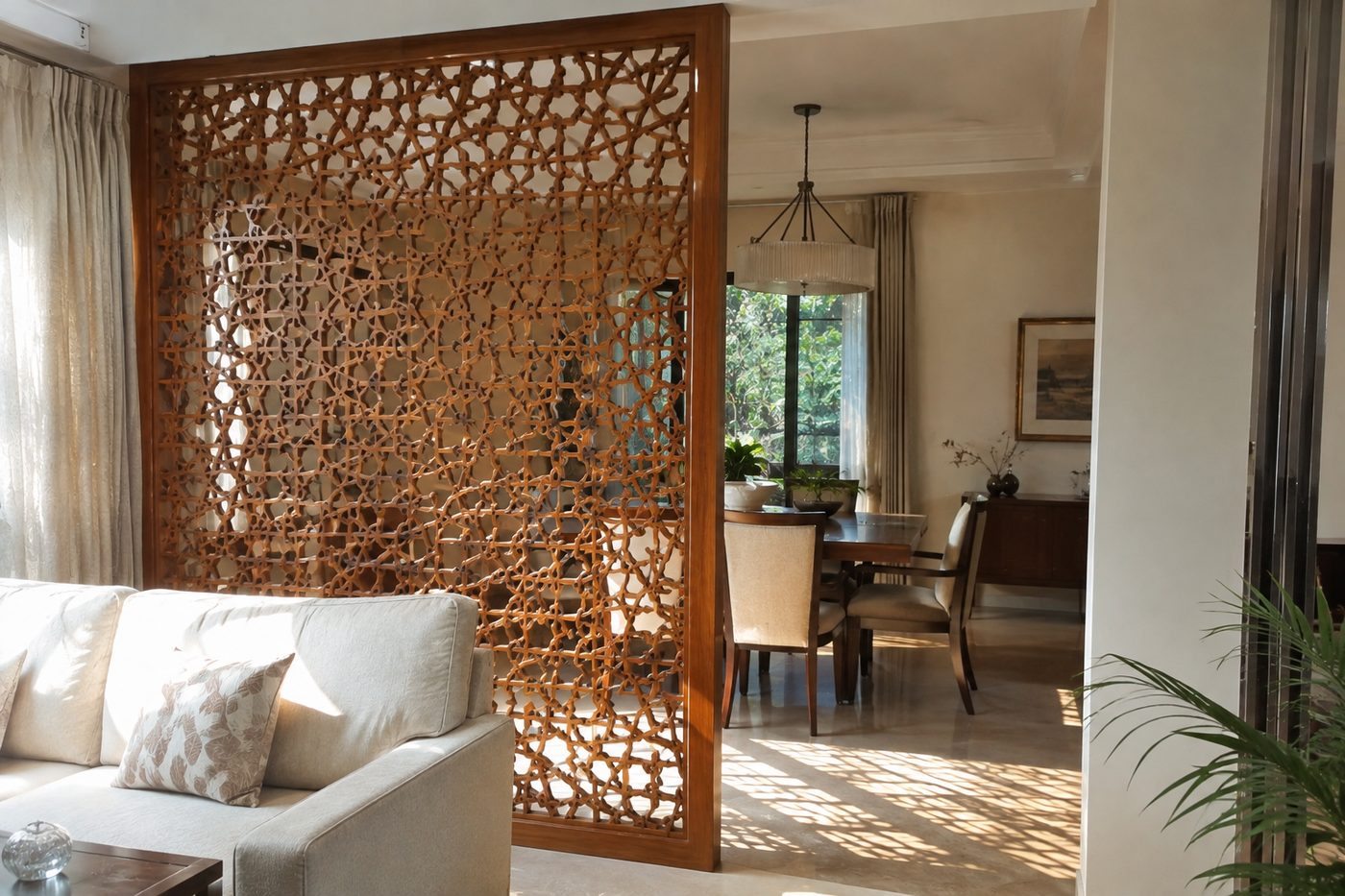
A jaali is a perforated screen, traditionally carved in stone or wood, that lets light and air through while filtering views and sun. In contemporary interiors, solid wood jaali partitions divide living and dining areas, screen pooja rooms and staircases, and shade façades. This guide covers patterns, woods, construction and the details architects should specify.
The short version:
Patterns
Geometric
Hexagons, stars and interlaced grids from Mughal and Islamic architecture. They read well at any scale.
Floral
Vines and petals, as in Rajasthani and Gujarati work. Best in hand-carved or CNC-carved wood.
Linear and slatted
Vertical or horizontal slats and battens: the most contemporary option, easy to make and maintain.
Custom motifs
Patterns derived from the project’s logo, plan or fabric, cut on CNC from drawings.
Construction and specification

- Openness: 30–50% for privacy with light; more for ventilation screens.
- Thickness: 18–25 mm for interior panels; 30–40 mm for large or external screens.
- Frame: set panels in a hardwood frame or build them from glued lattice so they stay flat.
- Fixing: floor and ceiling channels or pivots for partitions; concealed brackets for wall screens.
- Finish: oil or matt PU; spray, because brushes cannot reach inside the openings.
Send us the pattern and size. We make jaalis in solid wood by CNC and by hand. We respond within 24 hours.
Jaalis pair naturally with wall panelling and wooden ceilings. For pooja rooms, see pooja room Vastu; for doors with jaali panels, main door designs. Browse our ceilings, partitions and jaali and wood wall art.
Frequently asked questions
What is a jaali?
A perforated screen, traditionally in stone or wood, that filters light, air and views.
Which wood is best for a jaali partition?
Can a jaali be used outdoors?
Yes, in durable timber with a ventilated fixing and an exterior oil.
How is a wooden jaali made?
By CNC routing from a drawing, by hand carving, or by assembling lattice strips.
Does a jaali block sound?
Very little. Use glass behind it if acoustic separation is needed.
The bottom line
Choose the pattern for the style, the openness for the privacy you need, and the timber for the room. Specify a frame and a sprayed finish. See our architectural millwork.
We make jaalis and partitions to drawings. We respond within 24 hours.
Keep reading in Design
- Wooden Ceiling Designs: 12 Ideas for Living Rooms and BedroomsTwelve wooden ceiling designs, from slats with linear lights to coffers and beams, with woods, fire, acoustic and…
- Kitchen Island Ideas: Sizes, Clearances and Butcher Block TopsKitchen island sizes and clearances from the NKBA guidelines, layouts, seating and solid wood butcher block tops.
- Dressing Table Designs: Sizes, Woods and Styles for Every BedroomDressing table designs and standard sizes, from classic tables to wall-mounted vanities, with woods, lighting and placement details.
- Console Table Ideas: Sizes and Styling for Hallways and Living RoomsConsole table sizes for hallways, behind sofas and living rooms, styles, mirror proportions and woods.
Shweta KhemkaWrites about interior design, architecture and Vastu for Kathwala, which makes solid wood furniture, doors, panelling and millwork to order for architects and homeowners. Questions? Get in touch.