
Douglas Fir at a glance
Douglas fir is one of the strongest softwoods for its weight. Clear, vertical-grain fir is a classic material for doors, windows and exposed beams.
Despite the name it is not a true fir (Abies); it has its own genus, named after the botanist David Douglas.
Douglas Fir is a softwood. Origin: Western North America. The tree typically reaches 60–75 m tall, 1.5–2 m trunk diameter.
Buy Douglas Fir: stock, sizes and grades
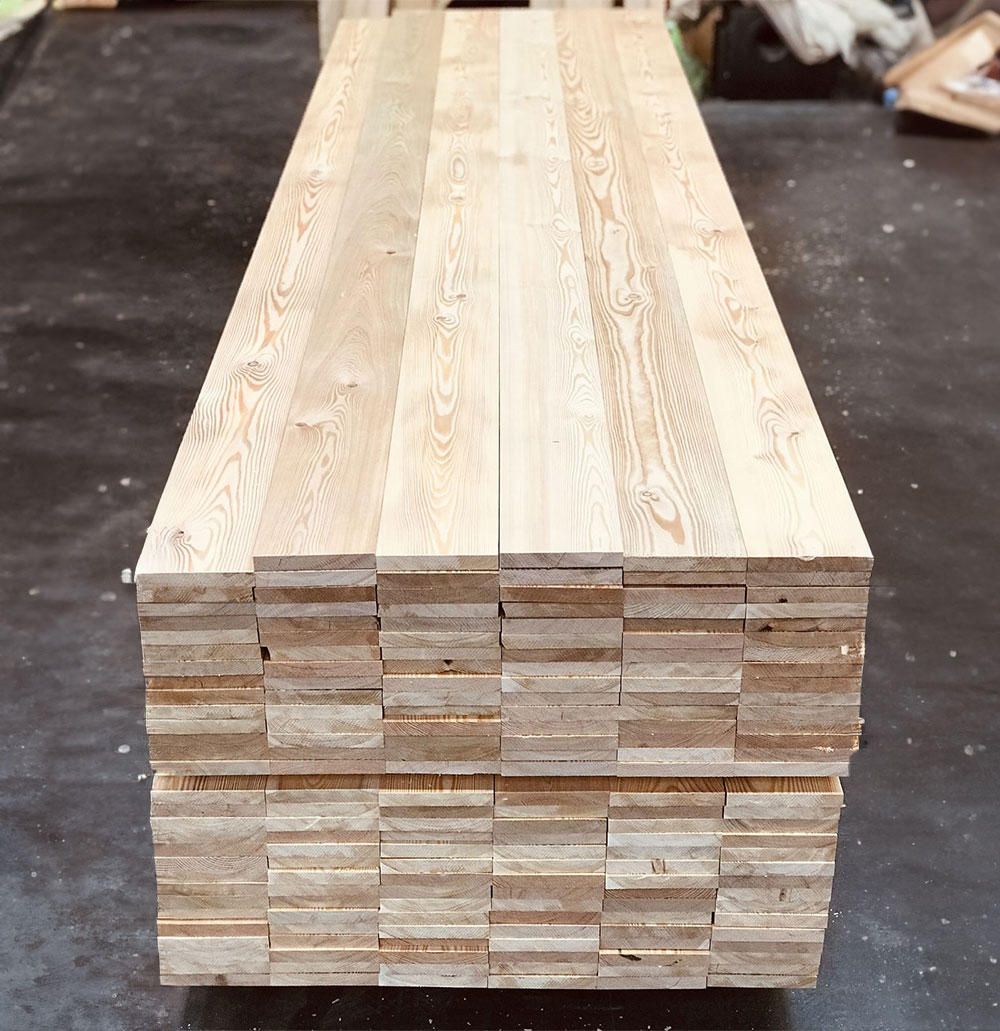
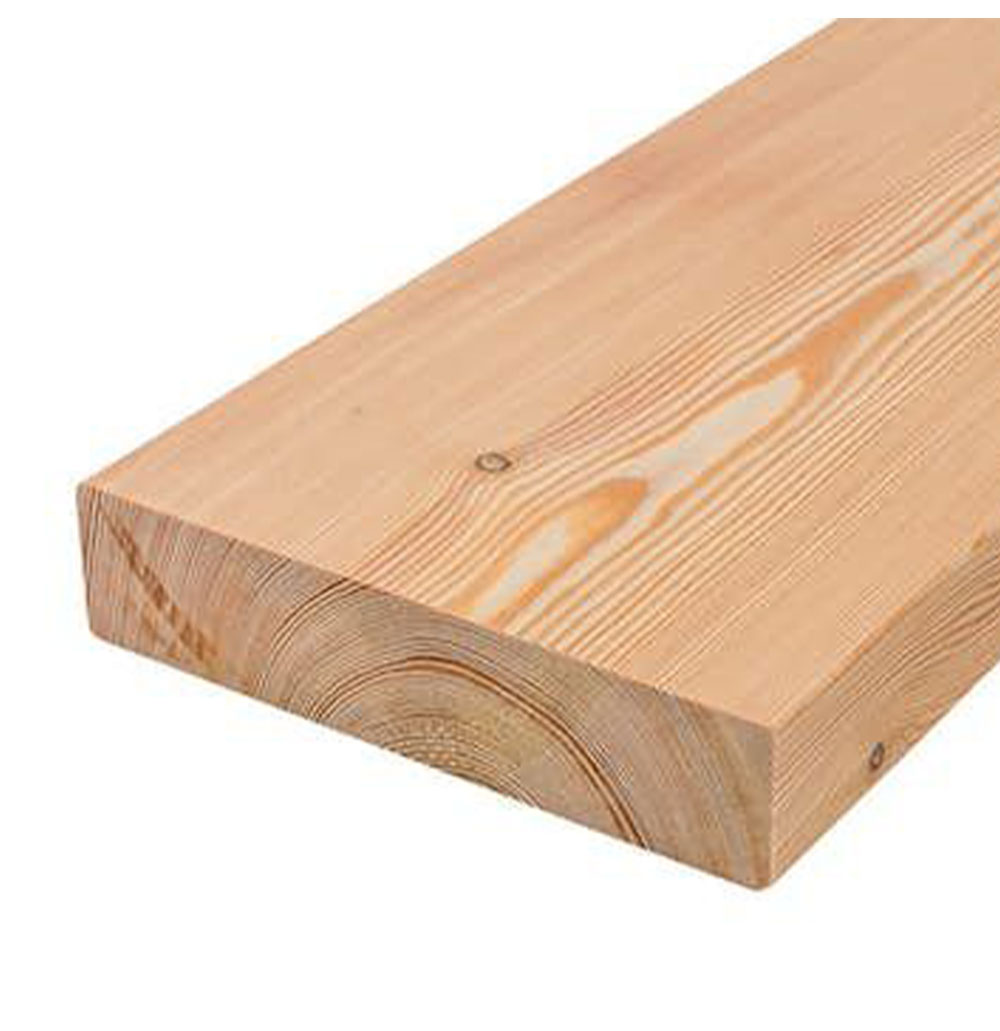
Kathwala supplies Douglas Fir as sawn timber, planed planks and made-to-order products. Tell us the sizes and quantity and we will confirm grade, moisture content and price.
Indicative prices
Douglas fir, kiln dried, square edged. From our current price list, effective 1 April 2026, ex-godown.
| Size | Rate per CFT |
|---|---|
| 8 x 2 in, 8 ft long | ₹1,801 |
These prices are indicative and come down for larger volumes. The final rate depends on grade, sizes and the stock on the day. GST (18%) and TCS (2%, not charged to consumers) are extra, as are delivery and any machining. For a firm quote, message us on WhatsApp or apply for a quote. We respond within 24 hours.
| Sawn timber | Thickness 25, 32, 38, 50, 63, 75 and 100 mm (1 to 4 inches); widths 100 to 300 mm; lengths 1.8 to 4.2 m (6 to 14 ft). Random widths and lengths, or cut to your sizes. |
|---|---|
| Planed (S4S) planks | Planed on all four sides to your finished size, for joinery and furniture making. |
| Panels and boards | Finger-jointed or edge-glued panels 18 to 40 mm thick, up to 1220 x 2440 mm, made to order. |
| Made from Douglas Fir | Doors and frames, flooring, wall panels, mouldings and furniture, made to your drawings. |
| Response | We respond within 24 hours. |
Buy Douglas Fir from Kolkata
Kathwala supplies Douglas Fir from Nimtalla Timber Market on Strand Road, Kolkata. Douglas Fir is not commonly stocked in East Indian timber markets, so you are welcome to visit and see the boards before you order.
In the Indian trade Douglas Fir is also asked for as Oregon pine.
For today’s Douglas Fir rate, send your sizes and quantity on WhatsApp, call or email us, or apply for a quote. We respond within 24 hours.
Colour, grain and figure
Colour
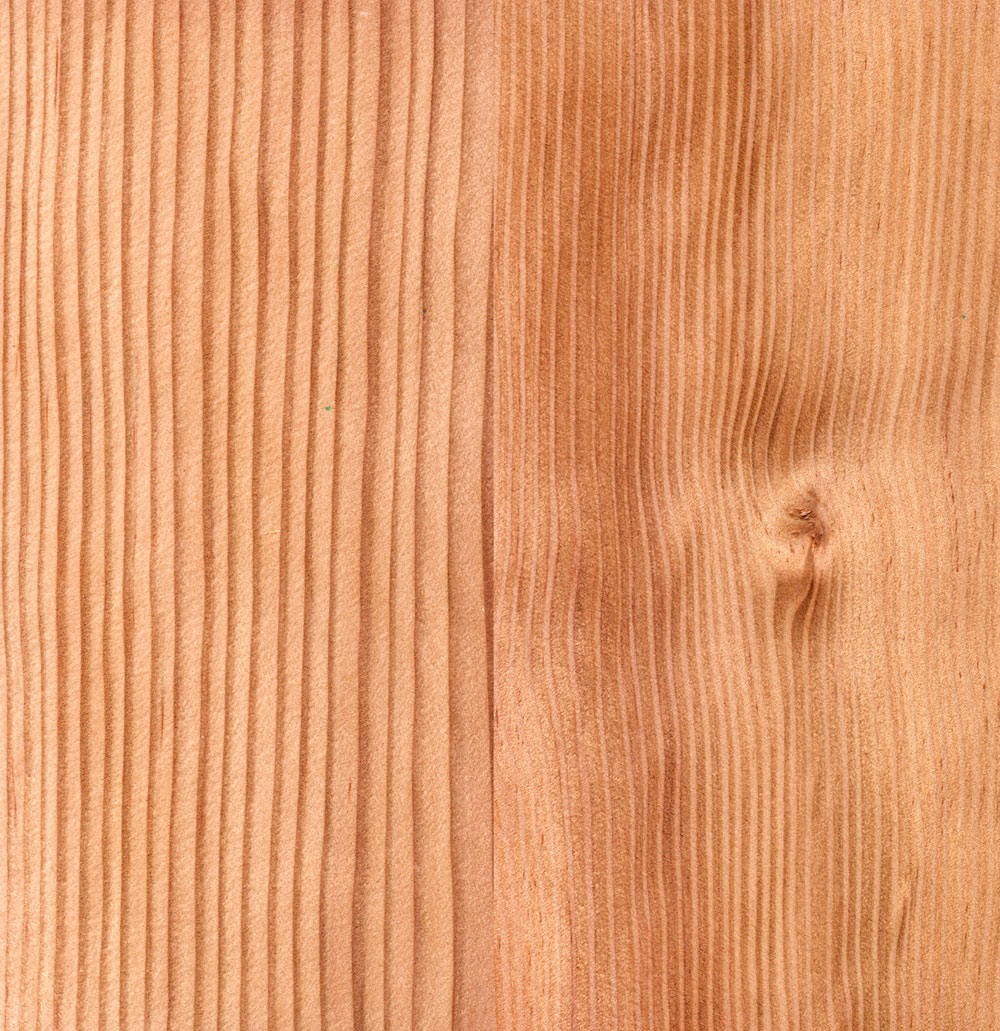
Light brown with a reddish or yellowish tint and clearly darker growth rings.
Grain and texture
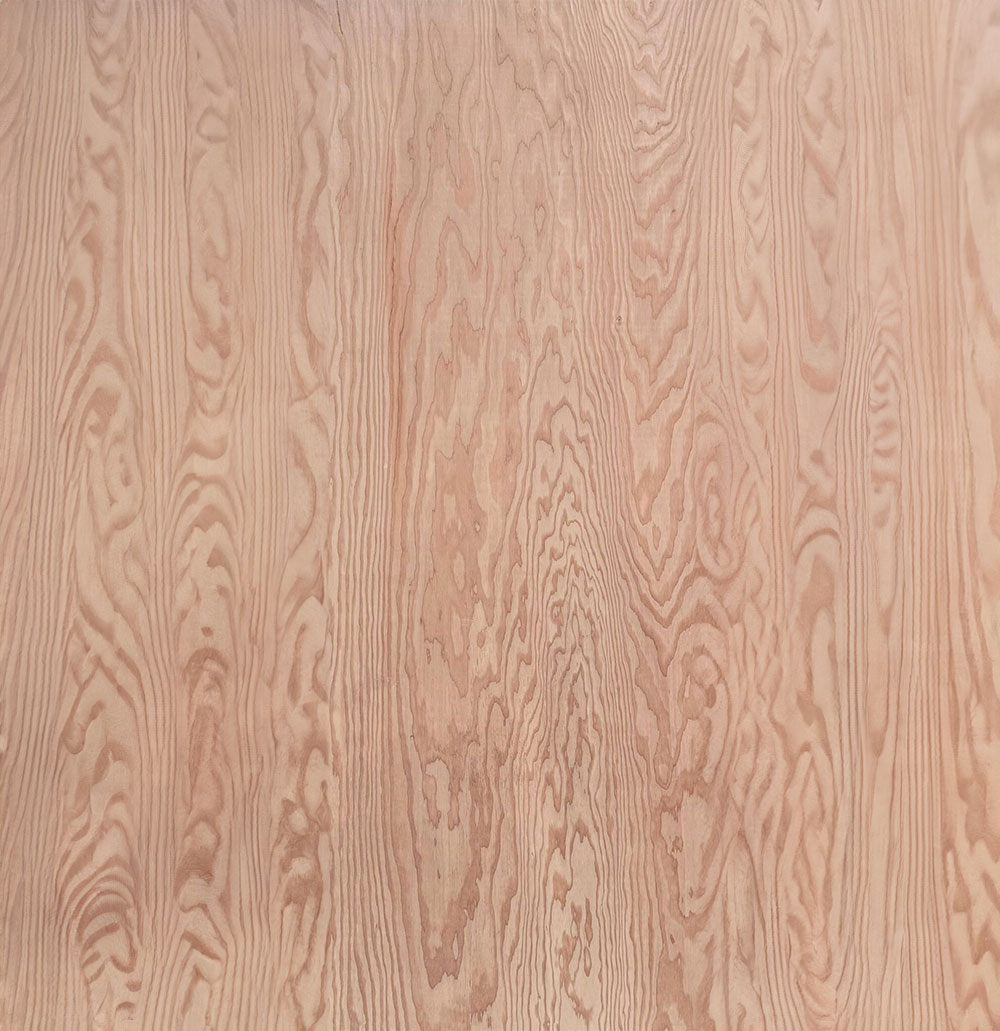
Straight or slightly wavy; medium to coarse texture. Rotary-cut veneer shows wild grain.
How it ages
Mellows to a warm orange-brown.
Grain pattern: what to look for
- Flat-sawn face: Wild, bold cathedral arches with strong contrast between pale earlywood and dark orange latewood.
- Quartersawn face: Straight, tightly spaced lines, sold as vertical-grain or “VG” fir.
- Figure: Some boards are wavy; flat-sawn veneer can look busy.
- Texture and knots: Medium to coarse texture; knots in construction grades.
For how grain, texture and figure work across all our woods, read our guide to types of wood grain.
Hardness, strength and density
Douglas Fir has a Janka hardness of 620 lbf (2,760 N), which makes it soft and 54% softer than white oak. Janka measures the force needed to press a 11.28 mm steel ball halfway into the wood, so it is a good guide to dent resistance in floors and furniture.
| Average dried weight (12% MC) | 510 kg/m³ |
|---|---|
| Specific gravity (basic / 12% MC) | 0.45 / 0.51 |
| Janka hardness | 620 lbf (2,760 N) |
| Modulus of rupture (bending strength) | 86.2 MPa |
| Modulus of elasticity (stiffness) | 12.17 GPa |
| Crushing strength | 47.9 MPa |
| Shrinkage, radial / tangential | 4.5% / 7.3% |
| Shrinkage, volumetric | 11.6% |
| T/R ratio | 1.6 |
Figures are typical published averages (green to oven-dry shrinkage; strength at 12% moisture). Individual boards vary. Source: The Wood Database, unless stated in the notes above.
Stability and movement
Douglas Fir shrinks 11.6% in volume from green to oven-dry (4.5% radially, 7.3% tangentially). We rate its stability as good. For comparison, teak shrinks 7.2% and white oak 16.3%.
A low T/R ratio means boards change shape very little as they dry or take up moisture, so cupping is rare.
In practice: let boards acclimatise on site for one to two weeks before installation, and keep indoor humidity between 35% and 60%.
Durability and outdoor use
Moderately durable. Heartwood moderately durable; susceptible to insects.
Our rating: best for interiors and sheltered exteriors.
Working, gluing and finishing
Machines well with moderate tool wear; glues, stains and finishes well.
Smell
Distinct resinous smell.
Health and safety
Skin irritation, nausea and runny nose have been reported; splinters can infect. As with all wood dust, use extraction and a mask when sanding or machining.
What Douglas Fir is used for
- Beams, posts and structural timber
- Doors and windows (vertical grain)
- Flooring
- Plywood and veneer
- Exposed ceilings and joinery
What we make from Douglas Fir
See photos and sizes on our Douglas Fir product page.
Sustainability, price and sourcing
Not listed in CITES. IUCN Red List: Least Concern.
Price: Modest for construction grades; clear vertical-grain and reclaimed stock is much more.
Every export order ships with a commercial invoice, packing list, certificate of origin and phytosanitary certificate. For CITES-listed species we ship only with valid CITES permits.
Vastu and feng shui
Vastu guidance for Douglas Fir
In our Vastu practice, Douglas Fir is a light, airy timber: light reddish tan, straight-grained, with clear growth rings. That character places it under the Jal (water) and Vayu (air) element, and it works best in the north, north-east and east of a room or home.
Best directions and rooms
Use Douglas Fir for study rooms, children’s rooms, pooja shelves, reading corners and east-facing living areas. For a single-species house, it can carry the whole home if the north-east is kept light in finish and furniture.
Benefits
- Its clear growth rings are associated with steady progress; we recommend it for exposed beams and ceilings in the east
- Brings lightness and openness to north and north-east zones, which Vastu keeps clear and bright
- Supports focus and learning in study tables and children’s furniture
- Reflects morning light, keeping east-facing rooms fresh
Where to take care
Avoid using it as the only timber in the south-west, where the master bedroom wants a heavier, darker wood; pair it there with a darker species. As with any wood in Vastu, keep the timber whole and sound, and avoid pieces with large splits or knots in doors and beds.
Feng shui
In feng shui, all timber belongs to the Wood element, associated with growth and vitality and with the east and south-east. By colour, Douglas Fir also carries Earth energy (brown, sand and ochre), which the classical bagua links to the centre, south-west and north-east and to stability, grounding and steady growth. A practical reading: use Douglas Fir where you want to add stability, or to balance a room that feels short of it.
Vastu and feng shui are cultural and design traditions. This guidance reflects Kathwala’s own Vastu practice.
Douglas Fir compared with similar woods
| Species | Janka (lbf) | kg/m³ | Vol. shrinkage | Durability |
|---|---|---|---|---|
| Douglas Fir | 620 | 510 | 11.6% | Moderately durable |
| Southern Yellow Pine (SYP) | 870 | 650 | 12.2% | Moderately durable |
| Hemlock | 540 | 465 | 12.4% | Slightly durable |
| SPF (Spruce-Pine-Fir) | – | 450 | – | Slightly durable |
Caring for Douglas Fir
- Clean floors and panels with a dry or barely damp mop; avoid standing water and steam mops.
- Use felt pads under furniture and mats at entrances to cut grit wear.
- Oil finishes need a maintenance coat every one to three years in busy areas; lacquered surfaces can be screened and recoated.
- Use a UV-filtering finish if you want to keep the original tone.
Douglas Fir FAQ
Is Douglas Fir a hardwood or a softwood?
Douglas Fir is a softwood. Its average dried weight is 510 kg/m³, which makes it medium-weight.
How hard is Douglas Fir?
Douglas Fir has a Janka hardness of 620 lbf (2,760 N). That is 54% softer than white oak.
Is Douglas Fir good for flooring?
It is better suited to beams, posts and structural timber, doors and windows (vertical grain) than to busy floors because it is relatively soft. For floors we usually recommend white oak, teak or merbau.
Can Douglas Fir be used outdoors?
Moderately durable: best for interiors and sheltered exteriors. Heartwood moderately durable; susceptible to insects..
Is Douglas Fir dimensionally stable?
Its stability is good, with 11.6% volumetric shrinkage and a T/R ratio of 1.6.
Does Douglas Fir change colour over time?
Mellows to a warm orange-brown.
Is Douglas Fir good for Vastu?
Yes. In our Vastu practice, Douglas Fir is a light, airy timber that suits the north, north-east and east, and is a good choice for study tables, children’s furniture and pooja shelves.
Can I buy Douglas Fir from Kathwala for export?
Yes. We supply Douglas Fir as sawn timber and as finished products such as wood doors and door frames, solid hardwood flooring. Use the form on this page for a quote; we respond within 24 hours.