
Pooja Room Vastu: Mandir Direction and Placement
Pooja room Vastu: where to place the mandir, which way to face, height, materials and how to plan a pooja unit in an apartment.

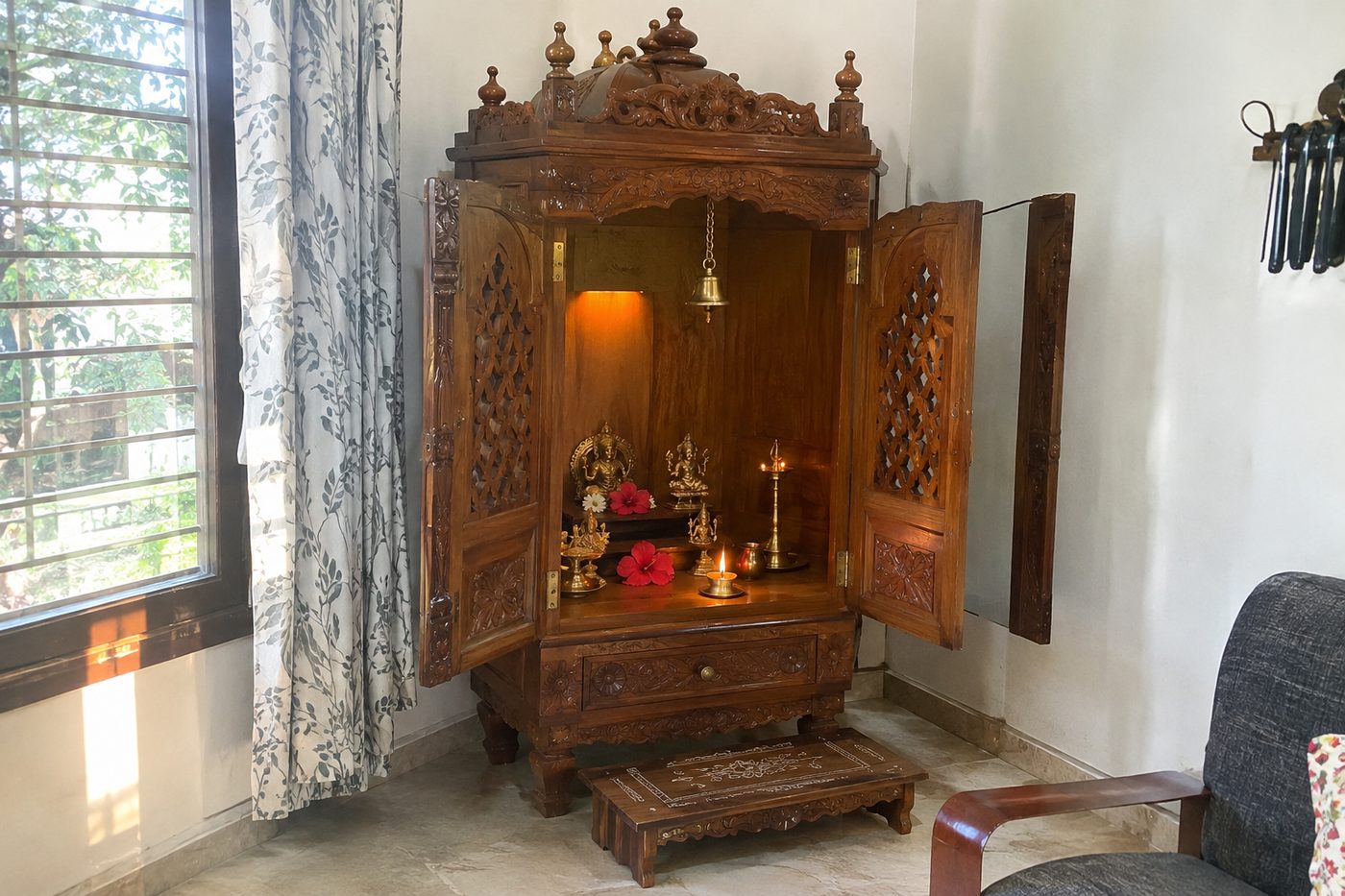
Vastu places the pooja room or mandir in the north-east of the home, with the idols facing west or east so that the person praying faces east or north. The mandir should not share a wall with a toilet, should not sit under a staircase or in a bedroom if avoidable, and should be raised off the floor. This guide covers placement, direction, size, materials and how to plan a mandir into a modern apartment.
What are Vastu and feng shui?
Vastu Shastra is India’s traditional system of architecture, set out in Sanskrit texts such as the Mayamata and Manasara. It plans buildings and rooms by direction, the five elements and the site. Feng shui is its Chinese counterpart: a tradition of arranging buildings, rooms and furniture to sit in harmony with their surroundings and the flow of qi.
The two grew up separately but run in parallel, and often arrive at similar practical rules, such as a solid wall behind the bed or a clear, welcoming entrance. We present both as cultural traditions, and say where advice comes from modern practitioners rather than the classical texts.
The short version:
- North-east is ideal; east or north are good alternatives.
- Face east or north while praying; idols face west or south accordingly.
- Raise the mandir: idols at about chest height when seated or standing.
- Avoid sharing a wall with a toilet, and avoid spaces under stairs.
- Solid wood mandirs in teak or sheesham are the traditional choice.
Placement
| Location | Vastu view |
|---|---|
| North-east corner of the house | Ideal |
| East or north of the house | Good |
| Living room corner | Good, if north-east, east or north |
| Kitchen | Acceptable in the north-east of the kitchen if space is short |
| Bedroom | Avoided; if unavoidable, north-east with doors that close |
| Under a staircase or next to a toilet | Avoided |
Apartments
Many apartments have no separate pooja room. A wall-mounted or freestanding pooja unit with doors works well in the north-east of the living room. Plan a socket for a lamp, a ventilated top for diya smoke, and a drawer for incense and matches.
For the main entrance, see Vastu for the main door; for kitchens, kitchen direction as per Vastu.
Send us the wall size and photos. We make solid wood mandirs and pooja units to measure. We respond within 24 hours.
Design and materials
- Material: solid teak or sheesham (see teak vs sheesham); marble for the base where oil and water are used.
- Height: idol platform at chest height for standing worship, or lower for seated worship.
- Doors: two-leaf doors, often with a jaali panel.
- Ventilation: an opening or jaali at the top for smoke.
- Lighting: warm, soft light; a dedicated circuit for lamps.
Frequently asked questions
Which direction should a pooja room face?
The person praying should face east or north, so the idols face west or south. The room itself is best in the north-east.
Can the mandir be in the kitchen?
If space is short, in the north-east corner of the kitchen, away from the stove.
Can a pooja room be under the stairs?
Vastu advises against it.
Which wood is best for a mandir?
Teak or sheesham are traditional; both are durable and take carving well.
How high should the idols be placed?
Around chest height for standing worship, so you look slightly up at them.
The bottom line
North-east, facing east or north, raised, ventilated and away from toilets. See our pooja units and mandirs and the wooden mandir.
We design and make mandirs in solid wood to fit. We respond within 24 hours.
Keep reading in Vastu & Feng Shui
- Kitchen Direction as per VastuKitchen direction as per Vastu: south-east or north-west, cooking facing east, sink and stove placement, and how to…
- Feng Shui Bedroom: Bed Placement, Wood and LayoutFeng shui bedroom rules explained: the commanding position, headboards, mirrors, balance and materials, and how they compare with…
- Vastu for the Main Door: Direction, Wood and DesignVastu for the main door: the best directions and positions, what to do with a south-facing plot, size,…
- Bed Direction as per Vastu: Which Way to Sleep, and Where to Place the BedWhich way should your head point when you sleep? A furniture maker’s guide to the bed direction Vastu…
Shweta KhemkaWrites about interior design, architecture and Vastu for Kathwala, which makes solid wood furniture, doors, panelling and millwork to order for architects and homeowners. Questions? Get in touch.