
Teak Wood vs Sheesham Wood: Price, Strength and Looks
Teak vs sheesham: density, durability, stability, looks and price, and which to choose for doors, outdoor and indoor furniture.

In this article
Teak is the better choice for anything that faces water or weather and for a calm, golden look; sheesham (Indian rosewood) is harder, darker and more dramatic, and usually costs less. Both make excellent furniture. The difference is in stability, durability outdoors, appearance and price, and those decide which belongs where.
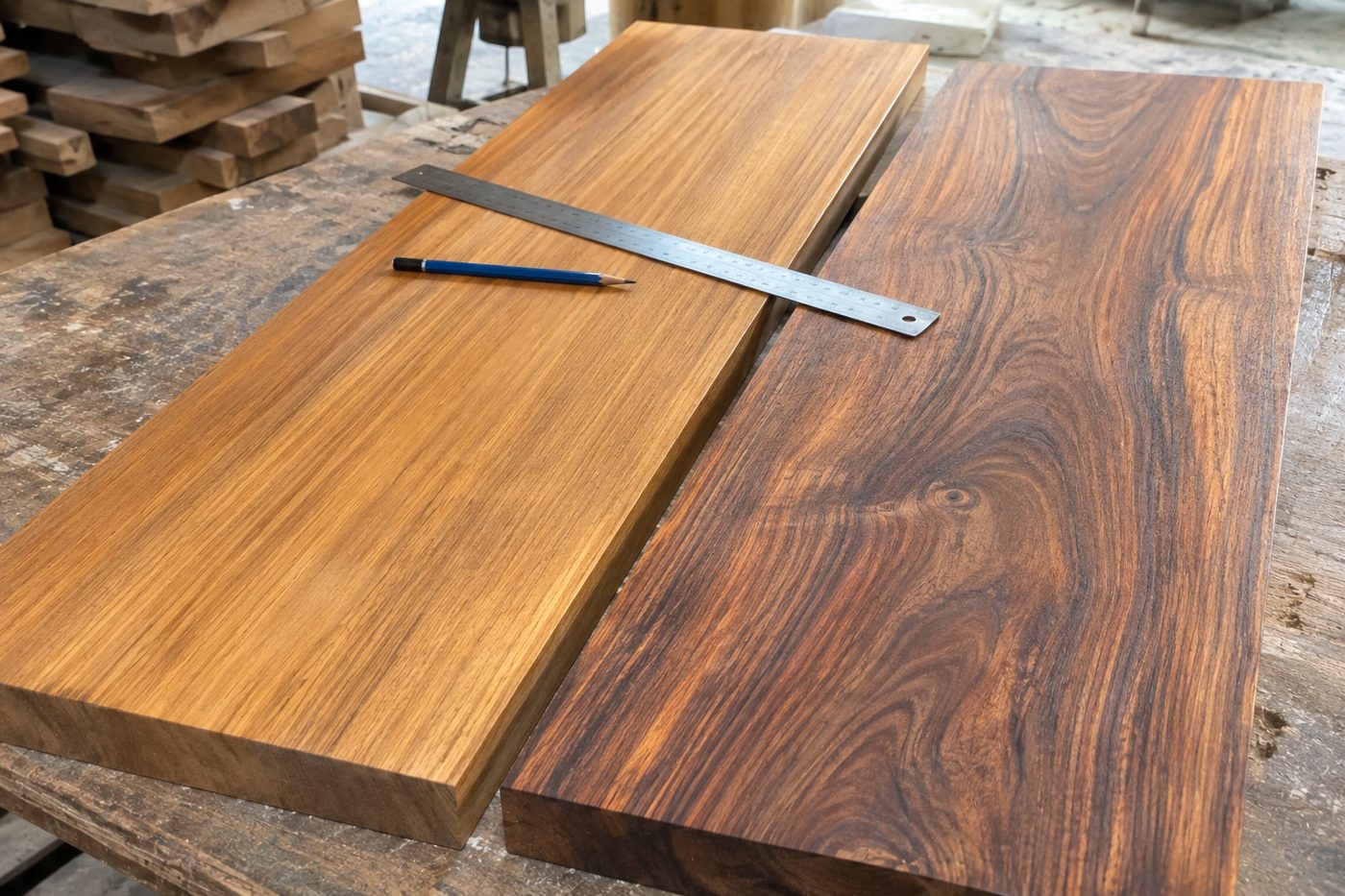
The short version:
- Teak: stable, oily, very durable outdoors; golden brown; higher price.
- Sheesham: denser and harder, strongly figured, darker; excellent indoors; less stable in changing humidity.
- For main doors, outdoor and bathroom furniture choose teak; for dining tables, chests and statement pieces, sheesham is a good alternative.
Teak vs sheesham, side by side
| Teak | Sheesham | |
|---|---|---|
| Botanical name | Tectona grandis | Dalbergia sissoo |
| Density (dried) | About 650 kg/m³ | About 750–800 kg/m³ |
| Colour | Golden to medium brown, darkening with age | Golden to deep brown with dark streaks |
| Grain | Straight, even | Interlocked, strongly figured |
| Durability outdoors | Very durable (EN 350 class 1) | Durable indoors; less suited to weather |
| Stability | Excellent; moves little | Moderate; needs good drying |
| Workability | Easy, but blunts tools (silica) | Harder; finishes to a high polish |
| Price | Higher | Lower to similar, depending on grade |
Where teak earns its price
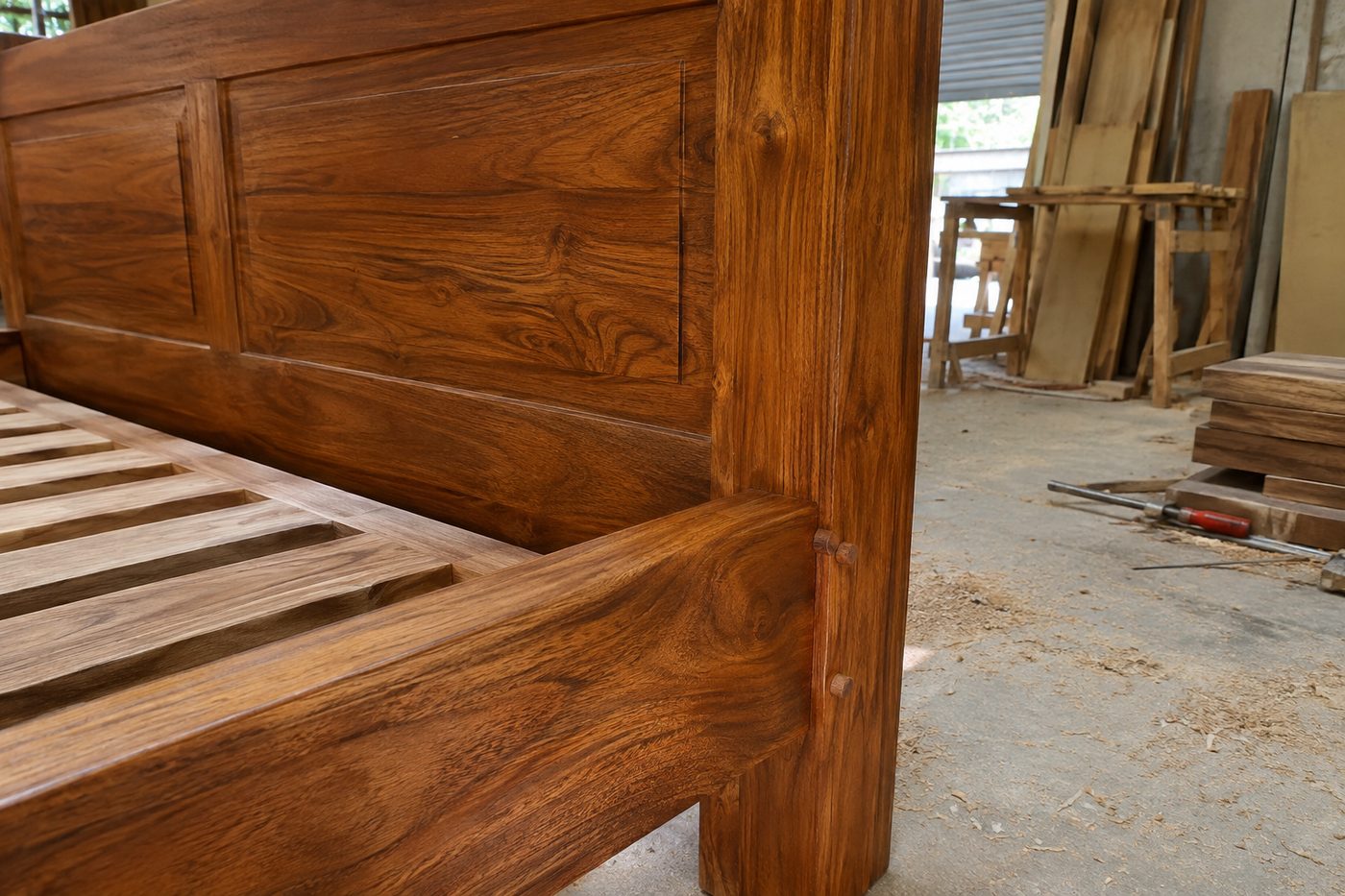
Teak’s natural oils and silica make it resist rot, termites and moisture without treatment, and it barely moves between seasons. That is why it is the default for main doors, outdoor furniture, bathroom vanities and boat decks. Plantation teak is widely available; Burma teak is denser and more figured, but cannot be exported to the US, UK or EU.
Where sheesham shines
Sheesham’s density and figure make striking dining tables, bookshelves, dressing tables and beds. It takes a high polish and wears well. Because it moves more with humidity, it needs properly kiln-dried stock and joinery that allows movement; see types of wood joints.
Send us the design. We will suggest the timber and quote in both, and we respond within 24 hours.
Sustainability and legality
Most teak sold today is plantation-grown, in India, Africa, Latin America and Southeast Asia, and plantation teak has a far smaller footprint than old-growth timber. Sheesham is also widely grown in plantations and along roads and canals in north India. For export, two points matter: Myanmar teak is sanctioned in the US, UK and EU, and several Dalbergia species have CITES histories, so confirm the exact species and its current status for your market. EU buyers will also need harvest geolocation under the EUDR.
Good alternatives
If neither suits the budget or the market: iroko and sapele for a teak-like look outdoors, American walnut for a dark figured wood, white oak for a lighter one, and rubberwood for value furniture. Browse the full wood species guide and our hardwood timber stock.
Frequently asked questions
Which is stronger, teak or sheesham?
Sheesham is denser and harder. Teak is more stable and more durable outdoors. For furniture, both are strong enough; the difference is in movement and weather resistance.
Is sheesham good for a main door?
It can be used indoors or under a deep porch, but teak is the better choice for a door exposed to sun and rain.
Which is more expensive?
Teak is usually more expensive, especially in high grades and wide boards.
Does sheesham crack?
Poorly dried sheesham can check and split. Buy kiln-dried timber at the right moisture content and use joinery that allows movement.
Is teak furniture worth it?
For outdoor, bathroom and heirloom pieces, yes: it lasts decades with little maintenance.
The bottom line
Choose teak for water, weather and stability; sheesham for indoor furniture with character at a lower price. See our teak, rosewood and other species, and our furniture.
We supply timber and make furniture in both. We respond within 24 hours.
Keep reading in Wood & Materials
- Types of Wood Grain: Grain, Texture and Figure ExplainedWood grain explained: growth rings, pores and rays, flat-sawn vs quartersawn, straight, spiral and interlocked grain, texture, figure…
- Indian Rosewood: The Price of a Tree That Takes a Century to GrowWhy Indian rosewood (Dalbergia latifolia) is so expensive: slow growth, scarcity, regulation and a wood that is hard…
- EU Green Claims Rules: What “Eco-Friendly” Wood and Furniture Can Still SayEmpCo, the EU’s green claims rules, has applied since 27 September 2026. What wood and furniture listings can…
- WPC Board: Price, Uses, and WPC vs PlywoodWhat WPC board is, where it beats plywood and where it doesn’t, typical prices, and how to work…
Sanjeev KhemkaWrites about timber, woodworking and trade for Kathwala, which supplies hardwood timber, plywood and panels and makes solid wood furniture and millwork to order. Questions? Get in touch.
Sources
- The Wood Database: teak
- PROTA (Pl@ntUse): Dalbergia sissoo (density 750–800 kg/m³)
- American Hardwood Export Council: Technical Matters #4, durability (EN 350 classes)