
Best Wood for Cutting Boards (and Which to Avoid)
The best and worst woods for cutting boards, end grain vs edge grain, what the research says about hygiene, and how to care for a board.

In this article
The best woods for cutting boards are hard, closed-grained and food-safe: hard maple, walnut, cherry, teak and beech. They are hard enough to resist deep scoring but soft enough not to blunt knives, and their tight pores keep moisture out. Open-grained woods like red oak, very soft woods like pine, and oily, toxic or very hard exotics are best avoided. Construction (end grain or edge grain) and finish matter as much as the species.
The short version:
- Best: hard maple, walnut, cherry, teak, beech.
- Avoid: red oak (open pores), softwoods, and very hard exotics that blunt knives.
- End grain is kindest to knives and self-heals; edge grain is cheaper, lighter and more stable.
- Finish with food-grade mineral oil or a board wax; never with varnish or PU.
Best and worst woods
| Wood | Verdict | Why |
|---|---|---|
| Hard maple | Best all-rounder | Hard, tight-grained, pale; the classic butcher block |
| Walnut | Excellent | Slightly softer, kind to knives, dark and handsome |
| Cherry | Excellent | Fine grain, darkens beautifully |
| Teak | Very good | Natural oils resist water; the silica dulls knives a little faster |
| Beech (steamed) | Very good | Tight grain; common in European boards |
| Rubberwood | Good value | Food-safe and stable when finger-jointed |
| Red oak | Avoid | Open pores trap liquid and food |
| Pine and other softwoods | Avoid | Too soft; scores deeply |
| Very hard exotics | Avoid | Blunt knives; some cause skin reactions |
End grain or edge grain?
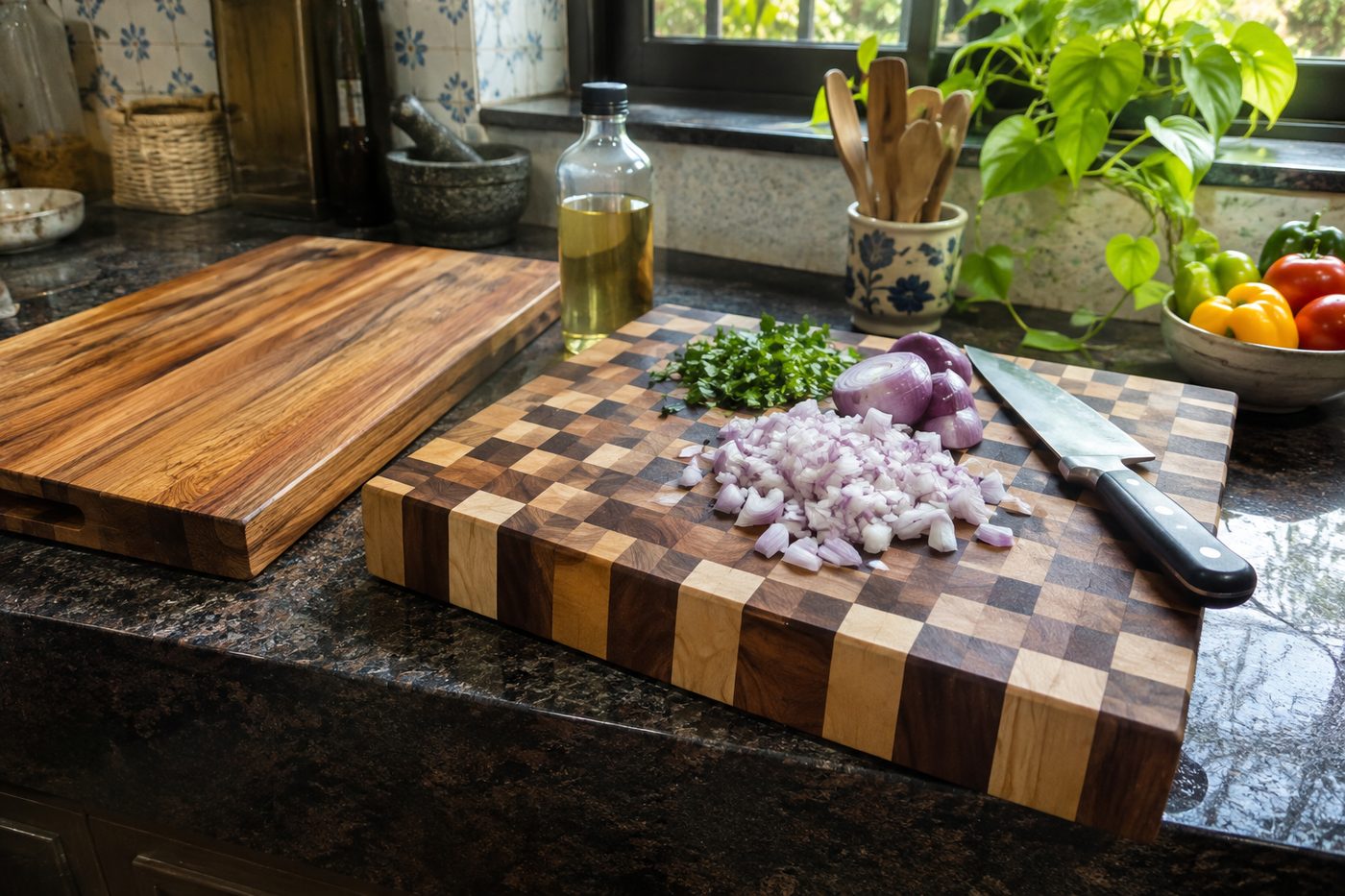
End-grain boards are glued up from blocks with the fibres standing on end, so the knife slips between them. They show fewer cuts, are kindest to knives and look striking, but they are heavier, cost more and need regular oiling to avoid cracking.
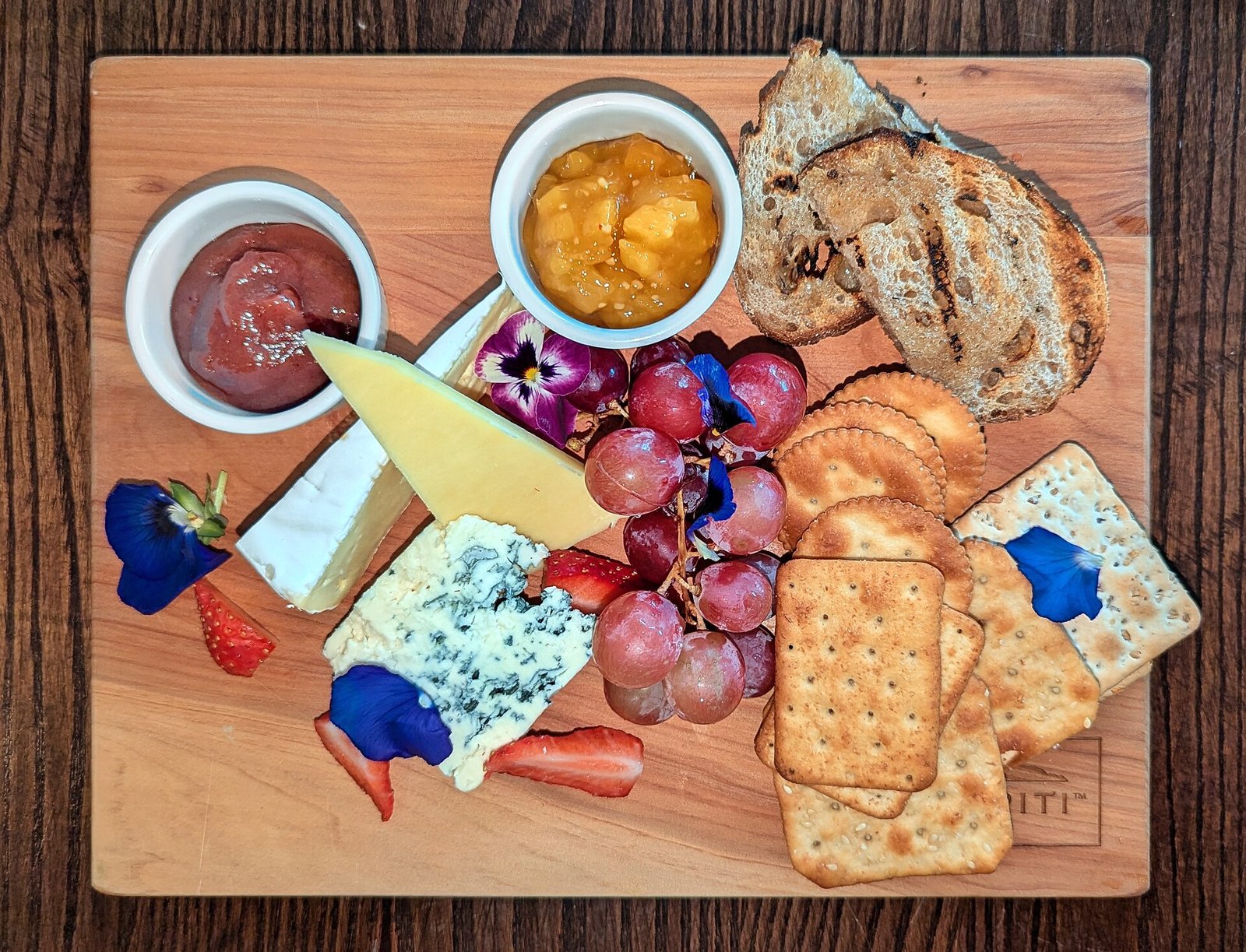
Edge-grain boards are long strips glued side by side. They are lighter, more stable and cheaper, and the right choice for serving boards and most home use. Finger-jointed rubberwood and teak boards are typical.
Is wood hygienic?
Yes. Research led by Dean Cliver at UC Davis in the early 1990s found that bacteria applied to wooden boards were harder to recover than from plastic ones, because they were drawn into the wood and died. A 2023 study found that all the woods tested had some antibacterial effect. Plastic boards, meanwhile, have been found to shed microplastics into food as they are scored. Wash wooden boards with hot soapy water, dry them standing up, and never put them in a dishwasher.
We make end-grain and edge-grain boards in teak, walnut, maple and more, for retail and hospitality. We respond within 24 hours.
Care and finishing
- Oil with food-grade mineral oil until it stops soaking in; repeat monthly.
- Wax with a beeswax and mineral oil blend for a water-resistant top layer.
- Avoid vegetable oils that can go rancid, and film finishes like varnish or PU.
- Resurface deep cuts by sanding; end-grain boards can be flattened many times.
More on finishes in wood polish types, and on serving boards in charcuterie boards.
Frequently asked questions
What is the best wood for a cutting board?
Hard maple, followed closely by walnut, cherry, teak and beech.
Is teak good for cutting boards?
Yes. It resists moisture and lasts well; its silica content dulls knives slightly faster than maple.
Is oak good for cutting boards?
White oak is acceptable; red oak is not, because its open pores trap liquid.
Are wooden boards more hygienic than plastic?
Studies have found wood performs at least as well as plastic when cleaned properly, and wood does not shed microplastics.
How often should I oil a cutting board?
Monthly, or whenever it looks dry and pale.
The bottom line
Choose a hard, closed-grained food-safe wood, end grain for heavy chopping and edge grain for everyday and serving, and keep it oiled. See our chopping and serving boards, trays and serveware and butcher blocks.
We make boards, trays and butcher blocks to your specification. We respond within 24 hours.
Keep reading in Woodworking
- Furniture, Design and Woodworking Exhibitions 2026–27: Global and India CalendarEvery major furniture, interiors, woodworking machinery and timber trade fair from November 2026 to November 2027, in India…
- Wood Polish Types: Melamine vs PU vs Duco vs OilMelamine, PU, duco and oil finishes compared: durability, look, cost and where each belongs, plus what is new…
- Chest of Drawers Buying Guide: Sizes, Woods and Joinery That LastsHow to choose or specify a chest of drawers: standard sizes, the best woods, drawer joinery and runners,…
- Charcuterie Boards: Best Woods, Sizes and How to Care for ThemHow to choose a charcuterie board: the best woods, sizes by guest count, shapes, food-safe finishes and care,…
Sanjeev KhemkaWrites about timber, woodworking and trade for Kathwala, which supplies hardwood timber, plywood and panels and makes solid wood furniture and millwork to order. Questions? Get in touch.
Sources
- Discover: wood vs plastic cutting boards (summarising Cliver et al. and later studies)
- The Wood Database: hard maple