
Chest of Drawers Buying Guide: Sizes, Woods and Joinery That Lasts
How to choose or specify a chest of drawers: standard sizes, the best woods, drawer joinery and runners, and QC checks for buyers and retailers.

In this article
A chest of drawers that lasts is made from solid wood or a stable veneered core, has dovetailed or properly dowelled drawer boxes, runs on good runners, and is sized for the room: typically 75–120 cm wide, 45–50 cm deep and 75–130 cm high. This guide covers sizes, woods, joinery and the checks a buyer or retailer should make before ordering.
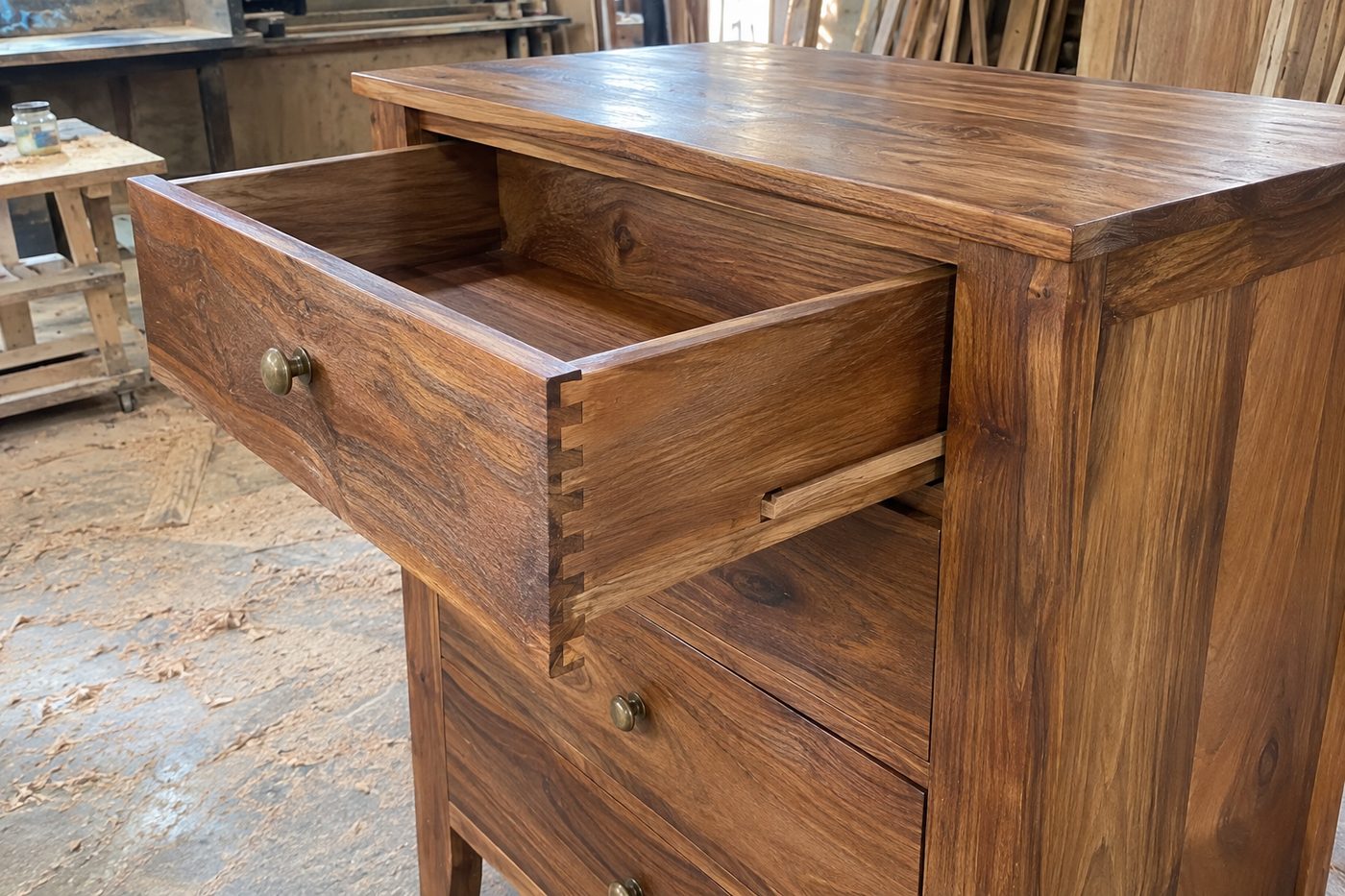
The short version:
- Standard depth is 45–50 cm; width 75–120 cm; height 75 cm (low) to 130 cm (tall).
- Solid oak, walnut, teak or rubberwood carcasses; drawer bottoms in plywood.
- Dovetailed drawers, full-extension runners and an anti-tip fixing.
Sizes
| Type | Width | Height | Depth |
|---|---|---|---|
| Low (3 drawers) | 75–90 cm | 75–85 cm | 45–50 cm |
| Standard (4–5 drawers) | 80–100 cm | 100–120 cm | 45–50 cm |
| Wide (2 x 3 or 2 x 4) | 120–160 cm | 75–90 cm | 45–50 cm |
| Tallboy | 60–80 cm | 120–150 cm | 40–50 cm |
Leave at least 90 cm in front of the chest to open drawers and stand. Drawer heights usually increase towards the bottom: 12–15 cm at the top, 20–25 cm at the bottom.
Construction that lasts
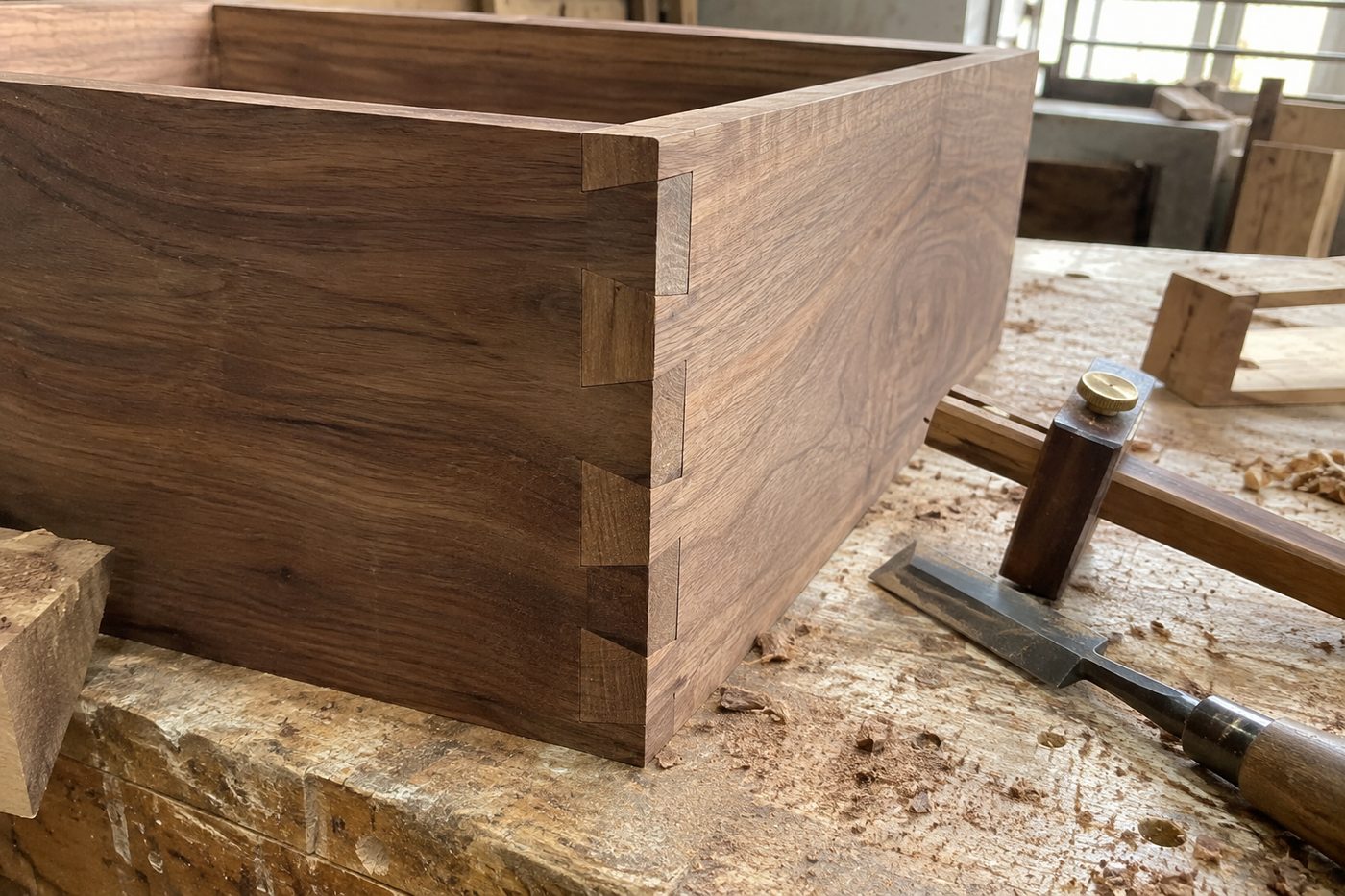
- Drawer joints: dovetails front and back, or long dowels. Never staples. See types of wood joints.
- Drawer bottoms: 6–9 mm plywood in a groove, not stapled hardboard.
- Runners: wooden runners waxed, or full-extension metal runners rated for the load.
- Back panel: set in a rebate and fixed, so the chest stays square.
- Top: solid wood fixed with buttons so it can move.
We make solid wood chests and case goods to your drawings and specification. We respond within 24 hours.
Woods
For solid wood, white oak and walnut for premium ranges, teak and sheesham for traditional ones, and rubberwood or beech for value. Veneered panels on a stable core work for wide sides and tops. Finishes are covered in wood polish types.
Buyer and QC checks
- Pull each drawer fully out and check the corners and bottom.
- Load a drawer and check it still runs smoothly.
- Rack the carcass diagonally; it should not move.
- Check for an anti-tip kit; many markets require one for tall chests.
- Measure moisture content for the destination market, usually 8–10%.
For the US market, chests of drawers are not on the Section 232 list; see US tariffs on Indian wood products. For the UK, see importing from India to the UK, EU and UAE.
Frequently asked questions
What is the standard size of a chest of drawers?
About 80–100 cm wide, 45–50 cm deep and 100–120 cm high for a standard 4–5 drawer chest.
What should the drawer joints be?
Dovetails or long, well-glued dowels. Avoid staples and glue-only joints.
Is solid wood better than veneer for a chest?
Solid wood can be repaired and refinished; a good veneer on a stable core is flatter on wide panels. Both are good if well made.
Do I need to fix a chest of drawers to the wall?
Yes, for tall chests, especially in homes with children. Use the anti-tip kit.
How deep should drawers be?
Internal depth usually 38–45 cm, leaving room for the back panel and runners.
The bottom line
Size it for the room, build drawers with proper joints and runners, and check a loaded sample. See our chests of drawers, solid wood chest, dressing tables and bedside tables.
We make chests, dressers and nightstands to your specification for India and export. We respond within 24 hours.
Keep reading in Woodworking
- Furniture, Design and Woodworking Exhibitions 2026–27: Global and India CalendarEvery major furniture, interiors, woodworking machinery and timber trade fair from November 2026 to November 2027, in India…
- Wood Polish Types: Melamine vs PU vs Duco vs OilMelamine, PU, duco and oil finishes compared: durability, look, cost and where each belongs, plus what is new…
- Charcuterie Boards: Best Woods, Sizes and How to Care for ThemHow to choose a charcuterie board: the best woods, sizes by guest count, shapes, food-safe finishes and care,…
- Best Wood for Cutting Boards (and Which to Avoid)The best and worst woods for cutting boards, end grain vs edge grain, what the research says about…
Sanjeev KhemkaWrites about timber, woodworking and trade for Kathwala, which supplies hardwood timber, plywood and panels and makes solid wood furniture and millwork to order. Questions? Get in touch.