
Charcuterie Boards: Best Woods, Sizes and How to Care for Them
How to choose a charcuterie board: the best woods, sizes by guest count, shapes, food-safe finishes and care, plus what retailers should specify.

A good charcuterie board is made from a hard, closed-grained, food-safe wood such as walnut, maple, cherry, teak or acacia, finished with food-grade oil, and sized for the number of guests: about 30 x 20 cm for two people, 45 x 30 cm for four to six, and 60–90 cm long for a party. This guide covers woods, sizes, shapes and care, and what retailers and hotels should specify when they source boards.
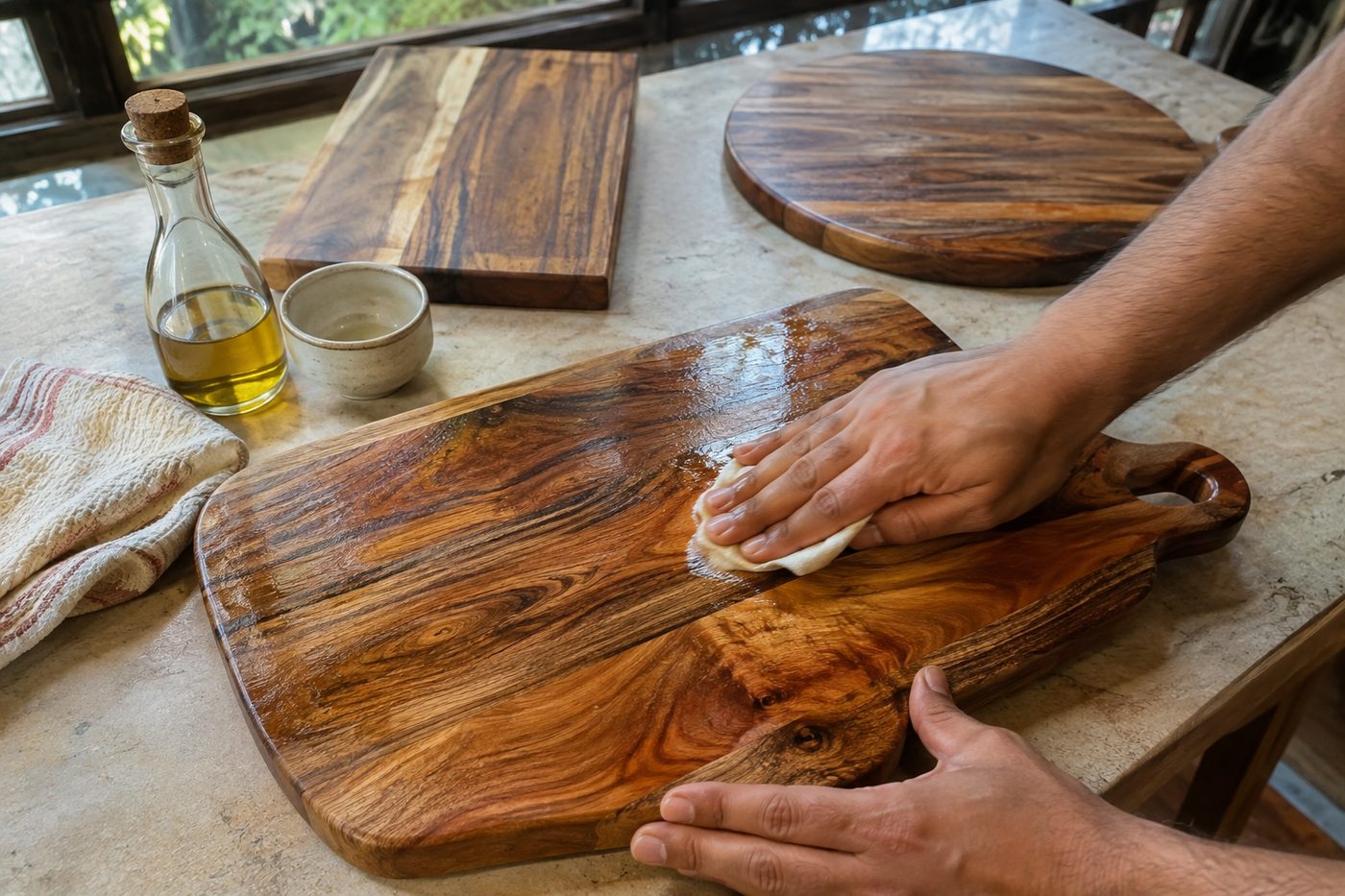
The short version:
Sizes by number of guests
| Guests | Board size | Shape |
|---|---|---|
| 2 | 30 x 20 cm | Rectangle or round 30 cm |
| 4–6 | 45 x 30 cm | Rectangle or paddle |
| 8–12 | 60 x 35 cm | Long rectangle or live edge |
| Party or buffet | 90–120 cm long | Plank, or several boards together |
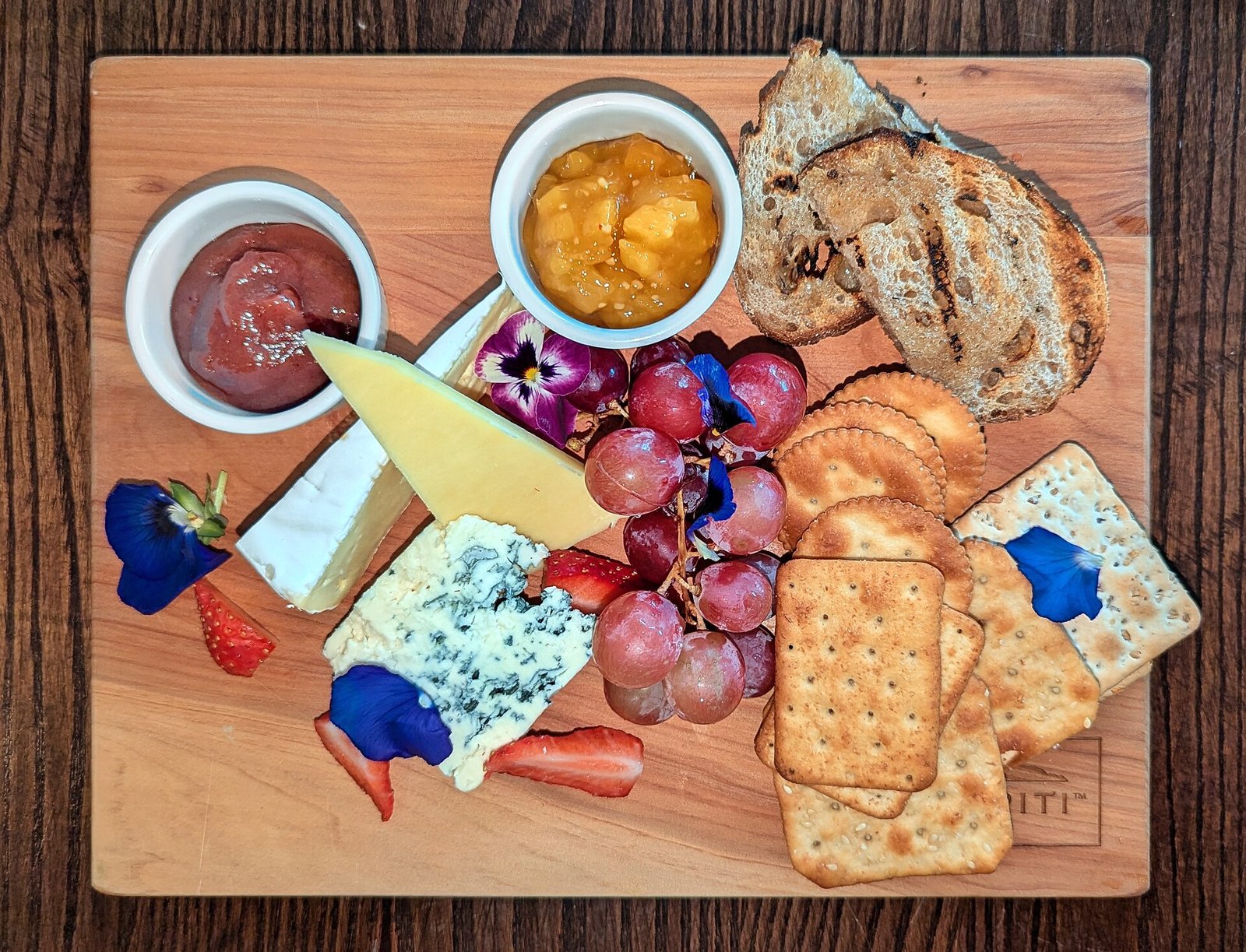
Shapes and details
Paddle boards with a handle are easy to carry; long planks suit buffets; live-edge slabs make a centrepiece. A juice groove helps with fruit and cured meat but takes surface area. Small feet or a bevelled underside make the board easy to lift.
We make boards in teak, walnut and maple, and sell them through our chopping and serving boards range.
Which wood?
The same rules as for cutting boards apply: hard enough not to score deeply, closed grain, food-safe. Walnut gives the dramatic dark look most people picture; maple a clean, light base that shows food colours; teak resists moisture. Our guide to the best wood for cutting boards goes into each species.
We make charcuterie and serving boards to your sizes, woods and branding. We respond within 24 hours.
Care
- Wipe and wash with warm soapy water soon after use.
- Dry upright so both faces dry evenly.
- Oil with food-grade mineral oil monthly, or when the board looks dry.
- Never soak it or put it in a dishwasher.
For retailers: specify the species, thickness tolerance, moisture content (8–10%), finish and food-contact declaration for your market. See also trays and platters, home décor and butcher blocks.
Frequently asked questions
What wood is best for a charcuterie board?
Walnut, maple, cherry, teak or acacia: hard, closed-grained and food-safe.
What size charcuterie board do I need?
About 30 x 20 cm for two, 45 x 30 cm for four to six, and 60 cm or longer for a party.
Can I cut on a charcuterie board?
Light cutting, yes. For heavy chopping use a dedicated cutting board.
How do I clean a charcuterie board?
Hand wash with warm soapy water, dry upright, and oil regularly.
What finish is food safe?
Food-grade mineral oil, or a wax made from beeswax and mineral oil.
The bottom line
Pick a hard, closed-grained wood, size the board to the guest count, finish with food-safe oil, and wash by hand. Browse our boards and kitchen and dining range.
Made to order for retailers, hotels and gifting. We respond within 24 hours.
Keep reading in Woodworking
- Furniture, Design and Woodworking Exhibitions 2026–27: Global and India CalendarEvery major furniture, interiors, woodworking machinery and timber trade fair from November 2026 to November 2027, in India…
- Wood Polish Types: Melamine vs PU vs Duco vs OilMelamine, PU, duco and oil finishes compared: durability, look, cost and where each belongs, plus what is new…
- Chest of Drawers Buying Guide: Sizes, Woods and Joinery That LastsHow to choose or specify a chest of drawers: standard sizes, the best woods, drawer joinery and runners,…
- Best Wood for Cutting Boards (and Which to Avoid)The best and worst woods for cutting boards, end grain vs edge grain, what the research says about…
Sanjeev KhemkaWrites about timber, woodworking and trade for Kathwala, which supplies hardwood timber, plywood and panels and makes solid wood furniture and millwork to order. Questions? Get in touch.