
WPC Board: Price, Uses, and WPC vs Plywood
What WPC board is, where it beats plywood and where it doesn’t, typical prices, and how to work with it.

In this article
WPC board (wood plastic composite) is a sheet made from wood fibre or flour bound in PVC or another plastic. It does not rot, swell or attract termites, which makes it the board of choice for bathroom vanities, under-sink cabinets and anything near water. It is heavier and less stiff than plywood and costs about the same as mid-grade plywood. This guide covers what WPC is, where it beats plywood, where it doesn’t, and what it costs.
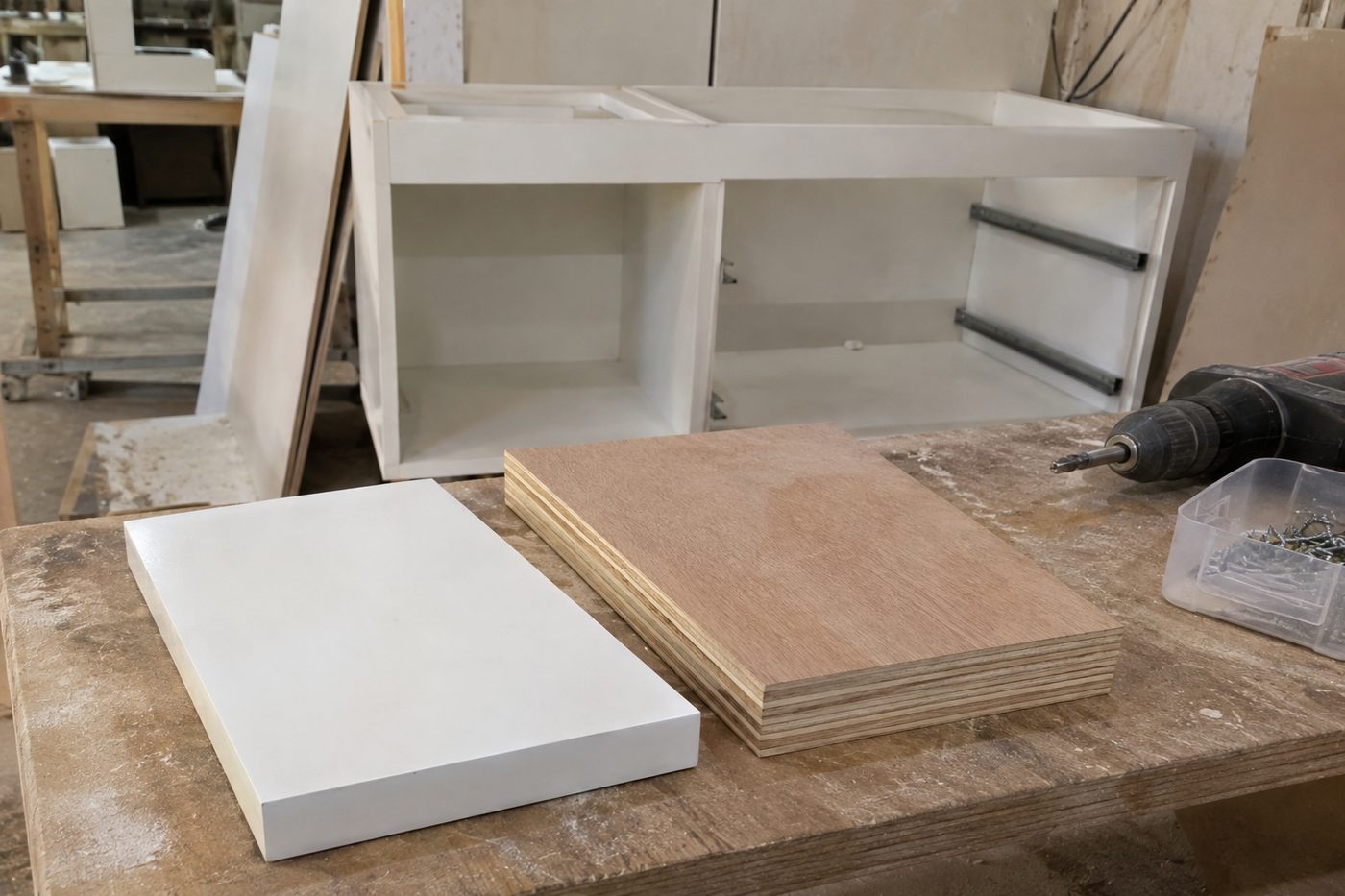
The short version:
What WPC board is
Most WPC boards sold in India for interiors are foamed PVC with wood flour, made in thicknesses from about 5 to 18 mm. Because the binder is plastic, the board is unaffected by water: it will not swell like MDF or delaminate like low-grade plywood. PVC foam board is similar but without the wood content; it is lighter and softer.
| WPC board | BWP plywood | HDHMR | |
|---|---|---|---|
| Water | Unaffected | Survives repeated wetting | Resists splashes and steam |
| Termites and rot | Immune | Treated cores resist | Resistant |
| Strength over long spans | Low; sags | High | Medium |
| Screw holding | Fair; use self-tapping screws, avoid edges | Best | Good on the face |
| Weight | Heavy for its stiffness | Light | Heavy |
| Finish | Paint, laminate, PVC edge band | Laminate, veneer | Laminate, paint |
| Fire | Plastic; check the fire rating | Wood | Wood fibre |
Where to use it, and where not
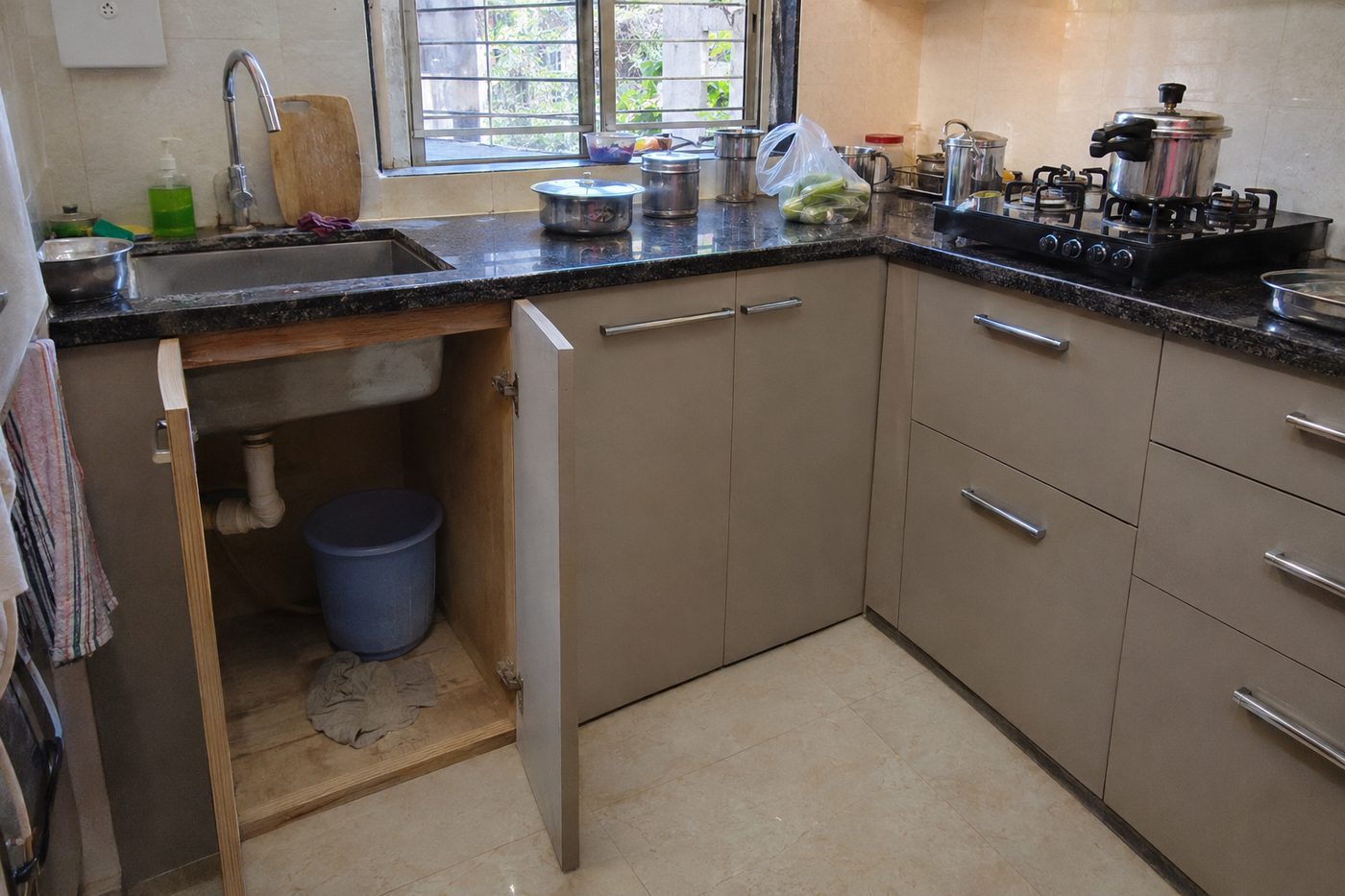
Good uses
- Bathroom vanities and the bottom panel of kitchen sink cabinets.
- Laundry and utility cabinets, balcony storage.
- Shutters and skirtings in ground-floor rooms that flood.
Poor uses
- Long shelves, beds and anything that carries weight.
- Furniture that will be dismantled and reassembled.
- Outdoor use in full sun, unless the product is rated for UV.
WPC board price
Branded WPC boards are generally priced in the same band as mid-grade plywood of the same thickness (see our plywood price guide), but the spread is wide: density, thickness and surface finish all move the price, and an 18 mm board costs well over twice a 9 mm one. Higher-density boards cost more and hold screws better. For a quote on WPC and PVC foam boards, send us the thickness and sheet count.
We supply WPC, plywood and laminates, cut to size. We respond within 24 hours.
Working with WPC
- Use the right screws. Self-tapping screws with coarse threads, pilot-drilled, at least 15 mm from any edge.
- Support shelves. Keep spans under about 600 mm, or add a centre support or a hardwood edge.
- Glue with the right adhesive. PVC solvent cement or a contact adhesive rated for PVC.
- Let it move. WPC expands with heat more than wood; leave small gaps in long runs.
For outdoor decking and cladding, solid timber or thermo-treated wood often performs better in full sun; see decking and cladding, thermo-modified timber and best wood for outdoor furniture.
Frequently asked questions
Is WPC better than plywood?
For wet areas, yes. For strength, long spans and screw holding, plywood is better.
Is WPC board waterproof?
The board itself is unaffected by water. Joints, edges and hardware still need detailing so water does not sit in them.
Does WPC attract termites?
No. Termites do not eat the plastic binder.
Can WPC be laminated?
Yes, with a suitable adhesive. It can also be painted directly.
How long does WPC last?
Indoors, as long as the furniture it is in. Outdoors, check the product’s UV rating; unprotected boards can fade and become brittle.
The bottom line
Use WPC where water is guaranteed and loads are light; use plywood everywhere else. Combining the two (a WPC base and plywood carcass in a kitchen sink unit, for example) often gives the best result. See WPC and PVC boards, plywood and MDF and HDHMR, and our plywood price guide.
Tell us the rooms and we will suggest the right board for each part. We respond within 24 hours.
Keep reading in Wood & Materials
- Types of Wood Grain: Grain, Texture and Figure ExplainedWood grain explained: growth rings, pores and rays, flat-sawn vs quartersawn, straight, spiral and interlocked grain, texture, figure…
- Indian Rosewood: The Price of a Tree That Takes a Century to GrowWhy Indian rosewood (Dalbergia latifolia) is so expensive: slow growth, scarcity, regulation and a wood that is hard…
- EU Green Claims Rules: What “Eco-Friendly” Wood and Furniture Can Still SayEmpCo, the EU’s green claims rules, has applied since 27 September 2026. What wood and furniture listings can…
- Teak Wood vs Sheesham Wood: Price, Strength and LooksTeak vs sheesham: density, durability, stability, looks and price, and which to choose for doors, outdoor and indoor…
Sanjeev KhemkaWrites about timber, woodworking and trade for Kathwala, which supplies hardwood timber, plywood and panels and makes solid wood furniture and millwork to order. Questions? Get in touch.
Sources
- Greenply: WPC sheet price in India and buying tips, 2 July 2026
- Bureau of Indian Standards (plywood IS 303 and IS 710)