
Types of Wood Joints: 15 Joints Furniture Makers Use, and Where
The fifteen wood joints furniture makers use, what each is good at, which machines cut them, and how to check joinery on a sample before you order.

In this article
Joinery decides how long a piece of furniture lasts more than the timber does. A teak chair with dowelled joints will come loose long before an oak chair with mortise and tenons. This guide covers the fifteen joints furniture makers actually use, what each is good at, which machines cut them in a modern factory, and how buyers can check joinery on a sample before they place an order.
The short version:
- Five joints do most of the work: mortise and tenon (frames), dovetail (drawers), finger joint (boxes and glued-up boards), dowel (panels and chairs) and tongue and groove (panelling, flooring and tops).
- For tables, chairs and beds, ask for mortise and tenon or long dowels, never screws alone.
- For flat-pack and export, good knock-down fittings beat glued joints that crack in transit.
- CNC and robotic cells now cut traditional joints at production speed, so the choice is about design and cost, not craft versus machine.
We make solid wood furniture and millwork for retailers, hotels and architects in India and abroad, and joinery is the first thing a buyer’s QC inspector looks at. This is the reference we give our own new team members.
Why joinery decides how long furniture lasts
Wood moves. A 500 mm wide board of oak can change width by several millimetres between a dry winter and a humid monsoon, while it barely changes in length. Good joints let that movement happen without splitting the wood or breaking the glue line. They also give the glue long-grain to long-grain contact, which is where glue is strongest; end grain glues poorly.
Three things decide a joint’s strength: the glue area, the mechanical interlock (whether it holds without glue), and how the load runs through it. A chair leg takes racking loads every time someone leans back, so it needs interlock and glue area. A wardrobe panel takes almost no load, so a dowel or biscuit is enough.
The 15 joints
| Joint | How it works | Strength | Where we use it | Usually cut on |
|---|---|---|---|---|
| Mortise and tenon | A tongue (tenon) on one part fits a slot (mortise) in the other | Very high | Chair and table legs, bed frames, door stiles | Mortiser, tenoner, CNC |
| Bridle | An open mortise and tenon | High | Table frames, exposed corners | Tenoner, saw |
| Half-lap | Each part cut to half thickness and overlapped | Medium | Cross-rails, frames | Saw, router |
| Dowel | Round wooden pins glued into matching holes | Medium to high | Panels, chairs, carcasses | Dowel borer, CNC |
| Pocket screw | A screw driven at an angle from a pocket | Low to medium | Face frames, hidden fixings | Pocket jig |
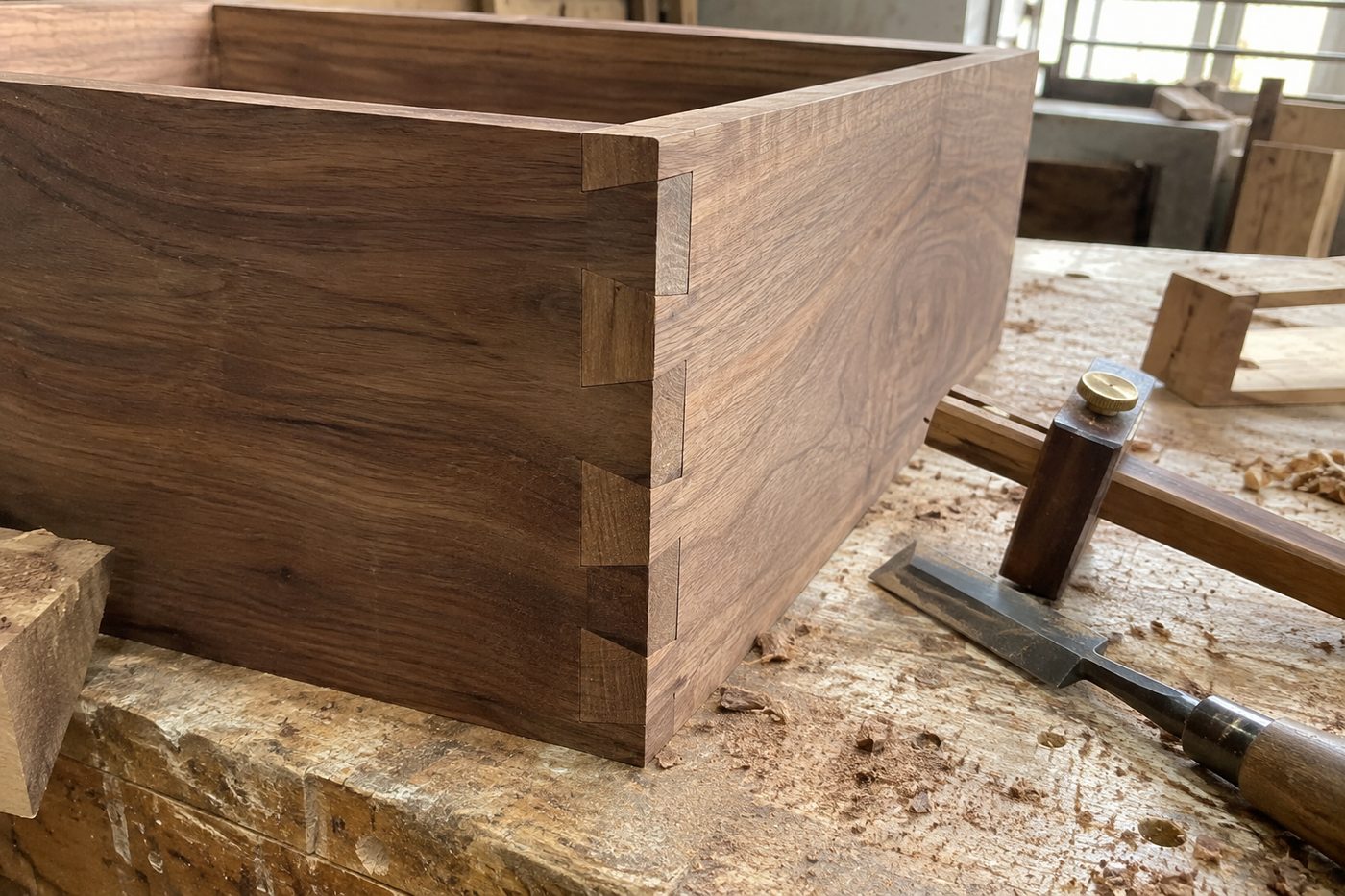
| Through dovetail | Flared tails and pins, visible on both faces | Very high in tension | Boxes, chests | Hand, dovetail jig, CNC |
| Half-blind dovetail | Visible only from the side | Very high in tension | Drawer fronts | Dovetail machine, CNC |
| Finger (box) joint | Square interlocking fingers | High | Boxes, chopping boards | Finger-joint cutter |
| Rabbet | A step cut along an edge | Low | Cabinet backs | Router, saw |
| Dado / housing | A groove across the grain holding a shelf | Medium | Bookshelves | Router, CNC |
| Tongue and groove | A tongue on one edge fits a groove on the next | Medium | Panelling, flooring | Moulder |
| Finger joint (lengthwise) | Long fingers join short boards end to end | High when glued well | Finger-jointed planks, engineered cores | Finger-jointing line |
| Biscuit | An oval wafer glued into slots | Low to medium | Edge alignment, panels | Biscuit joiner |
| Spline | A thin strip glued into matching grooves | Medium | Mitred corners, tabletops | Saw, router |
| Knock-down fittings | Cam locks, bolts and connectors | Depends on fitting | Flat-pack and export furniture | CNC drilling |
Mortise and tenon: the one to ask for
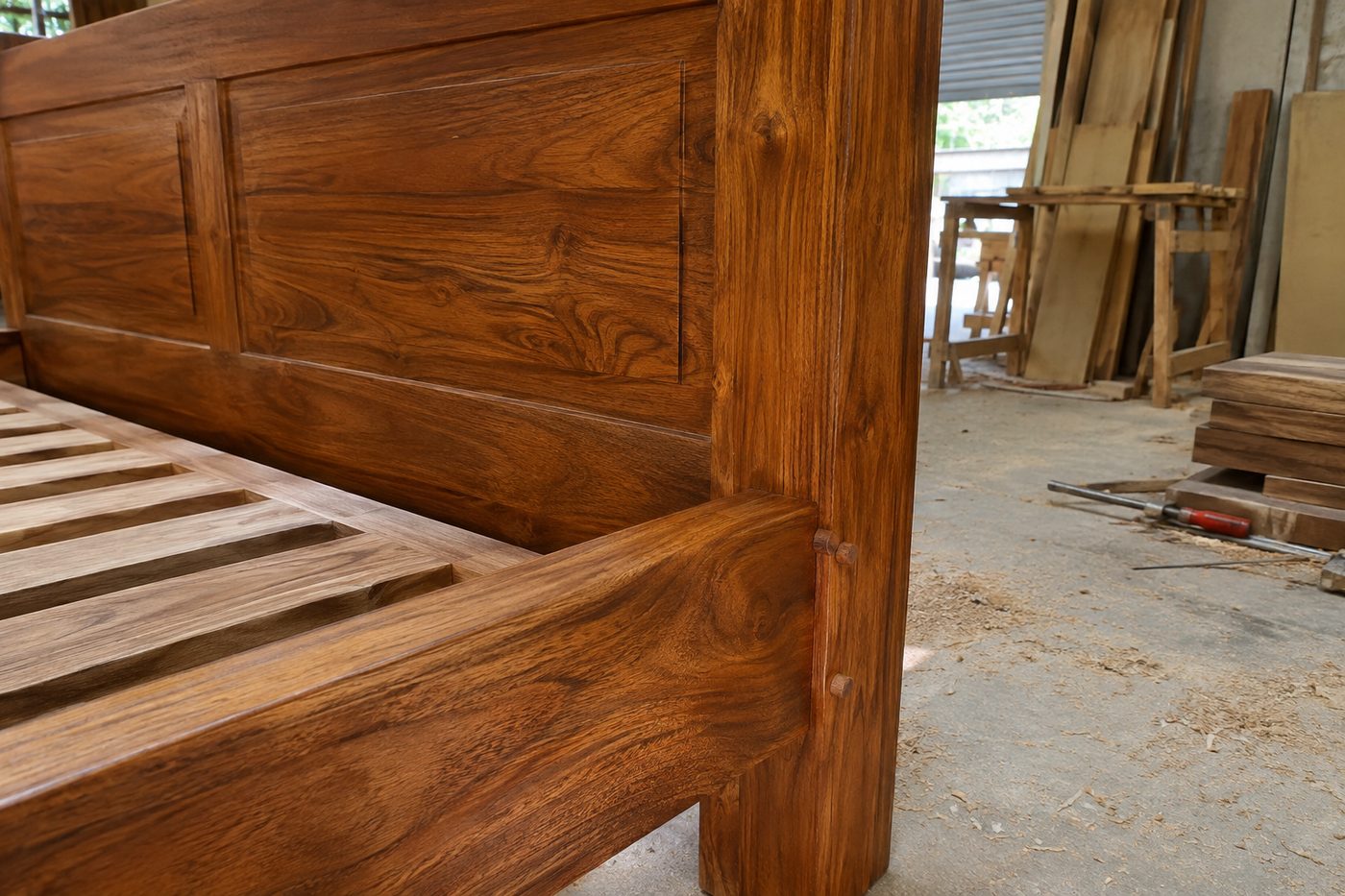
For anything that carries weight or racks, such as a bed, dining table or chair, the mortise and tenon is still the standard. A tenon about a third of the rail’s thickness and as long as the leg allows, glued and sometimes pegged, will outlast the timber around it.
A dowelled joint can match it in a lab, but only if the dowels are long, tight and well glued. On a cheap chair they are none of those things.
Send us your specification or a sample. We quote with the joinery spelled out, and we respond within 24 hours.
Which joint goes where
| Product | Main joints | Avoid |
|---|---|---|
| Dining tables | Mortise and tenon for legs and aprons; buttons or figure-8 fixings so the top can move | Screwing the top rigidly to the frame |
| Chairs and benches | Mortise and tenon or long dowels; corner blocks | Screws alone, short dowels |
| Beds | Mortise and tenon, or bed bolts for knock-down | Cam fittings on the main frame |
| Chests of drawers | Dovetailed drawers, dado runners, frame and panel sides | Stapled drawer boxes |
| Doors | Mortise and tenon or long dowels in the frame; floating panels | Gluing panels into the frame |
| Wall panels and flooring | Tongue and groove, shiplap | Face nailing on show faces |
| Butcher blocks and tops | Edge-glued boards, finger joints along the length | Biscuits as the only joint |
How to check joinery on a sample
- Rack it. Push a chair or table diagonally. Any movement in the joints now will be worse after shipping.
- Pull a drawer out completely. Look at the corners: dovetails or dowels are good; staples and glue alone are not.
- Look under the top. A solid wood top should be held with slotted buttons or clips that let it move.
- Check the glue lines. Thin, even and tight. Gaps filled with putty mean the joint was cut loose.
- Ask for the joinery drawing. A serious maker can tell you the tenon size and the glue they use.
Hand-cut, machine-cut, and what is new
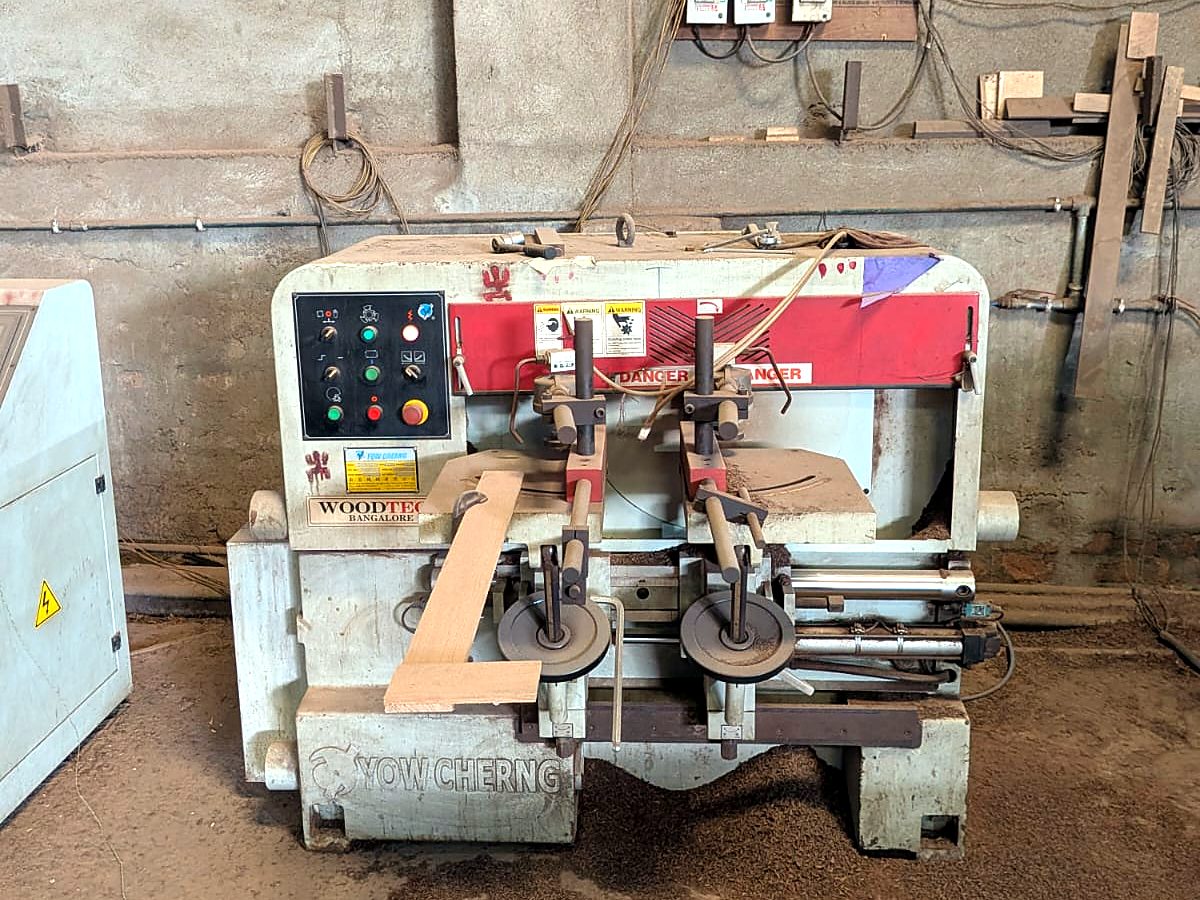
Almost every joint above was once cut by hand. Today most are cut by dedicated machines (tenoners, mortisers, dowel borers, finger-joint lines) or by a CNC router that can cut several joint types in one setup. The skill has moved from the chisel to the setup and the jig: a well-set machine cuts a tighter joint, a thousand times over, than most hands can.
Lot-size-one CNC
Panel and furniture machine makers are building lines that change job automatically between parts. At LIGNA 2025, HOMAG showed a CNC drilling machine aimed at lot-size-one work and a robotic panel saw, both designed so one-off parts cost little more than batch parts.
Robotic assembly
Research groups are teaching robots to assemble traditional joints. ETH Zurich researchers used robotic clamps working with an industrial arm to push 40 half-lap joints together into a 3.4 m timber frame, correcting misalignment as they went.
Scanning every board
At the University of Stuttgart’s IntCDC centre, a fabrication platform scans each piece of timber, uses machine learning to assess it, and adapts how robots cut and join it. The aim is to make lower-grade and reclaimed wood usable.
For furniture buyers this matters because it removes the old trade-off. Joints that used to mean “expensive hand work” (dovetailed drawers, pegged tenons) can now be specified at production cost. We cover the machines in more depth in future articles on the Woodworking hub.
Joints for flat-pack and export furniture
Glued furniture travels badly in a container: humidity changes over six weeks at sea, and a glued joint that cracks cannot be repaired by the customer. For export ranges we design the main frames with bed bolts or high-quality knock-down connectors, and keep glued mortise and tenons for sub-assemblies such as chair backs and drawer boxes. The US tariffs and UK, EU and UAE import guides cover the trade side.
The timber matters too: stable, well-dried hardwood at the right moisture content for the destination. See our wood species guide, solid wood boards and chest of drawers buying guide.
Frequently asked questions
What is the strongest wood joint?
For frames, a well-fitted, glued mortise and tenon. For pulling forces, such as a drawer front, the dovetail. Both depend on accurate cutting and good glue more than on the joint type alone.
Are dovetail joints better than screws?
For drawers, yes: a dovetail resists the pulling force of opening a drawer mechanically, while screws in end grain loosen over time.
Why do chairs come loose?
Racking loads from people leaning back, joints that were cut loose or glued with too little contact area, and wood shrinking in a dry season. Mortise and tenon joints with good glue coverage resist all three.
What joints are used in solid wood flooring?
Tongue and groove on the long edges and the ends, so boards lock together and can be secret-nailed or glued.
Is a finger-jointed board weaker than a solid board?
A well-made finger joint with a structural glue is as strong as the wood around it in most tests. It lets short, clear pieces become long, stable boards.
The bottom line
Specify the joint, not just the wood: mortise and tenon for frames, dovetails for drawers, tongue and groove for panels and floors, good fittings for flat-pack. Then check a sample by racking it and pulling out a drawer. Modern machines make the better joint affordable, so there is little reason to accept the cheaper one.
Browse our bedroom, kitchen and dining and living room furniture, or get in touch about a range.
We make solid wood furniture to your drawings and joinery specification, for India and export. We respond within 24 hours.
Keep reading in Woodworking
- Furniture, Design and Woodworking Exhibitions 2026–27: Global and India CalendarEvery major furniture, interiors, woodworking machinery and timber trade fair from November 2026 to November 2027, in India…
- Wood Polish Types: Melamine vs PU vs Duco vs OilMelamine, PU, duco and oil finishes compared: durability, look, cost and where each belongs, plus what is new…
- Chest of Drawers Buying Guide: Sizes, Woods and Joinery That LastsHow to choose or specify a chest of drawers: standard sizes, the best woods, drawer joinery and runners,…
- Charcuterie Boards: Best Woods, Sizes and How to Care for ThemHow to choose a charcuterie board: the best woods, sizes by guest count, shapes, food-safe finishes and care,…
Sanjeev KhemkaWrites about timber, woodworking and trade for Kathwala, which supplies hardwood timber, plywood and panels and makes solid wood furniture and millwork to order. Questions? Get in touch.