
India–UK Trade Deal and EUDR: Buying Wood Products from India for the UK, EU and UAE
Duty, origin rules and paperwork for buying wooden furniture, doors, flooring and panels from India for the UK, EU and UAE, including EUDR from December 2026.

In this article
Buying wood products from India has become cheaper for UK and Gulf buyers and is about to get easier for the EU. Since 15 July 2026, most Indian goods enter the UK duty-free under the India–UK trade agreement; the UAE has had the same under CEPA since 2022; and the EU–India agreement, concluded in January 2026, is expected to take effect in 2027. The bigger change for EU buyers is the deforestation regulation (EUDR), which applies to timber products from 30 December 2026. This guide covers duty, proof of origin and paperwork for each market, for procurement teams at construction, fit-out and furniture companies.
The short version (November 2026):
- UK: 0% on almost all Indian wood products under the India–UK CETA, in force since 15 July 2026, with a proof-of-origin statement.
- EU: normal EU duty for now (0% on most wooden furniture, more on some plywood and joinery). The EU–India FTA is expected in 2027. EUDR due diligence applies from 30 December 2026.
- UAE: 0% under the India–UAE CEPA on most lines, with a certificate of origin and at least 40% value added in India.
- Myanmar (Burma) teak cannot be sold into the UK or EU, and Russian and Belarusian birch is restricted.
Duty at a glance
| United Kingdom | European Union | UAE | |
|---|---|---|---|
| Agreement | India–UK CETA | EU–India FTA concluded; not yet in force | India–UAE CEPA |
| In force | 15 July 2026 | Expected 2027 | 1 May 2022 |
| Duty on wooden furniture (ch. 94) | 0% | Usually 0% already | 0% (5% without CEPA) |
| Duty on plywood, doors, flooring (ch. 44) | 0% | Normal EU duty until the FTA applies; up to about 10% on some plywood | 0% on most lines |
| Proof needed | Origin statement on the invoice | EUDR due diligence statement from 30 December 2026 | CEPA certificate of origin |
| Biggest compliance issue | UK Timber Regulation (legality) | EUDR (geolocation of harvest) | Origin rules (40% value added) |
Rates are for typical lines; always check the exact commodity code in the UK Trade Tariff, the EU’s TARIC or the UAE customs tariff before ordering.
United Kingdom: the India–UK CETA
The Comprehensive Economic and Trade Agreement entered into force on 15 July 2026, giving duty-free access for about 99% of Indian exports by value. For wood products that means furniture, doors, flooring, panelling and plywood that meet the agreement’s rules of origin enter the UK at 0%.
- Proof of origin: the exporter makes an origin declaration on the invoice, or the importer relies on its own knowledge. Keep the supporting records.
- Rules of origin: furniture made in India from imported timber generally qualifies, because the manufacturing changes the tariff heading. Check the product-specific rule for your code.
- UK Timber Regulation: the importer still has to do due diligence on the legality of the timber, whatever the duty.
The timber question
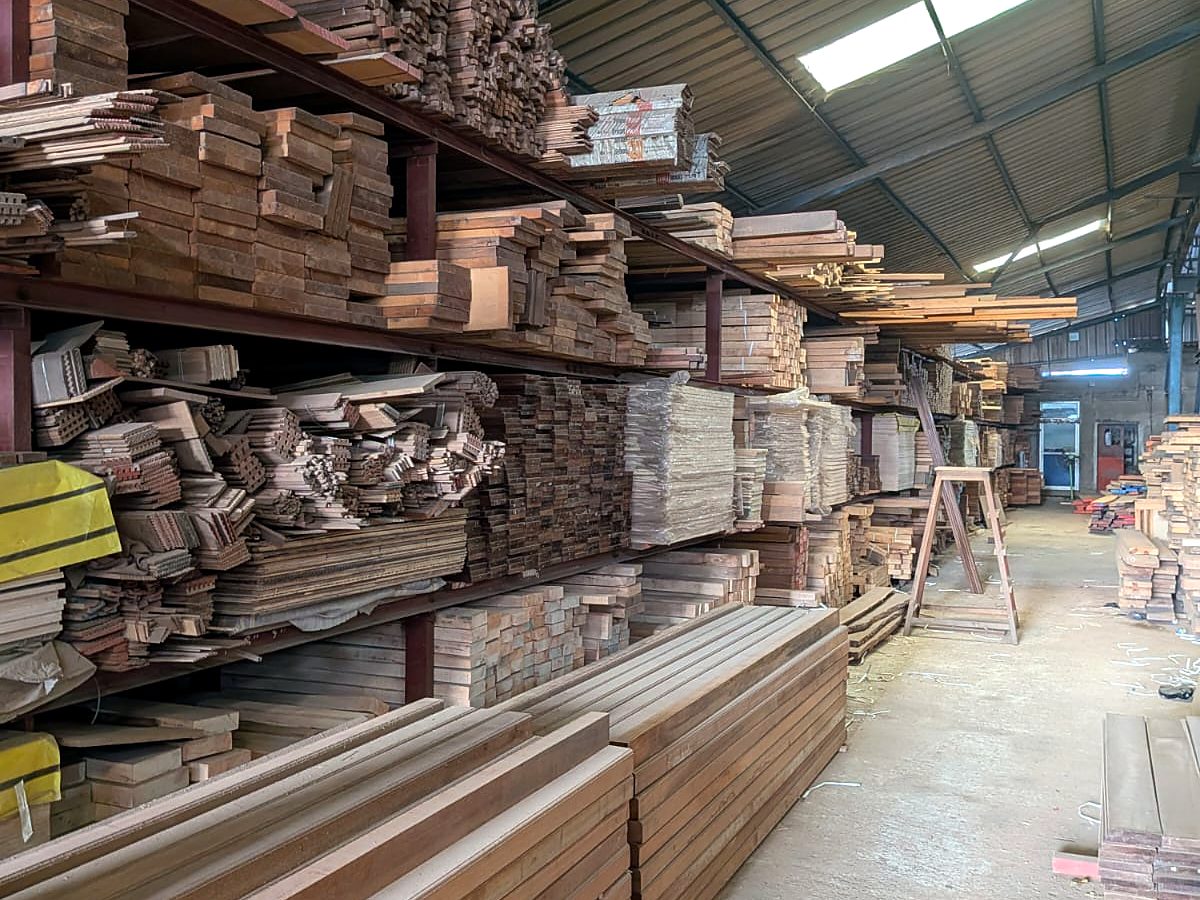
Most of the hardwood in Indian furniture is imported: American oak and walnut, African sapele and iroko, plantation teak. For UK and EU buyers that is helpful, because the timber comes with its own legality and origin paperwork from the producer country.
Two exclusions matter: Burma teak cannot enter the UK or EU, and birch from Russia or Belarus, including birch plywood, is sanctioned. Ask for the species and country of harvest for every product.
Send us your product list and destination. We quote with the commodity codes and origin documents, and we respond within 24 hours.
European Union: duty now, FTA next, EUDR first
Duty
Most wooden furniture already enters the EU at 0% normal duty. Some panel and joinery lines carry duty, notably certain plywood at up to about 10%. The EU–India FTA, concluded on 27 January 2026, will remove most of these once it is in force; the European Commission asked the Council in September 2026 to authorise signing, with signature expected in December 2026 and entry into force in 2027.
EUDR
| Question | Answer for wood products from India |
|---|---|
| When does it apply? | 30 December 2026 for medium and large companies and for micro and small companies in the timber sector; 30 June 2027 for other small companies |
| Which products? | Timber and products in Annex I, including sawn wood, plywood, joinery, flooring and wooden furniture |
| Who is responsible? | The EU operator that first places the product on the EU market; the Indian manufacturer has no direct obligation but must supply the data |
| What data? | Species, quantity, supplier and the geolocation of every plot where the timber was harvested, for every wood component |
| Country risk | Risk is judged by the country of harvest, not of manufacture. India itself is classed low risk; imported timber takes its own country’s rating |
The practical point for buyers: furniture made in India from, say, US oak and African sapele needs geolocation from both forests. Plan the data request into the order, not after it ships. Our EUDR explainer goes through the steps.
UAE and the Gulf: CEPA
The India–UAE CEPA, in force since 1 May 2022, removed the UAE’s normal 5% duty on most Indian goods, including wooden furniture, doors and millwork. To qualify, goods need a CEPA certificate of origin and generally at least 40% value added in India, or a change of tariff heading under the product rule. Specify finishes and timbers for heat and UV, not just humidity; see the best woods for outdoor furniture.
Shipment checklist
- Commercial invoice with the commodity code, origin and, for the UK, the origin declaration.
- Packing list matching the invoice line by line.
- Certificate of origin for the UAE (CEPA) and, where requested, for other markets.
- Species and harvest-country declaration for each wood component; geolocation for EU orders from 30 December 2026.
- Phytosanitary certificate where the product or market requires it, and ISPM 15 stamped pallets and crates.
- Fumigation or heat-treatment certificate if the buyer’s market or your broker asks for it.
For the American market, see US tariffs on Indian wood products. For product design, types of wood joints explains why we use knock-down fittings for some export ranges.
Frequently asked questions
Is furniture from India duty-free in the UK?
Yes, for products that meet the rules of origin, since the India–UK CETA entered into force on 15 July 2026. Make sure the invoice carries an origin declaration.
When will the EU–India FTA apply?
It was concluded on 27 January 2026. Signature is expected in December 2026 and entry into force in 2027, after approval by the Council, the European Parliament and India.
Does EUDR apply to furniture from India?
Yes, from 30 December 2026 for most importers. The EU importer must file a due diligence statement with the geolocation of the forest plots for every wood component.
Is India high risk under EUDR?
No. In the Commission’s May 2025 benchmarking India is low risk. But risk follows the country where the timber was harvested, so imported timber is judged on its own origin.
Can Burma teak be imported into the UK or EU?
No. Myanmar timber is subject to sanctions. Use plantation teak, iroko or sapele instead.
The bottom line
For UK and UAE buyers, Indian wood products are now duty-free with the right origin paperwork. EU buyers pay little duty on furniture today and less from 2027, but must have EUDR data from 30 December 2026. Ask every supplier for the species and harvest origin of each component, and plan for it in the order.
See our timber and materials, furniture and millwork.
We export furniture, doors, panelling and flooring with origin and species documents. We respond within 24 hours.
Keep reading in Trade, Tariffs & Customs
- Can You Export Indian Rosewood? CITES, India’s Export Rules and What Actually HappensIndian rosewood can leave India as veneer and finished products, not as logs or sawn timber. The CITES…
- EUDR Explained for Furniture and Wood BuyersThe EU Deforestation Regulation for timber, plywood, joinery and furniture: dates, who does what, the 2026 changes, and…
- US Tariffs on India in 2026: What They Mean for Wood Products and FurnitureUS tariffs on Indian wooden furniture, cabinets, doors and millwork as of November 2026: Section 301, Section 232,…
Sanjeev KhemkaWrites about timber, woodworking and trade for Kathwala, which supplies hardwood timber, plywood and panels and makes solid wood furniture and millwork to order. Questions? Get in touch.
Sources
- PIB: India–UK CETA to enter into force on 15 July 2026, 17 June 2026
- Cyril Amarchand Mangaldas: the India–EU FTA moves toward finalisation, 29 September 2026
- European Commission: Regulation on deforestation-free products
- EUSTAFOR: what the 4 May 2026 EUDR simplification package means for wood
- ATIBT: EUDR first country benchmarking list, 24 May 2025