
MDF vs Plywood vs HDHMR Board: Which to Use, Where, and 2026 Prices
Plywood, MDF or HDHMR? A timber merchant’s room-by-room guide to which board to use, how they compare on moisture, strength and price, and how to check quality.

In this article
Since February 2025, every sheet of plywood and MDF sold in India has to carry a BIS licence and the ISI mark. That settled one question buyers used to ask us at the counter: is this board genuine? It did nothing for the bigger one. Which board should go into a kitchen, a wardrobe or a wall?
The short version:
- Use BWP plywood for anything that gets wet or carries weight: sink units, bathroom vanities, beds.
- Use HDHMR for flat, stable shutters in kitchens and wardrobes.
- Use MDF for painted, routed and fluted work in dry rooms. It is the cheapest of the three.
- Whatever you buy, check the ISI stamp, the grade and the CM/L licence number on every sheet.
The MDF vs plywood question now has a third option, HDHMR, and each of the three is the right answer somewhere. Pick wrong and the result is easy to recognise: a sink cabinet base that swells at the edges, a wardrobe shelf that bows under books, a hinge that pulls out of a shutter after a year. Pick right and the same budget lasts for decades.
Every monsoon, the same kind of call reaches our shop. A family had their kitchen done two or three years earlier, it looked lovely on the day it was finished, and now the bottom of the sink cabinet has puffed up like a biscuit left too long in tea. The laminate is lifting, a hinge has worked loose, and the carpenter has stopped picking up. When we cut a strip from the base, the cause is nearly always the same: MDF or MR-grade plywood fitted exactly where the water goes.
There was nothing wrong with the board. Someone had put it in the wrong place.
We sell all three boards, so we have no reason to push one. Below is a one-table answer, then how each board is made, how they compare, which to use room by room, and how to check a sheet before you pay.
Which board for which job
| Use | Best board | Why |
|---|---|---|
| Kitchen carcass, sink and bathroom units | BWP plywood | Holds up to repeated wetting and holds screws at the edges |
| Kitchen and wardrobe shutters | HDHMR | Flat, dense and stable; handles steam and splashes |
| Wardrobe carcass and shelves | MR or BWR plywood | Strong across long spans; doesn’t sag |
| Wall panels, TV units, painted and CNC work | MDF | Smooth face, sharp routed edges, takes paint well |
| Beds and load-bearing frames | Plywood or solid wood | Needs strength and flex; MDF and HDHMR crack under point loads |
| Tight budget, dry room, light loads | Interior or prelam MDF | Lowest cost per sheet |
| Outdoors, or always wet | WPC, cement board or a durable hardwood | Only these survive standing water and weather |
What each board is, and how it is made
All three start as wood, but they are built in different ways, and that decides how they behave.
Plywood
Thin veneers glued with the grain of each layer at right angles to the next. The layers work like a beam, so plywood is strong in every direction, flexes instead of snapping, and grips screws even near the edge.
The glue sets the grade: IS 303 covers MR, BWR and, since 2024, BWP. IS 710 covers marine plywood. Birch plywood is the premium version, with many thin, even layers.
About 500–650 kg/m³. Best for carcasses, shelves and beds. See our plywood.
MDF
Wood broken into fibres, mixed with resin and pressed flat. There is no grain, so the faces are very smooth and the edges route into crisp profiles. Painted doors and fluted panels are usually MDF.
The catch is water: interior MDF swells when wet. IS 12406 sets the specification. Pine MDF is a lighter, paler variety.
Usually 600–800 kg/m³. Best for paint, CNC work and wall panels. See our MDF.
HDHMR
Finer fibres pressed harder, with a moisture resistant resin. It is flat, stable and good at holding screws across the face, and it handles steam and splashes far better than MDF.
It resists moisture but it is not waterproof, so every cut edge needs sealing.
About 850–900 kg/m³. Best for kitchen and wardrobe shutters. See our HDHMR.
Read the edge, and you know the board
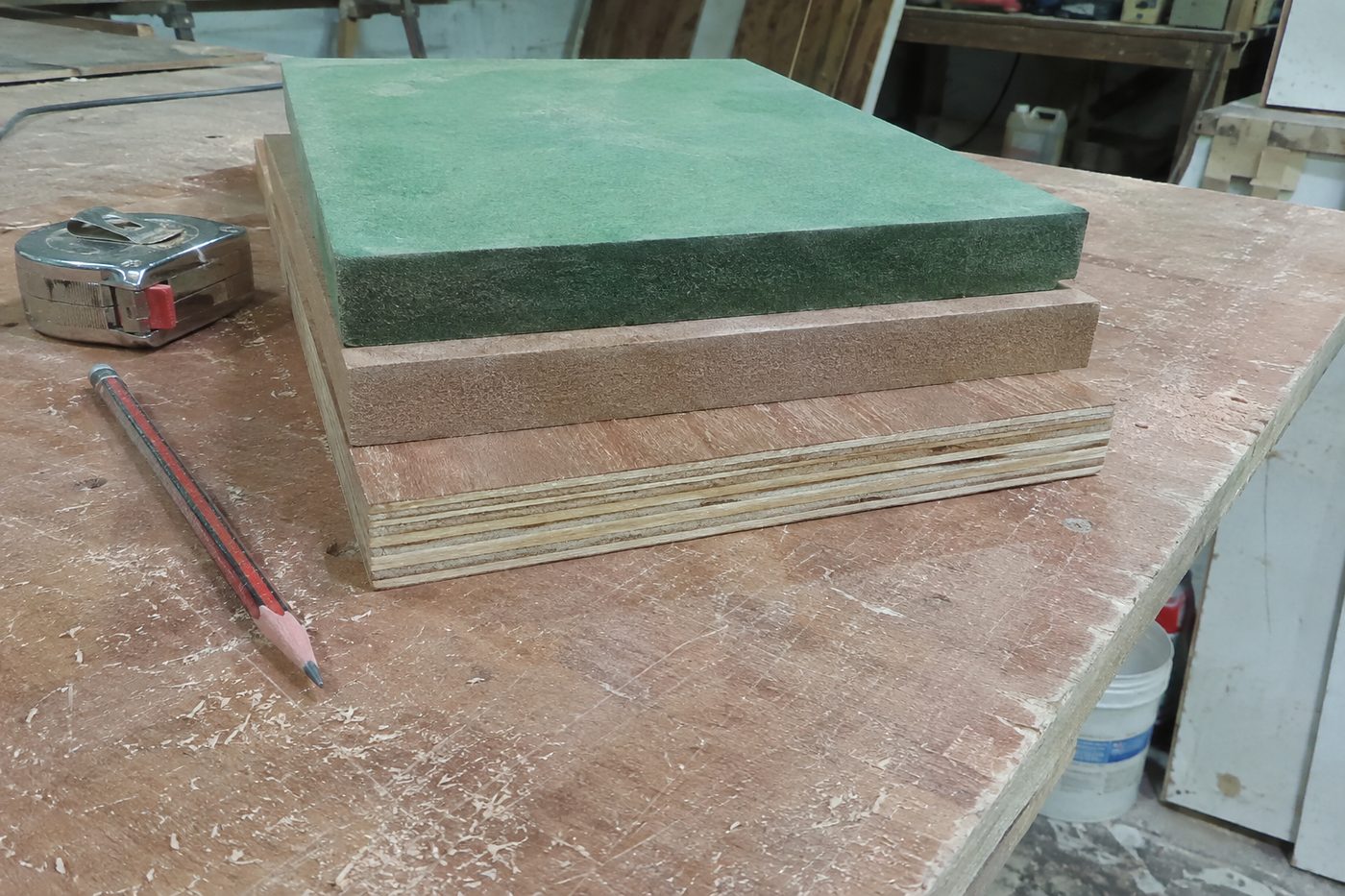
Ask the shop to show you a cut edge. Plywood shows its layers, and good plywood shows them tight, even and gap-free. MDF is one even shade of brown all the way through. HDHMR looks similar but darker and harder, often with a green tint in the core or on the face.
If the shop cannot show you an edge, ask for an offcut. Any timber yard will have a pile of them.
What about WPC and cement board?
Two other boards come up in the same conversation. WPC (wood plastic composite) and PVC foam boards do not rot or swell, so they suit bathrooms, under-sink cabinets and outdoor joinery. Cement-bonded particle board, sold as Bison board, is heavy and fire resistant and goes into partitions and cladding. Neither replaces plywood for good furniture, but both solve problems the wood boards cannot. We cover WPC in more detail in WPC board: price, uses and WPC vs plywood.
MDF vs plywood vs HDHMR, side by side
| Plywood (MR / BWP) | MDF | HDHMR | |
|---|---|---|---|
| Made from | Layers of veneer, cross-grained | Fine wood fibres and resin | Finer fibres, pressed denser, moisture resistant resin |
| Density (kg/m³) | About 500–650 | Above 600 (IS 12406); usually 600–800 | About 850–900 |
| Water | MR: humidity only. BWP: repeated wetting | Swells when wet; MR grade copes with humidity | Handles steam and splashes; not waterproof |
| Screw holding | Best, including near edges | Weak at edges; needs special screws | Good across the face, fair at edges |
| Long spans | Best; resists sagging | Sags under weight | Better than MDF, less than plywood |
| Surface | Wood grain; needs laminate, veneer or filler for paint | Very smooth; ideal for paint, routing, CNC | Smooth and flat; good for laminate and CNC |
| Weight (18 mm sheet) | Lightest | Heavier | Heaviest |
| Common thicknesses | 4–25 mm | 2.5–25 mm | 6–25 mm |
One thing the table hides. HDHMR is the heaviest board here, yet plywood carries more load over a long shelf, because its cross-grain layers act like a beam. Density buys you flatness and moisture resistance; layers buy you strength.
Plywood and HDHMR board prices in 2026
Typical market rates for branded 18 mm boards. An 8 x 4 ft sheet is 32 sq ft.
| Board | Per sq ft | Per sheet |
|---|---|---|
| Interior MDF | ₹55–85 | ₹1,760–2,720 |
| HDHMR | ₹90–130 | ₹2,880–4,160 |
| MR plywood | ₹105–175 | ₹3,360–5,600 |
| BWR / BWP plywood | ₹125–190 | ₹4,000–6,080 |
Rates move with brand, city and thickness. Ask us for today’s price on the exact sheets you need.
Brand makes a real difference to price. We stock Century, Greenply, Austin, Saburi, Avenger and Sylvan plywood, plus imported birch plywood, so we can quote the same grade across several brands. For thickness-by-thickness rates, see our plywood price guide.
Which board to use, room by room
Most homes end up with a mix. Spend on the parts that face water and weight, and save where neither matters.
Kitchen
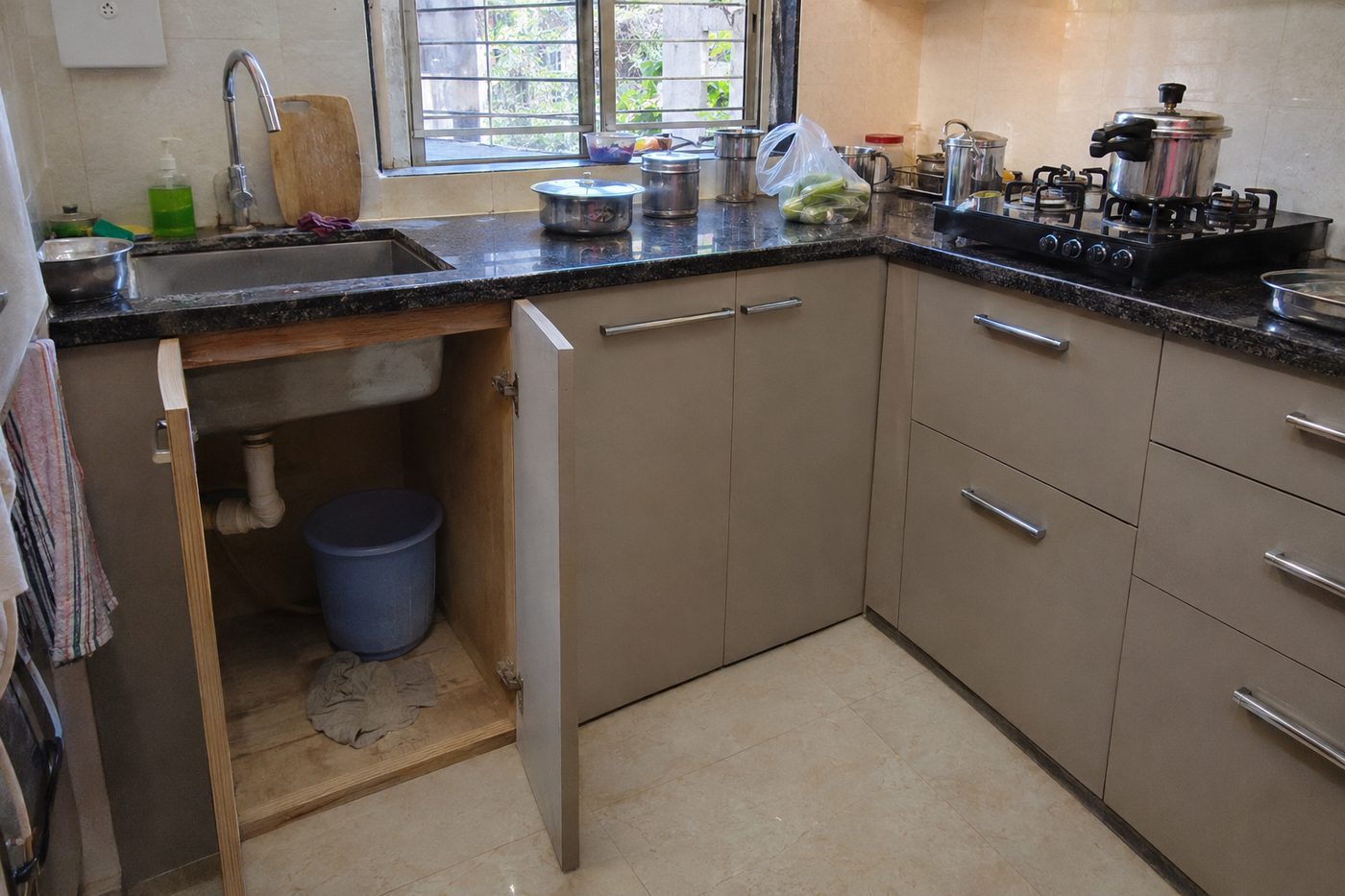
Build the base cabinets, especially the sink unit, in BWP plywood. Water drips, steam rises and someone mops the floor every day, and the bottom edge of the carcass takes all of it.
Wall cabinets can be BWR or MR plywood. For shutters, HDHMR stays flat, takes laminate well and holds concealed hinges. Edge-band every cut before it is fitted.
Planning the layout too? Read kitchen direction as per Vastu, or look at a solid wood kitchen island for the centre of the room.
Bathroom vanity
BWP plywood for the carcass, or WPC if the vanity sits close to a shower and gets splashed every day. Avoid plain MDF here, even with laminate on both faces; water finds the edges.
Wardrobe
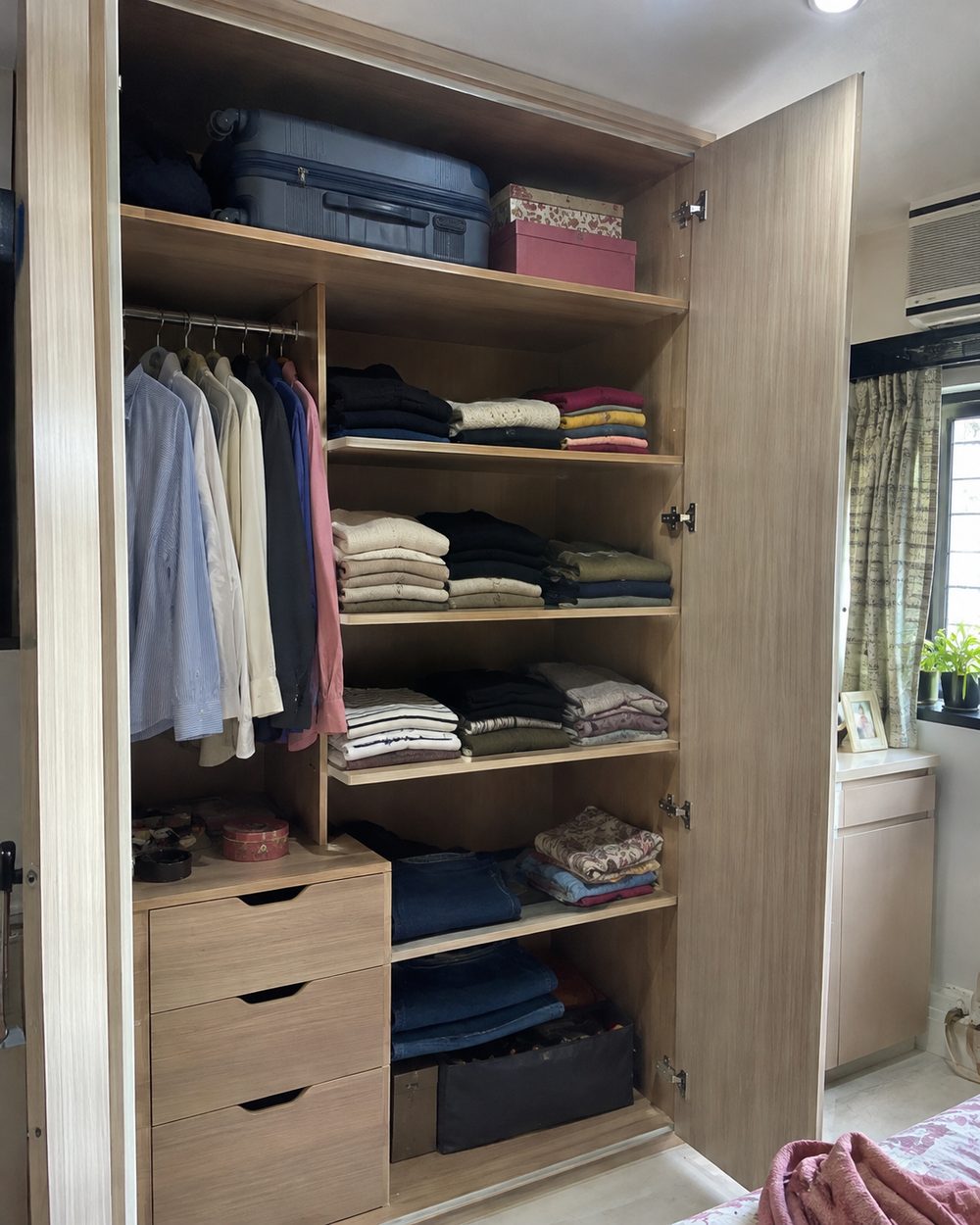
MR plywood is enough for the carcass in a dry bedroom, and it is the right board for shelves longer than about 75 cm, which sag in MDF.
Shutters can be HDHMR or plywood. If the wardrobe sits on an outside wall in a coastal or humid city, step the carcass up to BWR.
If you would rather skip boards altogether, we also make a solid wood wardrobe to order. See all our wardrobes and almirahs.
TV unit, study and wall panelling
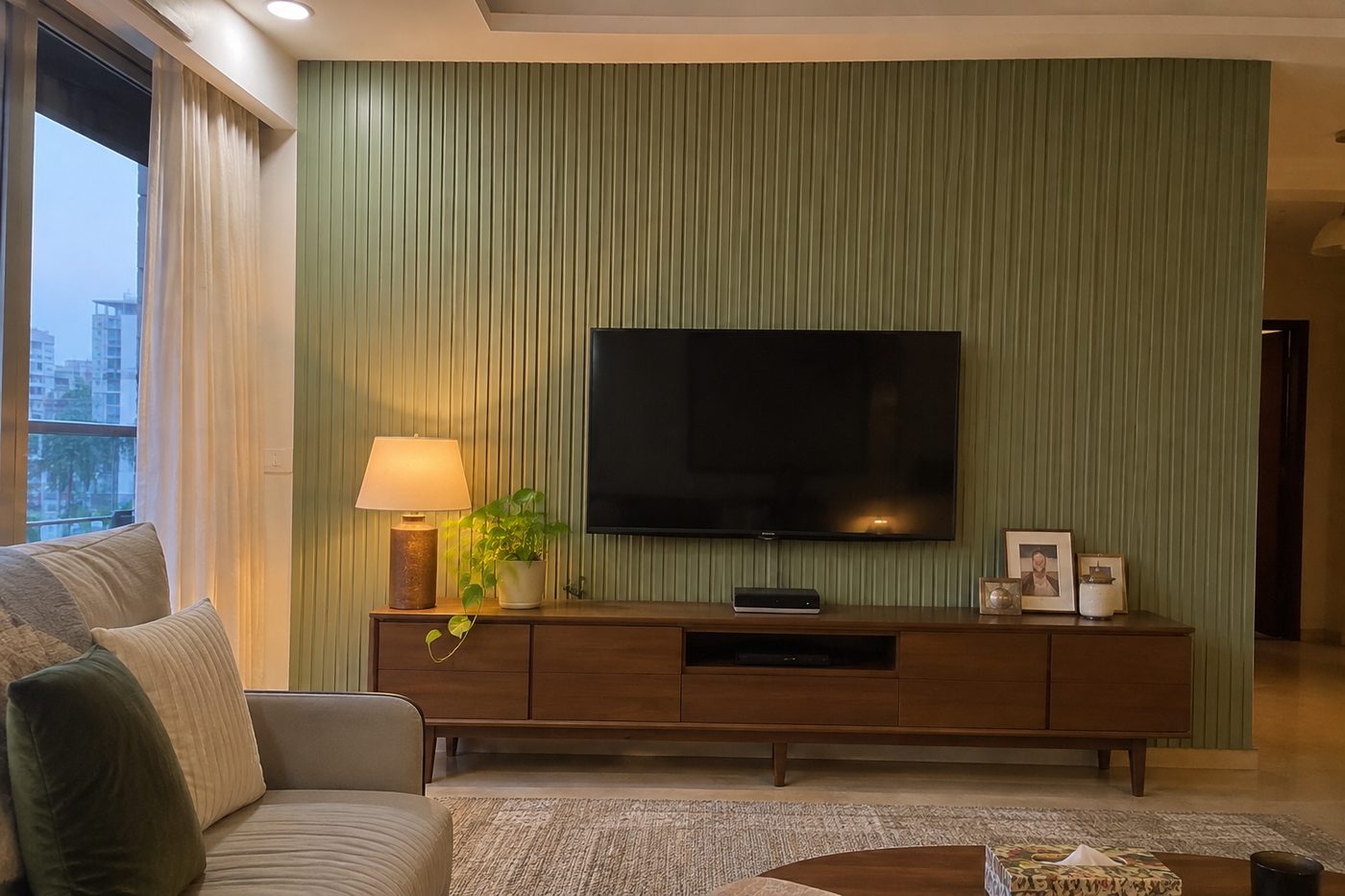
This is where MDF earns its place. It takes paint without grain showing through, routes into clean flutes and grooves, and costs less. For fluted panels in a bathroom or near a window that gets rain, use HDHMR or solid wood wall panels instead. Our wall panels and cladding and mouldings and trim come in teak, oak and other hardwoods, and there are more ideas in 15 wall panelling ideas.
For the unit itself, see our solid wood TV unit and the rest of the console tables and TV units.
Beds and anything that takes weight
Use plywood or solid wood for the frame and slats. MDF and HDHMR are brittle under point loads and do not like being screwed and unscrewed, so they are a poor choice for furniture that gets moved or carries people. A solid wood bed joined with mortise and tenon joints will outlast any board; our guide to types of wood joints explains why.
Send a photo or drawing of the job. We will mark the board for each part and quote for all of it within 24 hours.
Laminate or veneer on top
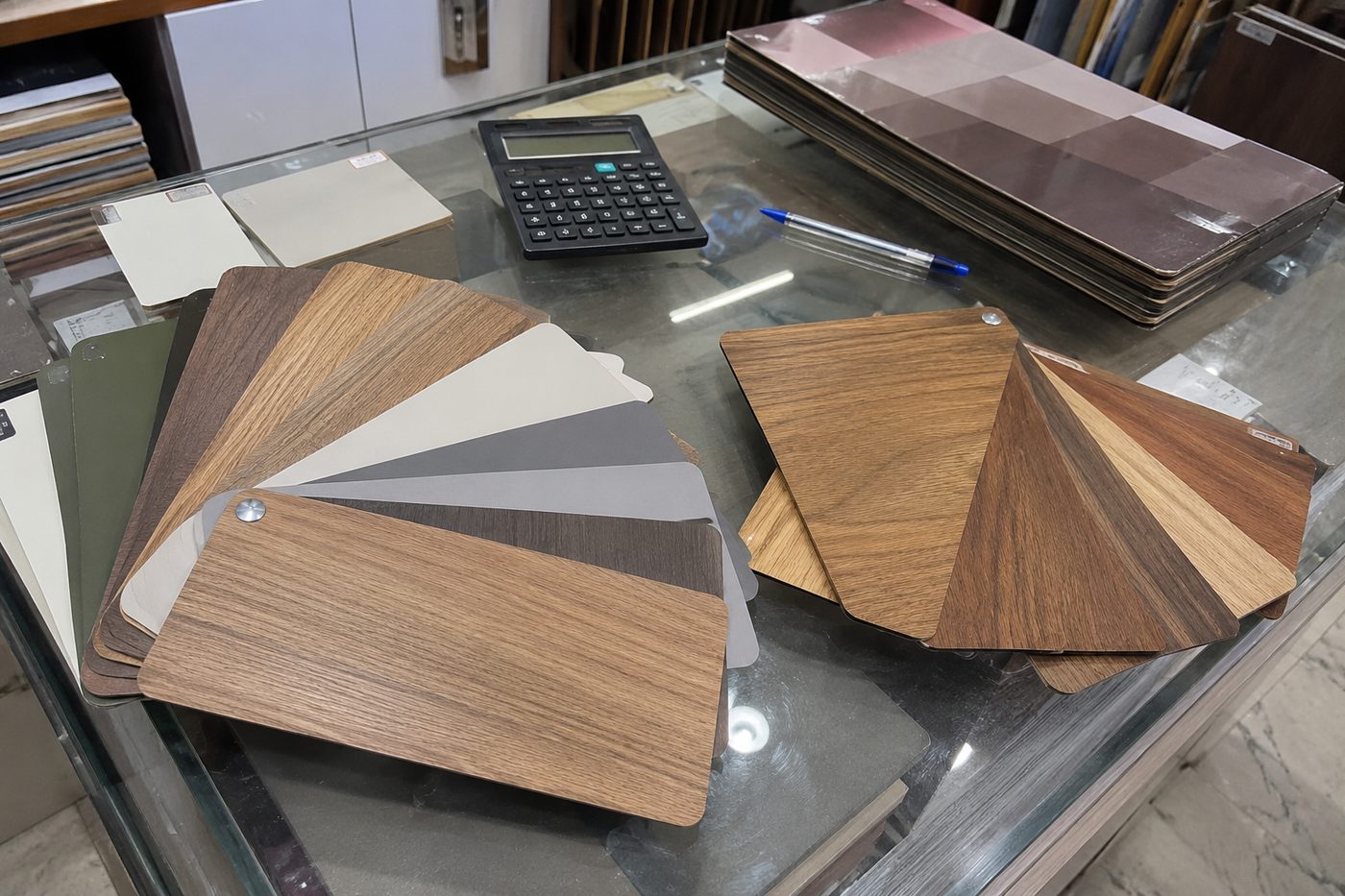
None of these boards is usually left bare. What goes on the face changes how the finished piece looks and, sometimes, which board underneath makes sense.
Whichever face you choose, balance it: put a laminate or backer on both sides of a shutter, or it will cup as the two faces take up moisture at different rates.
Laminate
About 0.8 to 1 mm thick and hard-wearing, so it suits kitchens and children’s rooms. HDHMR and MDF give the flattest result. We carry Merinolam, Greenlam, AICA and other laminate brands.
Natural veneer
A thin slice of real wood, so the piece looks like solid timber for a fraction of the cost. Plywood is the traditional base. See our natural veneers in teak, oak and walnut, and Century veneer.
Paint or PU
Looks best on MDF, which has no grain to show through. Plywood needs more filling and sanding to get the same finish. Our guide to wood polish types compares PU, melamine, duco and oil.
Prelaminated board
Laminate pressed on at the factory. The cheapest route to a finished cabinet, but with fewer colours, and cut edges still need banding. Prelam MDF is the usual choice.
How to spot a good board before you pay
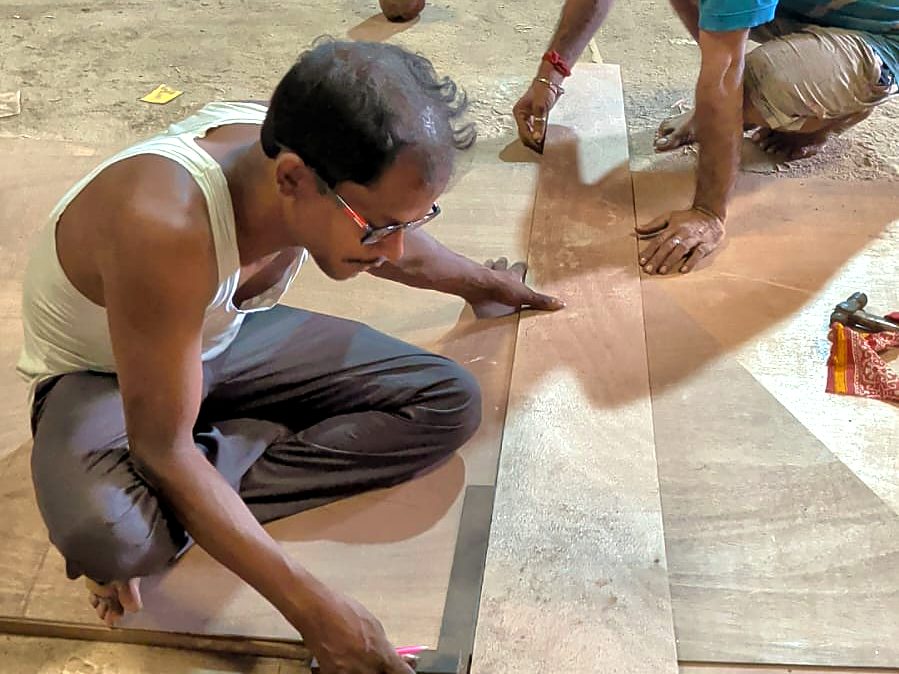
The ISI mark is now compulsory, so its presence alone tells you little. These five checks take a few minutes at the shop and catch most problems.
You don’t need tools beyond a measuring tape and your phone.
- Read the stamp. A genuine sheet carries the ISI mark, the Indian Standard it meets (IS 303 or IS 710 for plywood, IS 12406 for MDF), the grade (MR, BWR or BWP) and a licence number starting CM/L. The shop label can say anything; check that the grade on the stamp matches the grade you are paying for.
- Verify the licence. Enter the CM/L number in the BIS Care app or on the BIS website. It should show the same manufacturer and product.
- Look at the edge. On plywood, the layers should be even, tightly pressed and free of gaps, overlaps or filler. On MDF and HDHMR, the edge should be uniform with no soft or crumbly core.
- Measure the thickness. Calibrated boards should be even across the sheet. An 18 mm sheet that measures 16.5 mm at one corner will show in a cabinet line-up.
- Check it is flat and dry. Lay the sheet flat or sight down its length. Bowed or damp boards move after fitting.
Three more checks our team uses in the yard
Knock across the face. Tap the sheet with a knuckle every foot or so. Good plywood gives the same dull note everywhere; a hollow patch usually means a gap in the core.
Take a sheet from the middle of the stack. The top and bottom sheets in any godown take the most damp, dust and handling. We rotate our stock, but asking costs nothing.
Smell a fresh cut. Good boards smell of wood. A sharp, eye-stinging chemical smell from a new cut points to cheaper, high-formaldehyde glue, which you do not want in a bedroom wardrobe.
Frequently asked questions
What is the full form of HDHMR?
High Density High Moisture Resistant board. It is a fibreboard pressed denser than MDF, with a moisture resistant resin, and is sold mainly for kitchen and wardrobe shutters. You can see the HDHMR boards we stock here.
Is HDHMR better than plywood for kitchens?
For shutters, often yes: it stays flatter and takes laminate cleanly. For the carcass, especially under the sink, BWP plywood is the safer choice because it copes with repeated wetting and holds screws at the edges.
Is HDHMR better than MDF?
For kitchens, bathrooms and anywhere humid, yes. It is denser, holds screws better and copes with steam. MDF is cheaper and routes and paints more easily, so it still wins for dry-room wall panels and painted furniture.
Is MDF waterproof?
No. Standard MDF swells when wet. Moisture resistant MDF copes with humidity, but not with water sitting on it or soaking into a cut edge. For places that stay wet, look at WPC and PVC boards.
Which board lasts longest?
Good BWP plywood, used where it suits, will outlast the others in demanding spots. In a dry room with sealed edges, all three can last many years. For furniture you want to hand down, solid wood still beats any board.
Can MDF hold screws?
On the face, reasonably well. Near the edge, poorly; use confirmat screws or dowels, drill pilot holes, and avoid screwing into the same hole twice.
Is HDHMR the same as HDF?
No. HDF (high density fibreboard) is a thin, dense board used for door skins and drawer bottoms. HDHMR is a thicker, moisture resistant board made for furniture.
The bottom line
Each board has a job. Plywood gives strength and survives wet carcasses, HDHMR makes flat, stable shutters, and MDF gives smooth painted and routed surfaces. Before you buy, list each part of the job with the board it needs, and check the stamp on every sheet when it arrives.
If the job calls for real timber rather than boards, browse our hardwood timber, solid wood boards and the wood species guide, or see what we make in bedroom furniture and architectural millwork.
We stock plywood, MDF, HDHMR, laminates and veneers, cut to size. Send your list and we respond within 24 hours.
Keep reading in Wood & Materials
- Types of Wood Grain: Grain, Texture and Figure ExplainedWood grain explained: growth rings, pores and rays, flat-sawn vs quartersawn, straight, spiral and interlocked grain, texture, figure…
- Indian Rosewood: The Price of a Tree That Takes a Century to GrowWhy Indian rosewood (Dalbergia latifolia) is so expensive: slow growth, scarcity, regulation and a wood that is hard…
- EU Green Claims Rules: What “Eco-Friendly” Wood and Furniture Can Still SayEmpCo, the EU’s green claims rules, has applied since 27 September 2026. What wood and furniture listings can…
- WPC Board: Price, Uses, and WPC vs PlywoodWhat WPC board is, where it beats plywood and where it doesn’t, typical prices, and how to work…
Sanjeev KhemkaWrites about timber, boards and trade for Kathwala, which supplies plywood, MDF, HDHMR and hardwood timber and makes solid wood furniture to order. Questions about this article? Get in touch.
Sources
- Ply Reporter: QCO on wood based panels (BIS certification mandatory for MDF from 10 Feb 2025 and plywood from 28 Feb 2025)
- Ply Reporter: BWP grade comes under IS 303, 5 Jun 2024
- Business Standard: quality norms on plywood and MDF, 4 Jan 2025
- CenturyPly: HDHMR vs plywood (manufacturer density and price figures), Jun 2026