
Can You Export Indian Rosewood? CITES, India’s Export Rules and What Actually Happens
Indian rosewood can leave India as veneer and finished products, not as logs or sawn timber. The CITES 10 kg rule, permits by product, and what happens in practice.

In this article
- Which rosewood this guide covers
- Two separate rulebooks
- How the CITES rules for rosewood changed, 2017 to 2026
- What can be exported, product by product
- The paperwork on the Indian side
- What the importing country adds
- What happens in practice
- Mistakes that get shipments stopped
- Checklist for buyers
- What we make in Indian rosewood
- Frequently asked questions
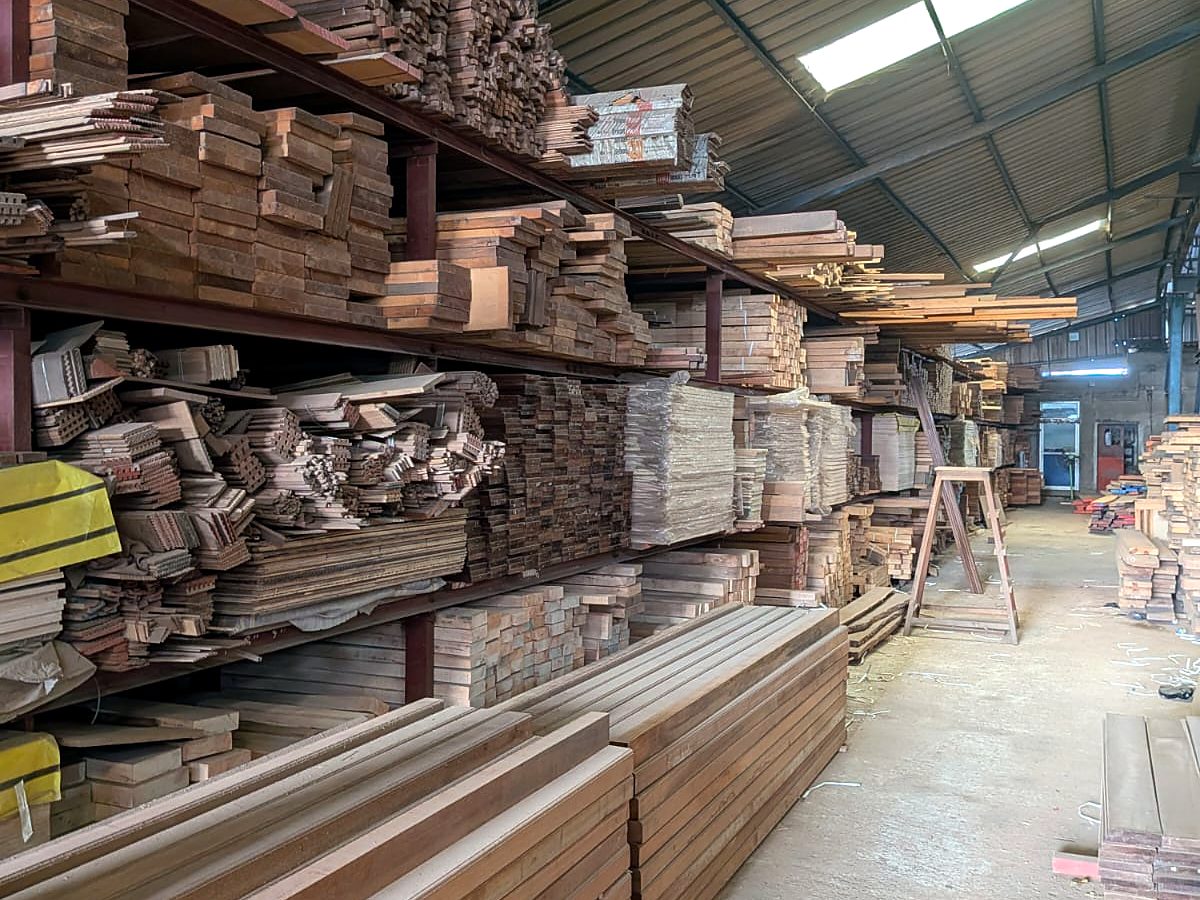
Yes, but only in some forms. India does not allow Indian rosewood (Dalbergia latifolia) to leave the country as logs or sawn timber. Veneer and finished products such as furniture, doors and handicrafts can be exported. Because the whole Dalbergia genus is listed in CITES Appendix II, a finished piece needs a CITES export permit when any single item contains more than 10 kg of rosewood. Pieces with 10 kg or less of rosewood each, and finished musical instruments and their parts, are exempt from CITES permits. The EU regulation that restated these rules after the last CITES conference was adopted on 22 June 2026, and the exemptions are unchanged.
The short version:
- Logs and sawn timber: not exportable from India. India’s export policy prohibits them, and India told CITES in 2018 that its exemption for Dalbergia excludes logs, timber, stumps, roots, bark, chips, powder, flakes, dust and charcoal.
- Imported rosewood re-sawn in India: also not exportable as sawn timber. India’s scheme for re-exporting timber sawn from imported logs excludes CITES Appendix I and II species.
- Veneer: listed as free to export, with a CITES export permit.
- Furniture, doors, panels and handicrafts: exportable. A CITES permit is needed for any item containing more than 10 kg of rosewood; items at or under 10 kg each are exempt.
- Musical instruments: finished instruments, finished parts and accessories are exempt from CITES permits since November 2019.
- Brazilian rosewood (Dalbergia nigra) is a different story: it is in Appendix I and has no exemptions.
This guide is written for procurement and sourcing teams at fit-out, construction, furniture and architecture companies buying from India, and for anyone shipping rosewood pieces abroad. It covers the two sets of rules that apply (India’s own export policy, and CITES), what the importing country adds, and what has happened in practice to people who got it wrong. It is a summary, not legal advice. For the wood itself, read our guide to why Indian rosewood is so expensive.
Which rosewood this guide covers
“Rosewood” is a trade name used for dozens of woods. This guide is about Indian rosewood, Dalbergia latifolia, also sold as East Indian rosewood, sitsal, sonokeling or Bombay blackwood. It is the dark, purple-brown wood used for heirloom furniture, veneers and guitar backs, and it is the rosewood we stock and use at Kathwala. Sheesham (Dalbergia sissoo), sometimes called North Indian rosewood, is a different species, but it sits in the same genus, so most of what follows applies to sheesham too. See our teak vs sheesham comparison for that wood.
| Wood | Botanical name | CITES status |
|---|---|---|
| Indian rosewood | Dalbergia latifolia | Appendix II, annotation #15 |
| Sheesham (North Indian rosewood) | Dalbergia sissoo | Appendix II, annotation #15 |
| Brazilian rosewood | Dalbergia nigra | Appendix I (no exemptions) |
| Honduran rosewood, cocobolo, African blackwood and other Dalbergia | Dalbergia spp. | Appendix II, annotation #15 |
| Siamese rosewood | Dalbergia cochinchinensis | Appendix II, annotation #4 (different exemptions) |
| “African rosewood”, kosso | Pterocarpus erinaceus | Appendix II, no 10 kg exemption |
| Padauk | Pterocarpus soyauxii | Not a rosewood; check current CITES listing |
Two separate rulebooks
Every rosewood shipment from India has to pass two tests that are often confused.
India’s export policy
The Directorate General of Foreign Trade (DGFT) sets which goods may leave India, product by product, in the ITC(HS) export schedule. If the policy says a form of wood is prohibited, no permit can fix that.CITES
The Convention on International Trade in Endangered Species controls trade between countries in listed species. For Dalbergia, CITES decides whether a shipment needs an export permit, and the importing country checks it on arrival.India’s CITES position
India’s CITES Management Authority told the CITES Secretariat in 2018 that wild-source D. latifolia and D. sissoo may be exported in forms other than logs, timber and wood waste, covered by a legal procurement certificate.The importing country
The EU, UK and some other markets add their own import permits and timber-legality rules on top. The US adds port and Lacey Act requirements.How the CITES rules for rosewood changed, 2017 to 2026
| Date | What changed |
|---|---|
| 2 January 2017 | The whole Dalbergia genus (except Brazilian rosewood, already in Appendix I) entered Appendix II under annotation #15. Only non-commercial shipments up to 10 kg were exempt, so every commercial shipment of rosewood furniture, handicrafts and guitars needed a permit. |
| 26 March 2018 | CITES Notification 2018/031: India bans commercial export of wild-taken CITES-listed plants and animals, with an exemption for D. latifolia and D. sissoo products other than logs, timber, stumps, roots, bark, chips, powder, flakes, dust and charcoal. |
| 26 November 2019 | The revised annotation #15 agreed at CoP18 in Geneva took effect. It exempts finished products with up to 10 kg of the listed wood per shipment, and finished musical instruments, finished instrument parts and accessories. |
| November 2022 | At CoP19 in Panama, India’s proposal to remove sheesham from Appendix II was not accepted. Parties clarified that the 10 kg limit is assessed per item, against the weight of the rosewood in that item, not the total shipment. The clarification applied from 23 February 2023. |
| February 2025 | The CITES Standing Committee reviewed a Secretariat study on how the exemptions have worked from 2013 to 2023, for the CoP20 meeting. |
| November–December 2025 | CoP20 in Samarkand, Uzbekistan, made no change to annotation #15. |
| 22 June 2026 | Commission Regulation (EU) 2026/1383 replaced the EU’s species annex after CoP20. It restates annotation #15 with the same exemptions and the per-item reading of the 10 kg limit. |
What annotation #15 says today
All parts and derivatives of the listed Dalbergia species need CITES documents, except:
- Leaves, flowers, pollen, fruits and seeds.
- Finished products with up to 10 kg of the listed wood per shipment. The limit is applied to each item separately, and to each species separately; weights are not added up across items or across species. Metal, glass, stone and fabric parts do not count towards the 10 kg.
- Finished musical instruments, finished instrument parts and finished instrument accessories, whatever their weight.
- Siamese rosewood (D. cochinchinensis), which follows annotation #4 instead.
- Dalbergia from Mexico, which follows annotation #6 instead.
A “shipment” is cargo under one bill of lading or air waybill, or a traveller’s personal baggage. A “finished product” is one that needs no further processing and is ready for use or retail. A dining table, a door or a carved box is finished. Sawn boards, blanks, squares and unfinished components are not.
Tell us the pieces and the destination country. We will confirm in our quote which items need CITES documents and how we will handle them. We respond within 24 hours.
What can be exported, product by product
The table combines India’s export policy and CITES for Indian rosewood. HS codes are the first four or six digits of the tariff code; check the full eight-digit code with your customs broker.
| Product | HS code | India export policy | CITES export permit? |
|---|---|---|---|
| Logs | 4403 | Not allowed: India’s policy prohibits export of wood “in the form of logs, timber, stumps, roots…”, and India’s CITES exemption excludes logs (the schedule also has a line for rosewood logs marked free, so ask DGFT before relying on it) | Would be required |
| Sawn timber, planks, squares, blanks | 4407 | Prohibited | Would be required |
| Sawn timber cut in India from imported rosewood | 4407 | Prohibited: the imported-log scheme excludes CITES Appendix I and II species | Would be required |
| Veneer sheets | 4408 | Free | Yes (veneer is not a finished product) |
| Mouldings, flooring strips | 4409 | Free | Usually yes; whether they count as finished products is decided case by case |
| Doors, frames, panels, builders’ joinery | 4418 | Free | Yes if an item contains more than 10 kg of rosewood |
| Bedroom, living room, kitchen and children’s furniture | 9403 | Free | Yes if an item contains more than 10 kg of rosewood |
| Small articles: photo frames, boxes, carvings | 4420, 4421 | Free (some 4420 lines restricted) | Usually no; most items are under 10 kg each |
| Finished instruments, parts and accessories | 9202, 9209 | Free | No |
In practice most rosewood furniture needs a permit. A double bed, a dining table or a main door in solid rosewood easily contains more than 10 kg of wood. A side chair, a bedside table or a small serving board may not. Because the limit is per item, a container of 40 side chairs that each contain 7 kg of rosewood needs no CITES permit, while a single 60 kg dining table does.
The paperwork on the Indian side
- Legal origin of the wood. Rosewood is a protected or “royalty” tree in the states where it grows. Felling needs Forest Department permission and timber moves under transit permits. Kerala’s rules, for example, bar cutting rosewood below 2.5 m girth at breast height. Tamil Nadu’s Rosewood Conservation Act lapsed in February 2025. The exporter should hold the purchase and transit records that trace each lot back to a legal source.
- Legal procurement certificate. India’s 2018 notice to CITES says Indian Dalbergia exports are covered by a legal procurement certificate. Handicraft exporters commonly get theirs through the Export Promotion Council for Handicrafts (EPCH), whose VRIKSH programme verifies timber legality and issues shipment certificates for rosewood and sheesham goods.
- CITES export permit (for items over 10 kg of rosewood, and for veneer). India’s CITES permits are issued through the regional offices of the Wildlife Crime Control Bureau, which act for the CITES Management Authority under the Ministry of Environment, Forest and Climate Change. Apply before the goods are packed; the permit names the species, quantity and consignee.
- Correct description on every document. Invoice, packing list, shipping bill and permit should all give the botanical name Dalbergia latifolia, the HS code and the net weight of rosewood per item. “Rosewood” alone, or a wrong species, is the most common reason shipments are held.
- Customs export clearance. Customs at the port checks the CITES permit against the goods.
Why we keep the records with the wood
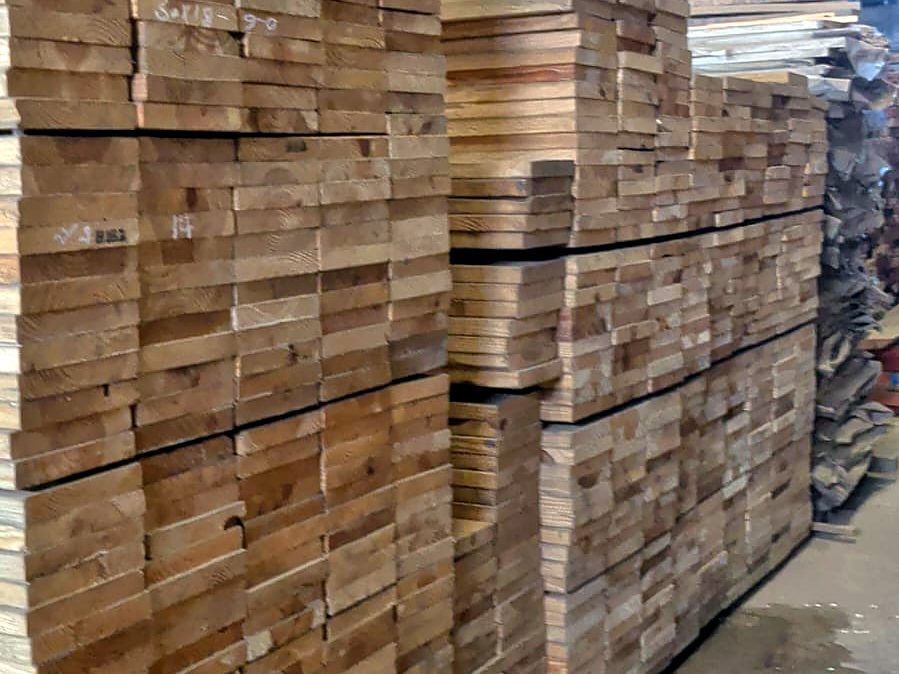
Each lot of Indian rosewood in our store keeps its purchase and transit papers with it, so the origin can be shown when a buyer, a permit officer or a customs officer asks. If you are buying finished pieces from any Indian maker, ask for the same before you place the order.
Our hardwood timber range lists the species we hold; the wood species guide has the properties of each.
What the importing country adds
| Market | What to expect |
|---|---|
| European Union | Dalbergia (other than Brazilian rosewood) is in Annex B of the EU wildlife trade regulation. Items that need a CITES export permit from India also need an EU import permit from the Management Authority of the member state of import, applied for before shipping. The 10 kg and musical-instrument exemptions apply. From 30 December 2026, wood products and furniture also fall under the EUDR, which needs geolocation of the harvest plot. |
| United Kingdom | The UK applies the same CITES annexes through its own wildlife trade regulations. APHA issues import permits. Items over 10 kg of rosewood need a UK import permit as well as the Indian export permit. |
| United States | No US import permit is needed for Appendix II plants, but the Indian CITES export permit must be validated at a CITES-designated port, where USDA APHIS inspects and cancels it. Wood products and wooden furniture also need a Lacey Act plant declaration (PPQ 505) naming the genus, species and country of harvest. See also US tariffs on Indian wood products. |
| UAE and other markets | The Ministry of Climate Change and Environment is the UAE’s CITES authority. Check with your importer whether an import permit is required for the goods before shipping; many countries apply stricter rules than CITES itself. |
For duty rates and documents by market, read our guide to importing wood products from India into the UK, EU and UAE.
What happens in practice
Official rules are one thing. Here is what has happened to real shipments, from court records, trade press and buyers’ own accounts.
519 guitars condemned
In October 2017 UK Border Force seized 519 Cordoba guitars made with East Indian rosewood at Felixstowe. A magistrates’ court in Ipswich ordered them condemned under the Customs and Excise Management Act. This was before the 2019 instrument exemption; today the same guitars would need no permit.Months in customs
On a UK business forum in 2018, an importer of Indian rosewood and teak furniture was told that one shipment had waited more than eight months in customs for CITES confirmation. The UK CITES office had a large backlog at the time.A guitar confiscated in Belgium
A US maker reportedly shipped a guitar with rosewood trim to a client in Belgium in 2018 without CITES or APHIS papers. It was confiscated, and insurance did not cover the loss of about $12,000–13,000.Musicians’ forums tell the same story from the buyer’s side. On a UK bass forum in 2017, a player in Sweden waited about two months for a US supplier’s export certificate and about 40 days for a Swedish import certificate, for a single neck with a rosewood fingerboard; others reported one-off import fees of £35 to £75. Since November 2019, Taylor Guitars and other makers tell owners that guitars with Indian rosewood need no CITES paperwork. Down To Earth reported that India’s exports of sheesham furniture and handicrafts fell from about ₹1,000 crore a year before the 2017 listing to an estimated ₹500–600 crore afterwards.
Most held shipments are not illegal wood. They are paperwork that does not match the goods.
Mistakes that get shipments stopped
- Calling it “rosewood” without the species. Customs cannot tell from the word which Dalbergia it is, or whether it is a Dalbergia at all.
- Adding up weights wrongly. The 10 kg test is per item and per species. A shipment of many small items can be exempt; one large item cannot.
- Treating unfinished parts as finished. Table legs, blanks, sanded components and flat-pack parts that need further work are not finished products.
- Mixing species on one line. If a piece combines rosewood with sheesham or another listed wood, list each species and its weight.
- Wrong HS code. Sawn timber declared as furniture, or furniture parts declared as mouldings, draws attention and can turn a permitted export into a prohibited one.
- Forgetting the import side. An Indian export permit alone does not get Annex B goods into the EU or UK.
Checklist for buyers
- Confirm the species in writing: Dalbergia latifolia, not just “rosewood”.
- Ask for the weight of rosewood in each item, so you know which items need permits.
- Ask for proof of legal origin: purchase and transit records, and the legal procurement certificate.
- Check your own country’s import rules before the order is confirmed, and apply for any import permit early.
- Plan for EUDR if you sell into the EU from 30 December 2026.
- Keep copies of everything for at least five years.
What we make in Indian rosewood
Every piece we make in Indian rosewood is made to order, to the buyer’s drawings or to one of our designs. We use it for wood flooring and solid hardwood flooring, wall panelling, children’s furniture such as cots and beds, bedroom furniture, living room furniture and kitchen and dining furniture. For export orders we tell you in the quote which items need CITES documents.
Contact us on +91 98318 28922 (also on WhatsApp), +91 33 2259 1296 or info@kathwala.com, or use the quote form below.
Frequently asked questions
Can I export Indian rosewood logs or planks from India?
No. India’s export policy prohibits export of logs, sawn timber and wood waste, and India’s CITES exemption for Dalbergia excludes them. Even sawn timber cut in India from imported rosewood cannot be exported, because the imported-log scheme excludes CITES-listed species.
Does rosewood furniture need a CITES permit?
Only items containing more than 10 kg of rosewood. The limit applies per item and per species, and only the weight of the rosewood counts. Most solid rosewood beds, dining tables, wardrobes and doors are over 10 kg; many chairs, side tables and accessories are under it.
Does a guitar with an Indian rosewood fingerboard need CITES papers?
No. Since 26 November 2019 finished musical instruments, finished instrument parts and accessories made of Dalbergia (other than Brazilian rosewood) are exempt, whatever their weight.
Did the 2025 CITES conference change the rosewood rules?
No. CoP20 in Samarkand made no change to annotation #15, and the EU restated the same exemptions in Regulation (EU) 2026/1383 of 22 June 2026.
Is sheesham treated the same as Indian rosewood?
For CITES, yes. Both are Dalbergia under annotation #15. India asked to delist sheesham in 2022 and the proposal was not accepted.
Can I take rosewood items in my luggage when I leave India?
Personal baggage counts as a shipment. Finished items with up to 10 kg of rosewood each are exempt from CITES; larger pieces need permits. Your destination may also have its own rules, so check before you travel.
Is Brazilian rosewood covered by the same exemptions?
No. Dalbergia nigra is in Appendix I. Every shipment needs permits, whatever the weight, and commercial trade is effectively closed.
Who issues CITES permits in India?
India’s CITES permits are issued through the regional offices of the Wildlife Crime Control Bureau, acting for the CITES Management Authority under the Ministry of Environment, Forest and Climate Change.
For the wood itself, its look, density and how it compares with sheesham and Burma teak, read why Indian rosewood is so expensive. For other trade rules, see importing wood products from India into the UK, EU and UAE and US tariffs on Indian wood products.
Send the list of pieces and the destination. We respond within 24 hours, and we will tell you which items need CITES documents.
This guide summarises the rules as of 14 November 2026. It is not legal advice. Check the current rules with DGFT, India’s CITES Management Authority and the authorities of the importing country before you ship.
Keep reading in Trade, Tariffs & Customs
- EUDR Explained for Furniture and Wood BuyersThe EU Deforestation Regulation for timber, plywood, joinery and furniture: dates, who does what, the 2026 changes, and…
- India–UK Trade Deal and EUDR: Buying Wood Products from India for the UK, EU and UAEDuty, origin rules and paperwork for buying wooden furniture, doors, flooring and panels from India for the UK,…
- US Tariffs on India in 2026: What They Mean for Wood Products and FurnitureUS tariffs on Indian wooden furniture, cabinets, doors and millwork as of November 2026: Section 301, Section 232,…
Sanjeev KhemkaWrites about timber, woodworking and trade for Kathwala, which supplies hardwood timber, plywood and panels and makes solid wood furniture and millwork to order. Questions? Get in touch.
Sources
- CITES Notification 2018/031: India’s ban on commercial export of wild-taken specimens and the Dalbergia exemption, 26 March 2018
- CITES SC78 Doc. 77: Annotation #15, text, definitions and the report on the impact of the Dalbergia exemptions, February 2025
- CITES CoP18 Com. I. 11: revised annotation #15, August 2019
- Commission Regulation (EU) 2026/1383 amending Regulation (EC) No 338/97 after CoP20 (compiled text; EUR-Lex prevails), 22 June 2026
- Earth Negotiations Bulletin: summary of CITES CoP20, Samarkand, December 2025
- ITC(HS) Export Policy 2022, Schedule 2, Chapter 44 (with amendments)
- Down To Earth: CoP19 relaxes restrictions on export of shisham products, November 2022
- EPCH: VRIKSH timber legality certification
- US Fish and Wildlife Service: wood, timber and other tree products
- USDA APHIS: Lacey Act declaration implementation schedule
- BADA: CITES restrictions lifted for certain rosewoods (UK guidance)
- Taylor Guitars: CITES and rosewood
- Report of 519 Cordoba guitars condemned after seizure at Felixstowe, 2017–2018
- UK Business Forums: importing rosewood and teak furniture from India, August 2018
- Basschat: importing a neck with a rosewood fingerboard under CITES, 2017–2018
- Chiff and Fipple: CITES enforcement experiences, April 2018
- The Hindu: why rosewood is in the cross hairs (Kerala felling rules)
- Tamil Nadu Rosewood Conservation Act lapses, September 2025